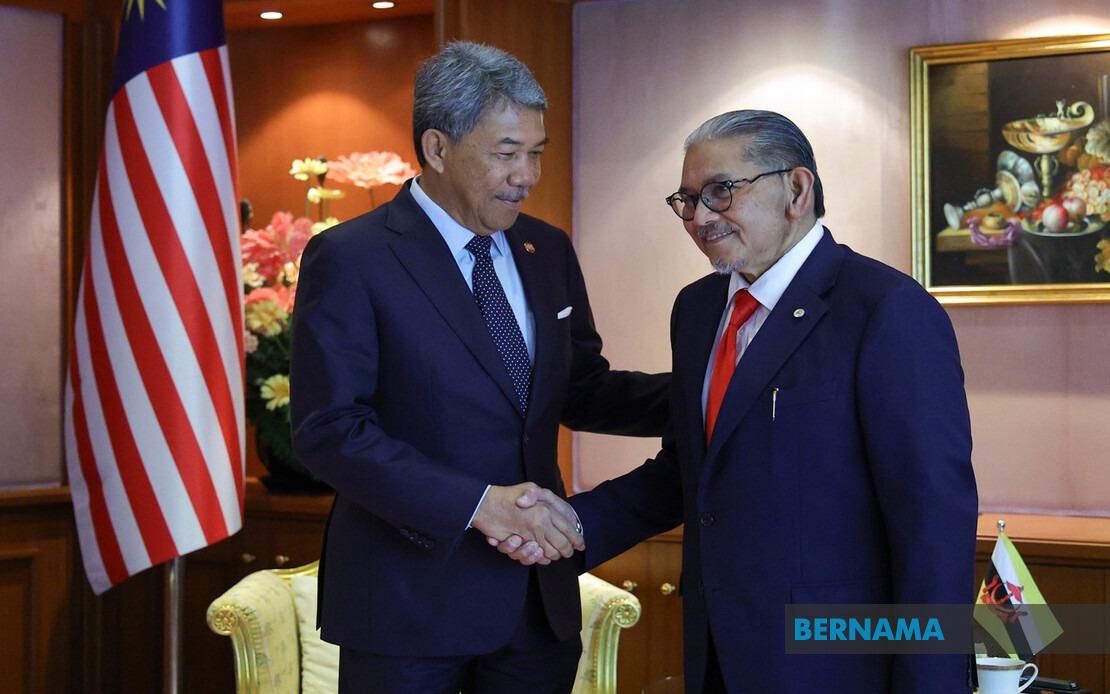
Malaysia and Brunei have made fresh progress in strengthening their partnership through high-level diplomatic engagement, with officials from both nations convening in Bandar Seri Begawan for the 27th Meeting on the Implementation of the Exchange of Letters. The gathering underscored the commitment of both Southeast Asian neighbours to deepen cooperation across multiple domains that affect their shared interests and populations. Foreign Minister Datuk Seri Mohamad Hasan, who co-led the Malaysian delegation alongside Brunei Second Minister of Foreign Affairs Datuk Seri Setia Erywan Mohd Yusof, emphasised the breadth of issues addressed during the substantive discussions held at the venue.
The meeting served as a platform for both countries to tackle longstanding issues that require sustained attention and technical expertise. Among the most significant matters examined were the demarcation of land boundaries and the definition of maritime zones separating the two nations. These boundary questions, while potentially sensitive, have been managed through a structured diplomatic framework that allows both sides to advance practical solutions without creating friction. The commitment to formalising these boundaries reflects the confidence both governments have in their ability to work collaboratively on matters that could otherwise become contentious if left unresolved.
Mohamad revealed that the two countries have completed approximately half of the boundary demarcation work, marking tangible progress on an undertaking that requires meticulous fieldwork and cartographic precision. The existing boundaries between Malaysia and Brunei are already established in principle, but the demarcation process entails a more granular exercise that accounts for geographical, topographical, and administrative factors on the ground. This distinction between a boundary's legal existence and its physical demarcation is crucial for ensuring clarity and preventing future disputes. Both nations are working within the parameters established by the 2009 Terms of Reference, a foundational agreement that provides the procedural guidelines for completing this technical task.
A technical committee comprising representatives from both countries continues to gather field data and prepare recommendations that will inform the final demarcation report. This approach of delegating complex boundary work to specialised teams allows political leaders to focus on broader strategic matters while ensuring that decisions are grounded in accurate geographical information. The 2009 framework has proven flexible enough to accommodate evolving circumstances and new data discovered during on-the-ground surveys, suggesting that both governments view this process as a collaborative problem-solving exercise rather than an adversarial negotiation.
Beyond boundaries, Malaysia and Brunei are establishing new mechanisms for coordinated search and rescue operations in their shared maritime domain. The two countries plan to sign a Memorandum of Understanding specifically addressing SAR protocols, reflecting growing recognition that emergencies at sea require seamless coordination between neighbouring maritime authorities. Such an agreement would enable faster response times, pooled resources, and standardised procedures when vessels or aircraft encounter distress in waters where jurisdictional responsibilities might otherwise create ambiguity. For a maritime region like Southeast Asia, where shipping traffic and fishing activities are substantial, robust SAR frameworks are essential for protecting human life and facilitating safe commerce.
The bilateral discussions also encompassed measures aimed at facilitating smoother movement of people across borders, particularly benefiting residents of Brunei, Sarawak, and Sabah. Enhanced cross-border mobility can stimulate economic activity, strengthen family connections, and promote cultural exchange among communities that have historical ties spanning generations. For Sarawak and Sabah, improved travel arrangements with Brunei could open new opportunities in tourism, trade, and professional services, as the sultanate remains a relatively prosperous destination with purchasing power and investment capacity. Conversely, Bruneians gain easier access to the larger populations and economic opportunities within Malaysian Borneo.
The successful implementation of these agreements will depend on the follow-through capacity of both governments and their ability to coordinate across multiple agencies. Customs authorities, immigration departments, maritime authorities, and border management bodies must align their operations to ensure that policy decisions translate into seamless experiences for ordinary citizens and businesses. This multi-agency coordination challenge is often more difficult than the political negotiations themselves, yet it ultimately determines whether bilateral agreements deliver tangible benefits to populations.
For Malaysia, deepening ties with Brunei carries strategic significance beyond the immediate bilateral relationship. Brunei, though small, occupies a critical position in the South China Sea and serves as a key node in ASEAN connectivity. Strengthening Malaysia's partnership with Brunei can reinforce ASEAN cohesion and signal to larger powers that the region is capable of managing its own affairs through consensus-building and mutual respect. The focus on practical cooperation mechanisms rather than contentious political declarations demonstrates a pragmatic approach to regional diplomacy.
The timing of this 27th implementation meeting also reflects the normalisation of regular high-level engagement between the two countries. By institutionalising these bilateral forums and maintaining consistent dialogue, both Malaysia and Brunei reduce the likelihood of misunderstandings escalating into diplomatic friction. Regular meetings create opportunities to address emerging issues before they become entrenched problems, and they build personal relationships among officials who become invested in the success of bilateral initiatives. This incremental relationship-building has proven effective for Malaysia and Brunei, which have avoided the kind of boundary disputes or maritime tensions that have affected some other regional pairs.
As the two nations advance their boundary demarcation process and expand cooperation frameworks, they are also setting an example for how Southeast Asian neighbours can manage sensitive matters through institutional channels and technical expertise. The involvement of specialised committees and the reliance on agreed-upon terms of reference create spaces for progress that might not be possible in overtly political forums. For Malaysian policymakers and the broader region, the Malaysia-Brunei experience offers valuable lessons in how bilateral relationships can be simultaneously deepened and stabilised through mechanisms that combine high-level political commitment with ground-level technical work.
The agreements reached and commitments renewed during the Bandar Seri Begawan meeting reflect an understanding among Malaysian and Bruneian leadership that their nations share sufficient common interests and compatible governance approaches to warrant continuous investment in their partnership. As regional dynamics evolve and new challenges emerge—from climate change affecting maritime resources to evolving trade patterns—having robust institutional frameworks for cooperation provides both countries with tools to adapt and respond collaboratively.

