%22%2F%3E%3C%2Fpattern%3E%3C%2Fdefs%3E%3Crect%20width%3D%22100%25%22%20height%3D%22100%25%22%20fill%3D%22url(%23ph2omqbg)%22%2F%3E%3Crect%20width%3D%22100%25%22%20height%3D%22100%25%22%20fill%3D%22url(%23ph2omqbp)%22%2F%3E%3Ctext%20x%3D%2250%25%22%20y%3D%2250%25%22%20text-anchor%3D%22middle%22%20dominant-baseline%3D%22central%22%20fill%3D%22rgba(255%2C255%2C255%2C0.95)%22%20font-family%3D%22Georgia%2C%20'Times%20New%20Roman'%2C%20serif%22%20font-weight%3D%22700%22%20font-size%3D%22170%22%20letter-spacing%3D%22-0.02em%22%3EMalaysia%3C%2Ftext%3E%3C%2Fsvg%3E)
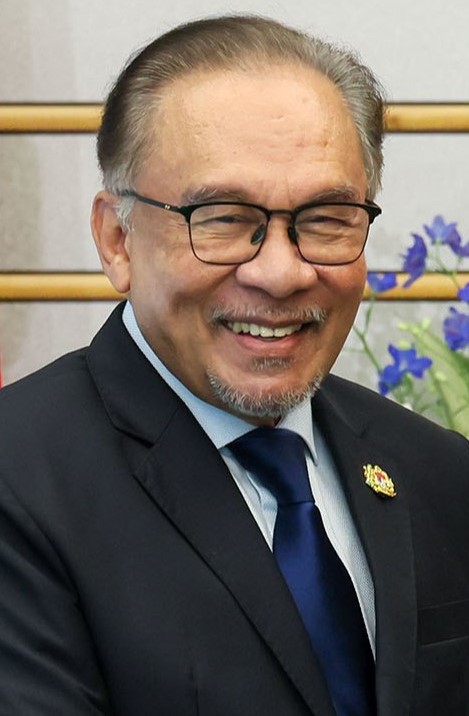
Prime Minister Anwar Ibrahim and Bangladesh Foreign Minister Dr. A.K. Abdul Momen have reaffirmed their governments' commitment to tackling exploitation and abuse within migrant labour networks, signalling a coordinated regional approach to worker protection that extends beyond rhetoric. The agreement, reached during talks in Putrajaya on June 22, addresses long-standing grievances from Bangladesh, which supplies Malaysia with hundreds of thousands of workers across construction, manufacturing, domestic service, and agriculture sectors. This bilateral emphasis on welfare standards reflects growing international pressure on both nations to reform labour practices and curb documented abuses that have tarnished their reputations in global supply chains.
Malaysia's reliance on migrant labour has become structural to its economy. Approximately two million foreign workers—with Bangladeshis forming a substantial portion—form the backbone of industries Malaysia struggles to fill with domestic workers. Yet the relationship remains fraught with recurring scandals involving wage theft, unsafe working conditions, illegal recruitment fees, and inadequate dormitory standards. For Bangladesh, labour exports represent a crucial revenue stream and employment safety valve; remittances from Malaysian workers contribute meaningfully to family incomes across rural regions. The bilateral understanding therefore carries economic weight for Dhaka beyond humanitarian considerations, making both nations' public commitment to reform credible in principle, if not always in implementation.
Anwar's emphasis on migrant worker welfare aligns with his government's broader emphasis on inclusive economic growth and labour standards. Since returning to office, his administration has signalled willingness to engage with international scrutiny over worker conditions, acknowledging that Malaysia's economic competitiveness depends partly on maintaining ethical supply chains acceptable to international partners and consumers. The Prime Minister's public statements positioning Malaysia as a responsible employer contrast sharply with predecessors' often dismissive postures toward criticism, suggesting a genuine policy shift rather than diplomatic courtesy. This framing matters for investor confidence and Malaysia's standing in negotiations over trade agreements and standards partnerships.
Bangladesh's Foreign Minister pressed for expanded job access within Malaysia's labour market, seeking to secure placement pathways for additional workers beyond current quota arrangements. The demand reflects Bangladesh's demographic challenge: rapid population growth concentrating in working-age cohorts creates persistent underemployment domestically, making overseas placement crucial for poverty reduction and social stability. Malaysia's selective recruitment processes have historically favoured certain source countries and imposed restrictions that limit Bangladeshi worker entry, creating competitive disadvantage for Bangladeshi recruiters and workers seeking Malaysian opportunities. Tarique's advocacy for fairer procedures aims to level the playing field, removing what Bangladesh views as discriminatory barriers embedded within Malaysia's labour import framework.
The recruitment process itself emerges as the agreement's critical operational focus. Both nations acknowledged that dishonest intermediaries, fraudulent documentation, and coercive practices pervade current pathways, often occurring in Bangladesh before workers even depart and continuing upon arrival in Malaysia. Unscrupulous agents charge excessive upfront fees, sometimes exceeding workers' initial monthly earnings, forcing vulnerable migrants into debt bondage conditions that extend contractual relationships into exploitative terrain. Malaysian employers frequently collude with these agents, cutting corners on compliance to reduce labour costs. By jointly demanding fairer procedures, the governments implicitly acknowledge their own institutional weaknesses in enforcement and suggest bilateral mechanisms might prove more effective than unilateral measures either nation could impose independently.
The practical implications of this agreement will depend heavily on implementation architecture. Bilateral labour commissions require adequate funding, real investigative authority, and willingness to sanction violators—including prominent employers—regardless of political connections. Historical precedent in Southeast Asian labour diplomacy reveals persistent gaps between signed agreements and ground-level compliance. Malaysia's construction and manufacturing sectors, heavily dependent on Bangladeshi workers, operate within highly competitive margins that reward corner-cutting; genuine reform threatens operational costs unless paired with broader industry restructuring. Bangladesh's recruitment infrastructure remains largely privatised and fragmented, with thousands of licensed agents competing on volume rather than worker protection, complicating centralized enforcement from Dhaka.
Regional resonance extends beyond bilateral dynamics. Thailand, Singapore, and South Korea—other major employers of Bangladeshi labour—observe these negotiations closely, as coordinated standards could eventually reshape entire labour corridors. Malaysia's willingness to engage seriously on worker protections potentially establishes precedent other destination countries might feel compelled to match, gradually elevating baseline conditions across the region. Conversely, if this agreement stalls in implementation, it reinforces cynicism about governmental reform commitments and strengthens the hand of NGOs and international bodies pushing for mandatory due diligence legislation in importing countries.
The framing of recruitment as a shared challenge rather than a zero-sum negotiation represents subtle but significant diplomatic progress. Rather than casting Bangladesh as a source of problems requiring Malaysian correction, or Malaysia as an exploitative destination extracting labour, the joint statement positions both governments as stakeholders in a system requiring mutual reform. This rhetorical shift, if coupled with substantive action, could build trust necessary for deeper labour cooperation—potentially including portable social security, skills training partnerships, and grievance mechanisms that actually compel employer compliance.
For Malaysian workers and society, improved migrant labour standards offer indirect benefits. When exploitation becomes normalised within migrant populations, wage suppression extends to competing Malaysian workers in similar sectors, depressing wages across low-skilled segments. Conversely, genuine protections and fair recruitment practices might modestly increase labour costs, but they reduce unfair competition and potentially encourage labour-saving automation and productivity improvements that benefit the broader economy. From a governance perspective, demonstrable commitment to worker protections enhances Malaysia's international standing during an era when supply chain ethics increasingly influence investment and trade relationships.