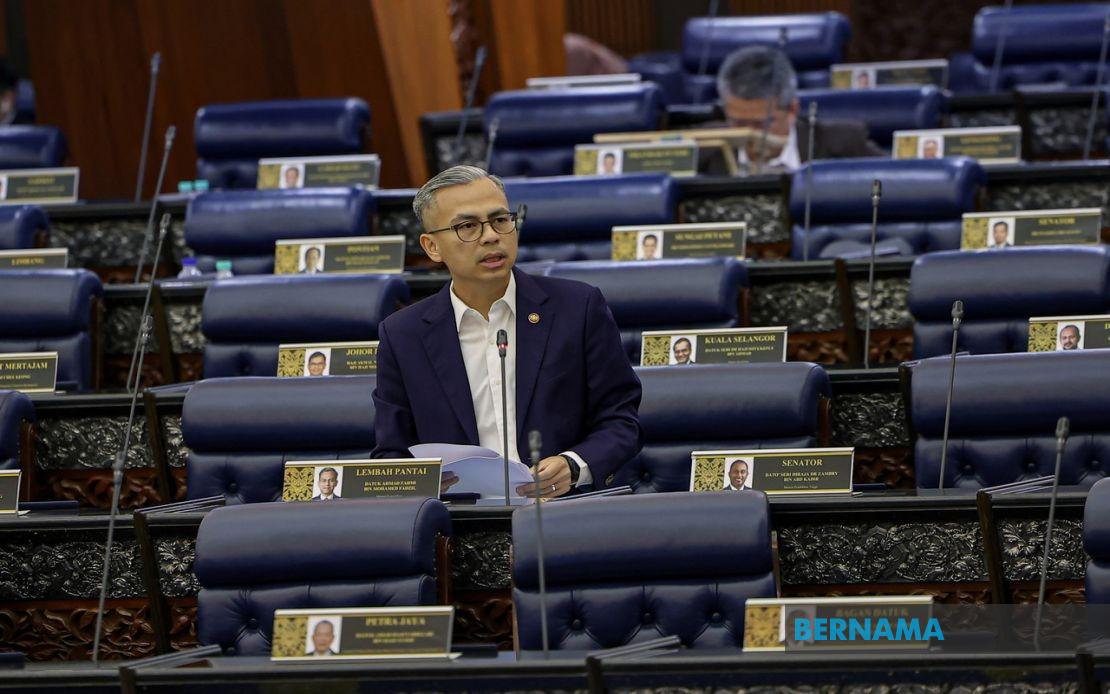
Malaysia has moved to reshape its telecommunications regulatory landscape by introducing legislation that explicitly links universal service obligations to national security concerns. The Communications and Multimedia (Amendment) Bill 2026 was tabled for first reading in the Dewan Rakyat on July 13, with Communications Minister Datuk Seri Fahmi Fadzil indicating it will proceed to second reading during the current parliamentary session. The proposed amendments represent a significant recalibration of how Malaysia approaches its commitment to ensuring broad-based access to communications services, now incorporating security considerations as a foundational principle rather than an afterthought.
The Bill targets Section 202 of the Communications and Multimedia Act 1998, the cornerstone legislation governing Malaysia's telecoms sector for over two decades. By introducing new subsections 202(1A) and 202(1B), the amendments would fundamentally alter the Minister's discretionary powers. The key innovation allows the Minister to direct the Malaysian Communications and Multimedia Commission (MCMC) to undertake universal service provision initiatives whenever such measures are deemed necessary for national security purposes. This represents a meaningful expansion of what can be justified under the universal service umbrella, moving beyond traditional access and affordability concerns into the realm of infrastructure resilience and strategic communications capability.
Under the proposed framework, national security determinations would not rest with the communications ministry alone. Instead, the National Security Council—operating under the National Security Council Act 2016—would hold the authority to designate what qualifies as a national security matter. This institutional arrangement reflects Malaysia's broader security governance structure and ensures that telecommunications decisions with security implications align with whole-of-government security assessments. The delegation of definitional authority to the NSC provides a degree of insulation from purely sectoral ministerial politics, though it also concentrates significant power in a body whose deliberations typically operate beyond public scrutiny.
The practical manifestations of these amendments would likely encompass a range of initiatives that blur traditional boundaries between commercial telecoms operations and strategic infrastructure development. The Bill explicitly contemplates encouraging the installation of network facilities and provision of network or application services when deemed necessary to safeguard national security. In Malaysia's context, this could extend to ensuring redundancy in critical communications pathways, supporting the deployment of domestic alternatives to overseas-dependent infrastructure, or mandating security standards that go beyond conventional regulatory requirements. The scope is deliberately broad, providing flexibility for future adaptation as threats and technologies evolve.
Context matters considerably for understanding why Malaysia is making these amendments now. The global telecommunications landscape has become increasingly fraught with geopolitical tension, particularly regarding infrastructure dependencies and supply chain vulnerabilities. Countries across Southeast Asia and beyond have grown wary of over-reliance on specific foreign suppliers or technologies for critical communications systems. Malaysia, as a middle-income country with aspirations toward greater technological sovereignty, faces pressure to ensure that its digital infrastructure reflects both economic efficiency and strategic autonomy. The amendment signals recognition that universal service obligations—historically focused on extending coverage to underserved communities—must now grapple with the reality that all communications infrastructure carries potential strategic implications.
The Bill includes a specific safeguard in proposed subsection 202(1b), which requires that any national universal service provision initiative remain consistent with the objects of the principal Act. This constraint prevents the security rationale from becoming a blank cheque for regulatory overreach. The objects of Act 588 emphasize universal access, affordability, and competitive markets—principles that could theoretically clash with security-driven mandates. By maintaining this requirement, the legislature appears to be attempting a careful calibration: security concerns are now legitimate grounds for ministerial direction, but such direction must still serve broader telecommunications policy objectives rather than standing in pure contradiction to them.
The amendment to Section 202(2) represents another important shift in regulatory authority. By empowering the Minister to make regulations under Section 16 of Act 588 specifically relating to national universal service initiatives, the Bill effectively creates a new regulatory pathway for security-driven telecoms policy. This proves significant because it allows for relatively rapid regulatory adaptation without requiring full legislative amendment each time circumstances change. The MCMC would operate within parameters set by ministerial regulation rather than statute alone, providing both flexibility and a degree of responsiveness to evolving security landscapes.
Financially, the Government has indicated that implementation of these amendments will not require additional public expenditure. This assertion warrants careful monitoring, as it presupposes that the MCMC and existing telecoms operators can absorb new security-related universal service obligations within current budgetary and operational frameworks. In practice, the costs might be distributed differently: operators could face increased compliance burdens, the MCMC might need to reallocate resources, or anticipated security benefits might be achieved through reprioritization rather than expansion of total spending. The assurance of no extra government cost reflects Malaysia's fiscal constraints but should not be taken as guarantee that implementing institutions face no new pressures.
For Malaysia's telecommunications sector, these amendments carry profound implications for future investment and regulatory certainty. Private operators will need to evaluate how security-driven universal service obligations might affect their business models and capital allocation decisions. Investors will scrutinize whether security considerations might be invoked to mandate infrastructure investments that lack immediate commercial viability. The MCMC faces the challenge of implementing expanded powers while maintaining the regulatory predictability essential for a functioning competitive market. The balance between security imperatives and market-driven innovation remains inherently difficult to strike.
Regionally, Malaysia's move reflects broader Southeast Asian anxieties about telecommunications infrastructure security and strategic autonomy. Other countries in the region grapple with similar questions about how to ensure their digital infrastructure serves national interests without unduly constraining innovation or international competitiveness. Malaysia's legislative approach—embedding security considerations into universal service frameworks rather than creating separate security-focused regulatory tracks—offers one model that other nations might examine or adapt. The extent to which this amendment proves effective in achieving its security objectives while maintaining healthy competition will likely influence thinking across the region.
The pathway ahead involves second reading debate where legislators can scrutinize the amendments' implications, followed by committee stage where detailed provisions might be refined. Public consultation has not been prominent thus far, which some stakeholders may view as a missed opportunity for broader input on how security and commercial considerations should balance within Malaysia's telecoms framework. Once enacted, the amendment will shift Malaysia's regulatory equilibrium, granting government agencies expanded tools to pursue security objectives through telecommunications policy while introducing new uncertainties about how those tools will be deployed.

