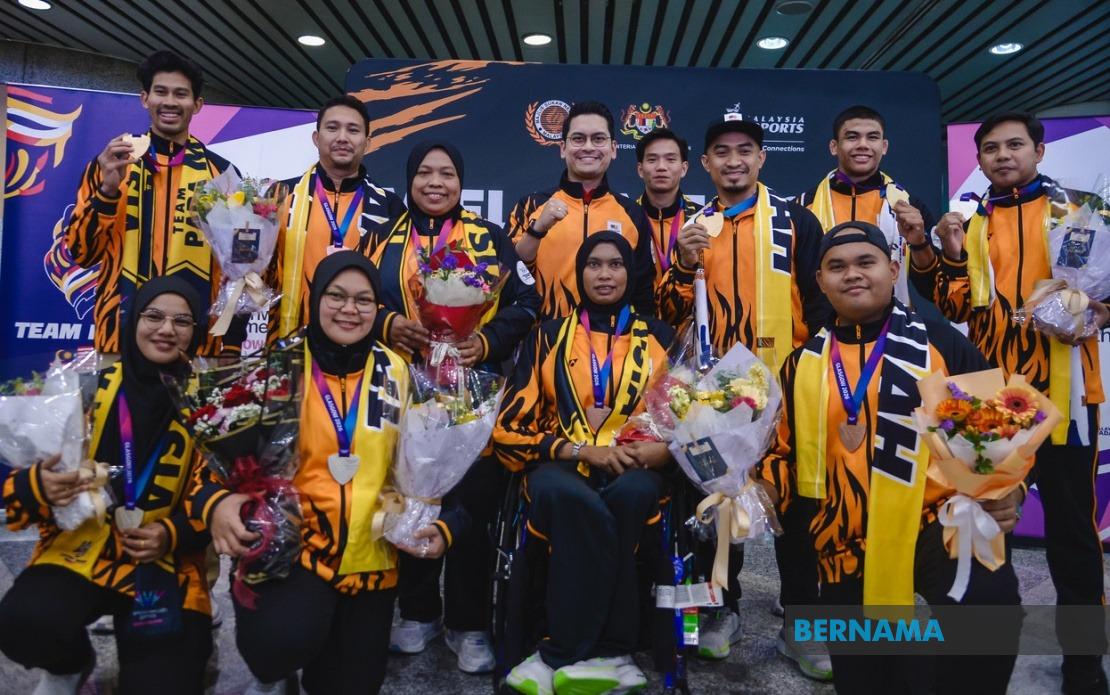
Malaysia's government has committed RM1.1 million in financial rewards for athletes who secured medals at the 2026 Glasgow Commonwealth Games, marking a significant investment in recognizing sporting excellence. Youth and Sports Minister Dr. Mohammed Taufiq Johari unveiled the incentive structure during a welcoming ceremony at Kuala Lumpur International Airport, positioning the payout as a tangible expression of national gratitude for the athletes' dedication and the honour they have brought to the country.
The reward framework established under the National Sports Incentive Scheme (SHAKAM) sets gold medalists to receive RM80,000 each, substantially higher than the RM40,000 designated for silver medal winners and RM20,000 for bronze. An additional RM10,000 bonus awaits any athlete who manages to establish a new games record in their respective event, creating a tiered structure that incentivizes both medal acquisition and championship-level performance. This differentiation reflects a deliberate policy shift toward elevating standards and encouraging athletes to pursue not merely participation but dominance in their disciplines.
Dr. Mohammed Taufiq indicated that the National Sports Council is actively pursuing supplementary funding from the corporate sector to enhance these monetary incentives. This approach suggests the government's recognition that sustained competitive excellence requires resources beyond the initial allocation, and it signals openness to public-private partnerships in sports financing. Such collaborative funding models have proven effective in other Southeast Asian nations and could establish a precedent for future Olympic and Commonwealth Games preparations.
The Glasgow 2026 campaign yielded eight gold, three silver, and five bronze medals for Malaysia, representing one of the country's strongest performances since 2010. This outcome exceeded the initial medal target of five gold medals, demonstrating that the strategic adjustments implemented by the ministry translated into measurable results. The relatively modest delegation size compared to previous Commonwealth Games iterations adds significance to these numbers, suggesting improved efficiency and targeted investment in medal-viable sports rather than broad-based participation.
A fundamental policy innovation underpinned this success: the ministry's adoption of colour-based medal targets rather than general numerical goals. This strategic reorientation required extensive consultation with sports associations, coaches, and athletes to ensure realistic yet ambitious objectives specific to gold medal achievement. Dr. Mohammed Taufiq emphasized that while some initial concerns existed about whether such targets might overwhelm competitors, the implementation actually generated renewed competitive spirit and provided psychological reinforcement that elevated performance levels.
The colour-based targeting system serves a dual purpose within Malaysia's broader athletic ambitions. Domestically, it has demonstrated effectiveness in shaping medal outcomes at regional competitions. More significantly, it functions as a preparatory framework toward the ultimate national objective: securing Malaysia's first-ever Olympic gold medal. By normalizing gold-medal-focused ambitions through Commonwealth Games competition, the sports ministry has begun embedding a championship mentality into the national athletic culture, essential groundwork for future Olympic aspirations.
Chef de Mission Datuk Awalan Abdul Aziz, who also leads the Malaysian Lawn Bowls Federation, provided perspective on how this targeting strategy operated within individual sports. For the lawn bowls contingent, gold medals represented an internal aspiration rather than formal pressure, allowing athletes to pursue excellence without the psychological burden of absolute mandates. This nuanced approach yielded four medals overall in lawn bowls—two silver and two bronze—a substantial improvement over the one silver and one bronze earned at Birmingham 2022, demonstrating how measured expectations can paradoxically deliver superior outcomes.
The Glasgow Games results carry implications for Malaysia's regional sporting positioning and soft power projection. Within Southeast Asia, Malaysia's consistent performance at Commonwealth competitions reinforces its standing as a serious regional sporting power, competing effectively against larger nations and more generously funded programs. The success also provides a foundation for attracting talent retention and encouraging younger athletes to pursue elite-level competition, addressing persistent challenges in developing deep athletic talent pipelines across multiple disciplines.
The RM1.1 million allocation, while substantial, represents a calculated investment in a relatively small athlete population compared to broader government expenditures. This targeted resource concentration reflects growing sophistication in Malaysian sports policy, prioritizing measurable returns on investment and strategic alignment with long-term national objectives rather than dispersing funding across numerous lower-priority initiatives. The emphasis on gold medals specifically acknowledges international sporting hierarchies while providing clear performance benchmarks for evaluation.
Looking ahead, the establishment of colour-based targets creates a framework that the ministry intends to maintain for future international competitions. Dr. Mohammed Taufiq's commitment to continuing this approach suggests institutional confidence that the strategy produces results while elevating national sporting culture. This consistency in policy direction provides athletes and coaches with predictability and allows systematic building toward increasingly ambitious targets across successive Games cycles.
The corporate sector engagement planned by the National Sports Council opens possibilities for creative funding models that could extend beyond monetary rewards. Companies might sponsor specific sports, establish athlete development programs, or create performance bonuses tied to particular achievement thresholds, thereby multiplying the impact of government allocation. Such arrangements have enabled smaller nations to punch above their weight in global sporting competition by leveraging private capital toward public sporting objectives.
For Malaysian athletes, the financial recognition carries significance beyond monetary value. It signals governmental commitment to elite sport and provides material support that enables focus on training and competition without financial distraction. This recognition mechanism also enhances the professional standing of athletics within Malaysian society, potentially shifting cultural perceptions about career viability in sports compared to traditional professional pathways.
The Glasgow 2026 outcome and its accompanying incentive structure represent a maturation of Malaysian sports policy toward strategic excellence and sustainable competitive performance. By combining targeted goal-setting, resource concentration, and public recognition through meaningful financial rewards, the ministry has constructed a framework that translates ambition into achievement and positions Malaysia competitively within regional and international sporting hierarchies.

