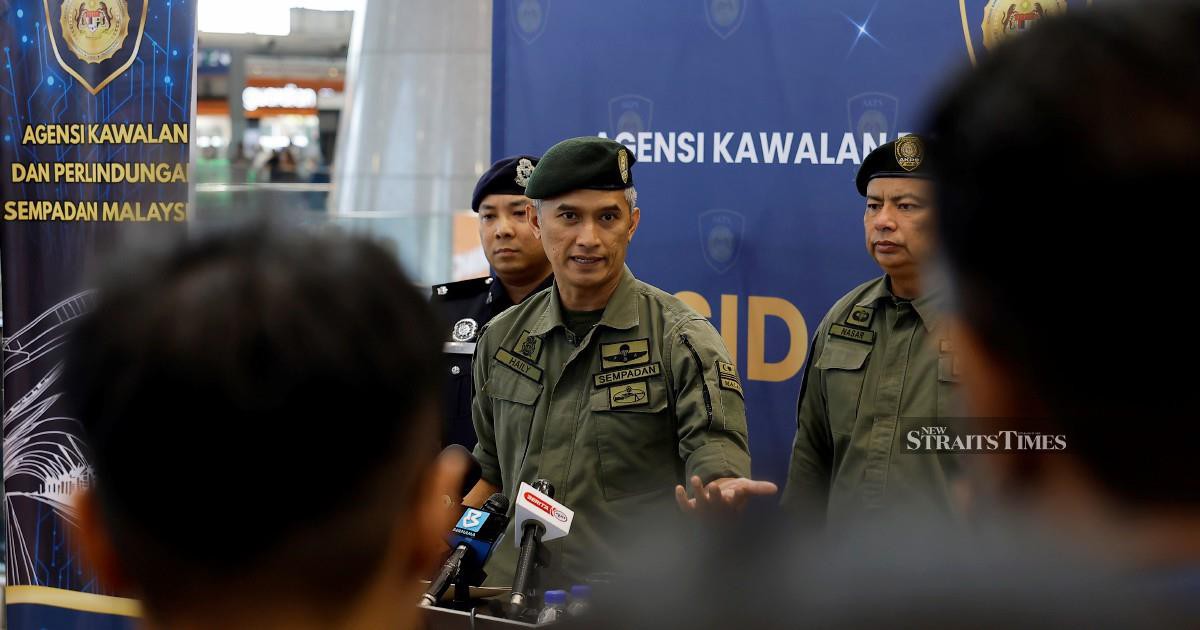
A Malaysia Airlines pilot detained in Indonesia last week after authorities discovered 70,000 ecstasy pills in his possession had his baggage cleared by the Aviation Security (AVSEC) unit, not by any screening mechanism under the Malaysia Border Control and Protection Agency (MCBA), according to a statement from the border control body. The clarification addresses mounting scrutiny over how such a significant quantity of narcotics passed through Malaysia's airport security infrastructure without detection.
The distinction between agencies responsible for baggage screening has become increasingly relevant as investigators piece together the circumstances surrounding the pilot's arrest. AVSEC operates as a separate security function within Malaysia's aviation ecosystem, primarily focused on pre-flight and in-flight security measures, while MCBA handles border protection and control at ports of entry. The public's understanding of these institutional boundaries has been limited, making the clarification essential for transparency regarding security procedures at Malaysian airports.
The Malaysia Airlines pilot, whose identity has been withheld pending further investigation, was apprehended following a routine baggage inspection in Indonesia, sparking immediate questions about the effectiveness of screening protocols at Malaysian departure points. The sheer volume of contraband involved—70,000 ecstasy tablets—suggests either a significant lapse in detection systems or a deliberate circumvention of established security procedures. For Malaysian readers following this case, the implications extend beyond a single criminal matter to broader concerns about narcotics trafficking through regional aviation networks and the reliability of airport security frameworks.
The involvement of AVSEC rather than MCBA-operated screening raises important questions about inter-agency coordination and information-sharing within Malaysia's security apparatus. Aviation Security operates under different operational guidelines and technological standards compared to border control agencies, potentially creating inconsistencies in detection capability. This fragmentation of responsibility could represent a vulnerability in the broader security perimeter, particularly given Malaysia's geographic position as a regional aviation hub and known transit point for illicit substances destined for other parts of Southeast Asia.
Indonesia's discovery of the contraband has drawn unwelcome international attention to Malaysia's drug enforcement record at a time when regional cooperation on narcotics interdiction remains critical. The Association of Southeast Asian Nations has increasingly emphasized joint efforts to combat transnational drug trafficking, making any detection failure at a major Southeast Asian airport concerning for neighboring governments. Malaysia's credibility as a reliable partner in regional security initiatives depends partly on the effectiveness of its airport screening systems, particularly given the volume of international transit passengers.
The timing of this incident adds pressure on Malaysian authorities to demonstrate competence and accountability in their security operations. Public confidence in aviation safety and border security remains foundational to the country's tourism and business sectors, both economically vital to Malaysia. When high-profile cases reveal potential security gaps, they can influence international perceptions of Malaysia's operational capacity, affecting everything from airline routing decisions to business travel patterns.
For travelers and the aviation industry operating within Malaysia, this incident underscores the need for continuous review and upgrading of security infrastructure. AVSEC's screening protocols, while generally effective, apparently failed to detect a substantial drug shipment, prompting legitimate questions about whether detection equipment is sufficiently modern and whether staff training encompasses emerging smuggling methods. International best practices in aviation security have evolved considerably, and Malaysia must ensure its systems remain aligned with global standards.
The distinction between AVSEC and MCBA operational areas also highlights potential coordination gaps during the passenger and baggage processing sequence. A pilot departing from a Malaysian airport would theoretically pass through multiple security checkpoints, including both aviation security and border control procedures. The fact that contraband cleared all these barriers simultaneously suggests either a breakdown in systematic checks or, alternatively, deliberate collusion—a prospect that carries more serious implications for institutional integrity.
Investigators will likely examine whether standard procedures were followed, whether equipment was functioning properly, and whether staff protocols were observed during the screening process. The Malaysian authorities' openness about which agency conducted the screening may indicate confidence in AVSEC's procedures or simply an attempt to clarify institutional responsibility as investigations proceed. Either way, the public disclosure offers an opportunity for comprehensive review of aviation security operations nationwide.
Moving forward, this incident will probably catalyze discussions about modernizing detection technology and improving inter-agency information-sharing mechanisms. Malaysia's broader counter-narcotics strategy depends not only on enforcement activities but also on prevention through effective screening. The pilot's arrest in Indonesia, while ultimately successful in preventing narcotics from reaching their intended destination, represents a failure of prevention at the source—Malaysia's own airports.
For policymakers and security officials, the case demonstrates why investment in training, technology, and coordination mechanisms cannot be deferred. As transnational narcotics trafficking networks become increasingly sophisticated in their methods, aviation security systems must evolve accordingly. The incident provides a concrete example of why regional governments must prioritize airport security as a critical component of their broader counternarcotics and border protection strategies.

