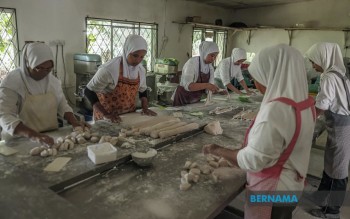
The Malaysian government has activated 23 distinct initiatives, projects and programmes spanning the Halal Industry Master Plan 2030, marking a substantial push to strengthen domestic production capacity and reduce the nation's vulnerability to fluctuations in global halal ingredient supplies. As of May 30, 2026, these programmes are being rolled out systematically across seven core strategic pillars designed to reshape Malaysia's position as a halal producer rather than primarily a halal consumer nation. The Ministry of Investment, Trade and Industry disclosed this information to Parliament in response to questions about the government's long-term strategy for ingredient self-sufficiency in the halal sector.
The breadth of this initiative reflects recognition that Malaysia's halal industry, despite being globally recognised and certified, remains heavily dependent on imported raw materials and processed ingredients. Seven of the 23 implemented programmes specifically address the supply-side challenge by channelling resources into ingredient development, scientific research and development activities, financial support mechanisms for smaller enterprises, workforce capability building, and commercialisation pathways. By structuring interventions around these complementary pillars, the government aims to create an integrated ecosystem where innovation translates into commercially viable production.
Implementation occurs in carefully sequenced phases. The first involves detailed mapping of which ingredient categories represent the highest strategic priorities—those with significant import bills, limited domestic alternatives, and realistic potential for local manufacturing. Subsequent phases focus on generating new production technologies through R&D partnerships, moving promising discoveries toward market readiness, and facilitating investment flows into venture-stage halal ingredient enterprises. The strategy then emphasises identifying and developing anchor companies capable of scaling operations while encouraging these leading players to collaborate with suppliers and smaller firms across the supply chain.
A critical supporting mechanism launched in August 2025 is MyHALALINGREDIENTS, a data collection system administered by the Department of Islamic Development Malaysia (JAKIM). This platform enables manufacturers and ingredient producers to register and document the raw materials they source, creating a comprehensive database of local availability and usage patterns. Rather than functioning as a standalone system, MyHALALINGREDIENTS integrates directly with Malaysia's existing MYeHALAL certification platform, which verifies products meet halal standards. This technological convergence streamlines the certification journey, reducing bureaucratic friction that previously discouraged smaller producers from formalising their operations.
The significance of this administrative redesign should not be understated for Malaysian stakeholders. Previously, companies seeking halal certification navigated multiple overlapping documentation requirements and lengthy verification periods. By consolidating data collection and certification assessments within one system, the government removes obstacles that historically deterred MSMEs from participating in the formal halal supply chain. For manufacturers reliant on certified halal ingredients, faster certification cycles reduce production delays and inventory carrying costs, improving overall competitiveness.
MALAYSIA's approach differs markedly from simplistic import-substitution strategies that merely restrict foreign goods. Instead, the government applies sophisticated targeting criteria when identifying which ingredients warrant domestic development investment. Priority categories are those where Malaysia already possesses competitive advantages—whether through agricultural capacity, technical expertise, or regional proximity to markets—combined with those where import dependence creates strategic vulnerability. This disciplined methodology prevents wasteful investment in sectors where Malaysia lacks comparative advantage, focusing resources where domestic production can genuinely compete on price and quality.
Industry collaboration mechanisms form another pillar of this architecture. Rather than government directly managing production, the strategy facilitates partnerships between leading halal companies, research institutions, and smaller suppliers. These matchmaking exercises help large manufacturers identify promising local ingredient suppliers while providing technical guidance and market access guarantees that enable MSMEs to justify capital investments. Such vertical integration within the halal supply chain creates stability and predictability absent in purely market-driven procurement.
The financing dimension addresses a persistent constraint facing ingredient producers. Developing new halal ingredients requires upfront investment in laboratory equipment, process optimisation, and compliance infrastructure—costs that overwhelm individual small enterprises. By structuring dedicated financing programmes for this sector, the government reduces capital barriers and accelerates the timeline between research breakthrough and commercial production. Malaysian financial institutions gain visibility into government commitment, reducing perceived risk when evaluating loan applications from halal ingredient startups.
Talent development initiatives embedded within the masterplan recognise that ingredient innovation depends on skilled personnel. Programmes supporting workforce training in halal ingredient science, quality assurance, and production management build human capital necessary for sustainable productivity growth. This particularly benefits regions outside Kuala Lumpur and Selangor, where halal ingredient manufacturing clusters could emerge and generate employment diversification.
For Malaysia's broader economic strategy, reducing halal ingredient imports produces multiple benefits beyond immediate trade balance improvements. The halal sector currently generates substantial export revenues, with Malaysia positioning itself as a trusted global supplier of certified halal products and services. However, this export competitiveness is constrained when ingredient costs remain elevated due to import dependency. Localising ingredient production improves cost structures, enabling Malaysian manufacturers to compete more aggressively in international markets. Additionally, developing a comprehensive domestic halal supply chain creates higher-value economic activity than Malaysia's current position as primarily an assembler or re-exporter of halal goods.
Regionally, Malaysia's halal ingredient development carries implications for other Southeast Asian nations pursuing halal certification. As Malaysia demonstrates that consistent investment in R&D and supply chain integration can build self-sufficiency, neighbouring countries may face pressure to develop equivalent capabilities rather than relying on Malaysian imports. Simultaneously, successful Malaysian ingredient developers gain opportunities to supply certified components to other Muslim-majority nations, potentially expanding export markets even as domestic substitution reduces imports.
The staggered implementation timeline through May 2026 suggests the government recognises that ingredient ecosystem transformation requires patience. Results will not materialise overnight, but the institutional framework now exists to track progress, adjust interventions, and maintain political momentum across electoral cycles. By embedding the masterplan within MITI's formal responsibilities and integrating technological systems across government agencies, Malaysia demonstrates seriousness about this strategic commitment.
Success ultimately depends on whether these initiatives translate theoretical advantages into tangible market outcomes. The government has provided regulatory clarity, financing mechanisms, and collaborative platforms—necessary conditions but not sufficient guarantees. Individual entrepreneurs and companies must recognise genuine commercial opportunities and execute effectively. Over the coming years, observers should monitor whether localised ingredient production actually captures market share from imports, whether new halal ingredient companies achieve sustainable profitability, and whether the supply chain integration deepens. These practical indicators will reveal whether the Halal Industry Master Plan 2030 successfully reshapes Malaysia's halal economy.

