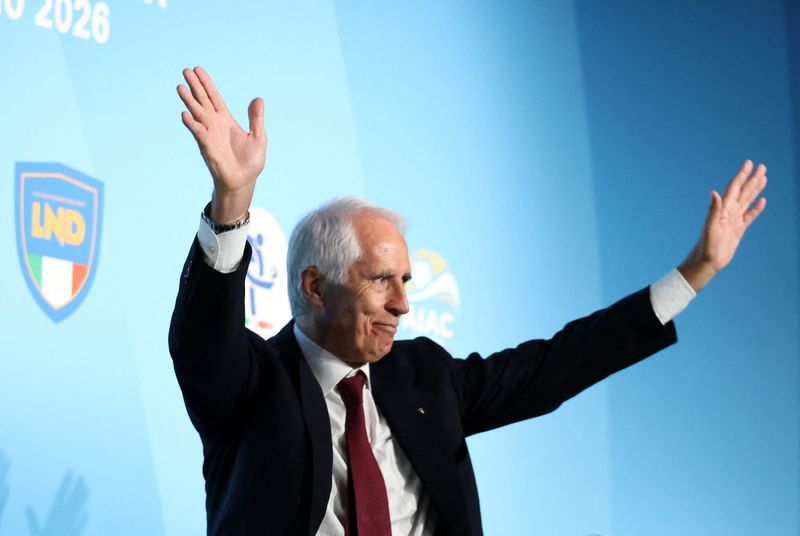
Giovanni Malago has assumed leadership of Italian football at perhaps its lowest point in four decades, elected president of the Italian Football Federation on Monday with an overwhelming mandate to resurrect a nation that has stumbled through three consecutive World Cup qualification cycles. The 67-year-old businessman, who recently oversaw the successful organisation of February's Milano Cortina Winter Olympics, secured 68.58% of the vote at the FIGC assembly in Rome, defeating rival candidate Giancarlo Abete in a decisive result that underscores the federation's desire for decisive change.
The appointment comes in the wake of unprecedented turmoil within Italian football. Gabriele Gravina's resignation in April followed the team's shocking playoff elimination at the hands of Bosnia & Herzegovina, a result that sent shockwaves through a country accustomed to World Cup participation. The fallout extended beyond the national team, with Italian clubs subsequently eliminated from European competition, creating a perfect storm of institutional failure that has left the sport's credibility severely damaged domestically and internationally. For a nation with four World Cup titles, the reality of missing three consecutive tournaments represents a generational crisis requiring immediate and comprehensive intervention.
Malago brings credentials shaped by Olympic stewardship rather than football administration, a distinction that could prove either refreshing or challenging depending on implementation. His role as former president of Italy's National Olympic Committee and experience as a competitive futsal player provide some sporting pedigree, yet the complexities of football governance—with its entrenched club interests, political dimensions, and media scrutiny—represent fundamentally different terrain. During his inaugural remarks after election, he acknowledged this weight of responsibility, stating that while he harbours no fear, he remains acutely conscious of the burden he assumes.
The federation's structural problems run deeper than any single individual can address through willpower alone. Roberto Baggio and other prominent former players have repeatedly highlighted the deterioration of Italy's youth development system, suggesting that today's failures germinated years earlier through inadequate talent identification and training methodologies. This institutional rot demands not merely cosmetic changes but systematic overhaul touching everything from grassroots academies to national team selection philosophies. Malago's challenge extends beyond appointing a new men's national team coach—though this remains an urgent immediate priority following Gennaro Gattuso's resignation and Gianluigi Buffon's departure as delegation head—to fundamentally reimagining how Italy develops football talent across all age groups.
The European Championship co-hosting opportunity in 2032, shared with Turkey, provides Malago with both timeline pressure and motivational focus. Hosting a major continental tournament typically demands competitive qualification success leading into the tournament, establishing a clear recovery milestone that extends his mandate into the next decade. This extended timeframe allows for genuine structural reform rather than quick-fix approaches, yet equally creates expectations that early results demonstrate progress. The federation must simultaneously manage immediate credibility restoration while executing long-term institutional change—a balancing act that will test his leadership severely.
Malago's election statement emphasised that football federations must function as sources of inspiration rather than mere administrators, characterising the FIGC as the nation's largest social institution. This framing transcends sport, positioning football's recovery as a matter of national importance and cultural significance. Italy's football heritage contains legitimate historical foundation—the four World Cup titles, the tradition of tactical innovation, the production of world-class players across generations—yet Malago explicitly cautioned against allowing this history to become either nostalgic burden or excuse for inaction. Instead, he positioned Italy's footballing roots as catalysts for renewed ambition, requiring humble recognition of current deficiencies alongside belief in future capability.
The immediate federation dynamic presents significant challenges beyond external perception. Malago must unite an institution fractured by the qualification disaster, restore confidence among federation staff, and rebuild relationships with club football that often operates according to competing commercial interests. Italian Serie A clubs, struggling for European success themselves, frequently prioritise domestic revenue over national team development—a structural tension that Malago's predecessor failed to adequately address. Any meaningful reform requires leveraging the federation's regulatory authority to align club development practices with national team requirements, a potentially confrontational approach that demands considerable political skill.
Outgoing president Gravina's reflective comment—that he should have departed earlier—suggests the depths of the crisis that accumulated during his tenure. While Gravina inherited certain structural problems, his inability to arrest the qualification failures across three cycles indicated either insufficient strategic vision or institutional resistance to necessary changes. Malago inherits both Gravina's unfinished agenda and the accumulated goodwill of institutional change, a factor that temporarily insulates new leadership from immediate criticism while demanding tangible progress within reasonable timeframes.
For Southeast Asian observers and Malaysian readers following global football, Italy's institutional struggles illuminate the competitive restructuring occurring across world football. Nations traditionally dominant in specific eras—whether England in the early professional game, Germany in recent decades, or France currently—face recurring cycles of decline when development systems become disconnected from playing philosophy or when complacency replaces innovation. Italy's current crisis demonstrates that historical achievement provides no automatic protection against systemic obsolescence. Malago's appointment signals Italian football's recognition that restoration requires not merely new personnel but comprehensive philosophical reorientation, a lesson relevant to any national football programme confronting unexpected decline.
The federation's cooperation imperative extends to players, coaches, club administrators, and supporters who have grown increasingly frustrated with sustained underperformance. Malago's post-election declaration—"Alone I can do nothing, together we can do everything"—acknowledges that federation leadership, however capable, cannot unilaterally reverse institutional decline without broad stakeholder participation. This collaborative framing, combined with his explicit emphasis on ambition tempered by humility, suggests a leader conscious of the psychological dimensions of recovery. Italian football requires not only tactical and technical improvements but also emotional restoration, confidence rebuilding, and the conviction that excellence remains achievable despite recent failure.