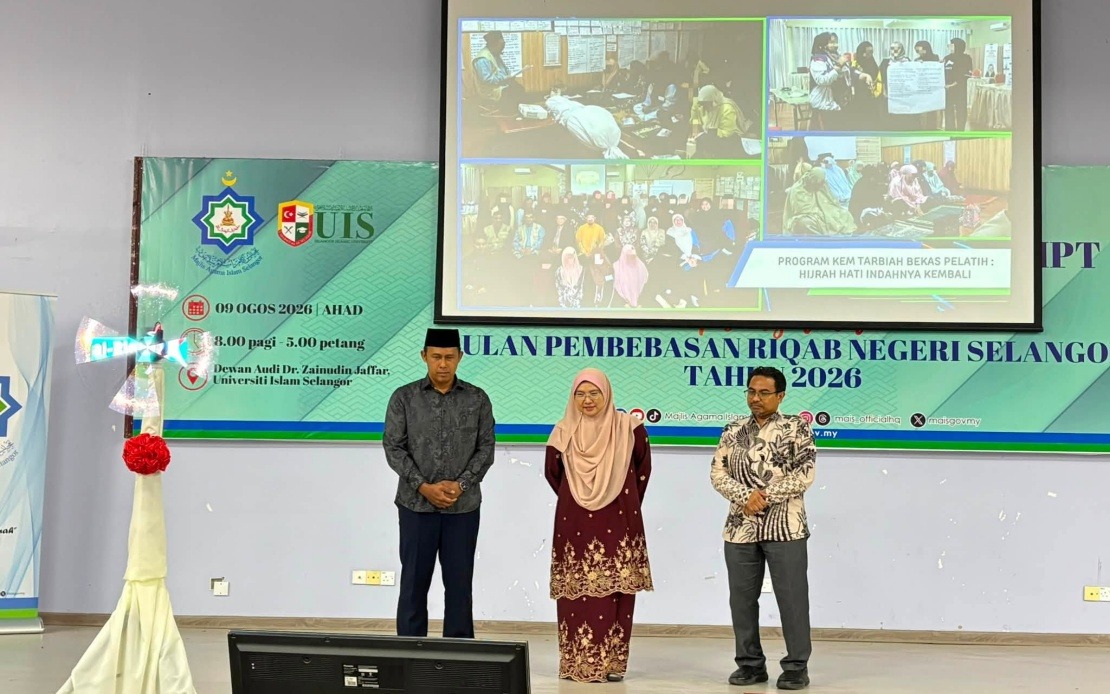
The Selangor Islamic Religious Council (MAIS) has invested substantially in addressing the welfare needs of vulnerable Muslim populations, distributing more than RM17 million in zakat allocations throughout the previous year to support 13,945 individuals designated as asnaf riqab. This significant commitment reflects an institutional recognition that social rehabilitation requires sustained financial resources and coordinated intervention strategies, particularly in Malaysia's largest and most urbanised state.
The funds flowed through an interconnected network of support mechanisms spanning both institutional facilities and community-based programmes. Three dedicated rehabilitation homes operated by MAIS, supplemented by 24 additional riqab rehabilitation facilities, received grant allocations earmarked for resident care and facility operations. Beyond infrastructure support, the council invested in structured intervention pathways including vocational training initiatives, professional counselling services, and direct welfare assistance designed to address the multifaceted needs of programme participants.
The momentum has accelerated into the current year, with the first half of 2026 already witnessing assistance extended to 1,656 additional individuals through RM4.1 million in zakat distributions. This midyear figure suggests an annualised trajectory approaching or potentially exceeding previous expenditure levels, indicating either increased need within Selangor's vulnerable populations or expanded programme reach as MAIS consolidates its service delivery infrastructure. The allocation demonstrates a strategic commitment to continuous engagement rather than episodic intervention.
A critical enabler of this support system comprises the appointment of 213 Al Riqab guides tasked with providing individual mentorship and pastoral support. These guides represent a human-centred approach to rehabilitation, moving beyond material assistance to encompass relationship-based intervention and spiritual guidance. Their deployment suggests MAIS recognises that sustainable transformation requires sustained personal engagement and culturally-rooted counselling adapted to Islamic frameworks and principles.
The classification of asnaf riqab, formally established through a 2012 fatwa, encompasses individuals contending with intersecting social and spiritual challenges. Drug addiction represents a primary concern, reflecting broader substance abuse patterns affecting Malaysian communities. The inclusion of individuals experiencing gender identity or sexual orientation questions indicates institutional engagement with contemporary social complexities, though within a framework defined by Islamic jurisprudence. Muslims classified as having deviated from religious orthodoxy constitute another cohort receiving targeted support, reflecting theological and pastoral dimensions of rehabilitation programming.
This year's Riqab Liberation Month Campaign, extending throughout August, represents an attempt to shift discourse around asnaf riqab from stigma toward social responsibility and collective action. By designating an entire month to awareness initiatives, MAIS signals that rehabilitation succeeds only through broader community understanding and participation. The campaign architecture encompasses diverse stakeholder engagement, from informational sessions and guidance forums to structured seminars addressing social and religious dimensions of rehabilitation.
The initiative carries particular relevance for Malaysian policy considerations regarding welfare provision and religious social services. Unlike secular social welfare systems, religiously-administered rehabilitation maintains spiritual counselling as integral rather than supplementary to material assistance. This approach aligns with Islamic jurisprudential traditions emphasising holistic wellbeing encompassing material, psychological, and spiritual dimensions. The model demonstrates how religious institutions leverage zakat mechanisms not merely for poverty alleviation but for targeted intervention addressing specific social vulnerabilities.
For Selangor specifically, the programme reflects the state's positioning as a laboratory for Islamic administrative innovation within Malaysia's federalised Islamic governance structure. As the nation's economic powerhouse and home to substantial migrant and urban populations, Selangor experiences acute manifestations of social dislocation, addiction, and identity-related challenges. MAIS's response indicates recognition that Islamic governance requires engagement with contemporary social realities rather than retreat into traditional frameworks disconnected from lived experience.
The programme's transparency regarding beneficiary numbers and fund allocation provides a model for accountability within religious institutional spending. By publicly reporting that 13,945 individuals received support through named facilities and specified programme categories, MAIS establishes baseline metrics against which future performance can be measured. This contrasts with opaque charitable spending and establishes expectations for ongoing documentation and impact assessment within Malaysia's Islamic administrative ecosystem.
The economic dimension merits attention, as substantial zakat allocation toward social rehabilitation represents a deliberate prioritisation of preventative and restorative spending over alternative religious applications. In Islamic jurisprudence, zakat funds serve multiple purposes including poverty relief, administration, and community welfare. MAIS's emphasis on rehabilitation suggests institutional judgment that investing in returning troubled individuals toward productive social participation generates long-term community benefits justifying intensive per-capita spending.
Broader Southeast Asian patterns reveal comparable institutional responses to social fragmentation accompanying rapid urbanisation and economic transition. Religious councils across Muslim-majority states face escalating demand for rehabilitation services as traditional family and community structures weaken. MAIS's professionalised approach, incorporating trained guides, structured curricula, and monitored outcomes, represents institutional capacity-building that potentially influences best practices across the region's Islamic administrative networks.
The sustainability question remains salient, particularly regarding continued zakat revenue growth matching expanding service demand. As Selangor's population increases and urbanisation intensifies, rehabilitation needs may escalate beyond historical trends. MAIS faces strategic decisions regarding programme prioritisation, cost-efficiency innovations, and potential partnerships with government health services or secular NGOs despite philosophical differences, ensuring vulnerable populations remain supported regardless of funding trajectories.

