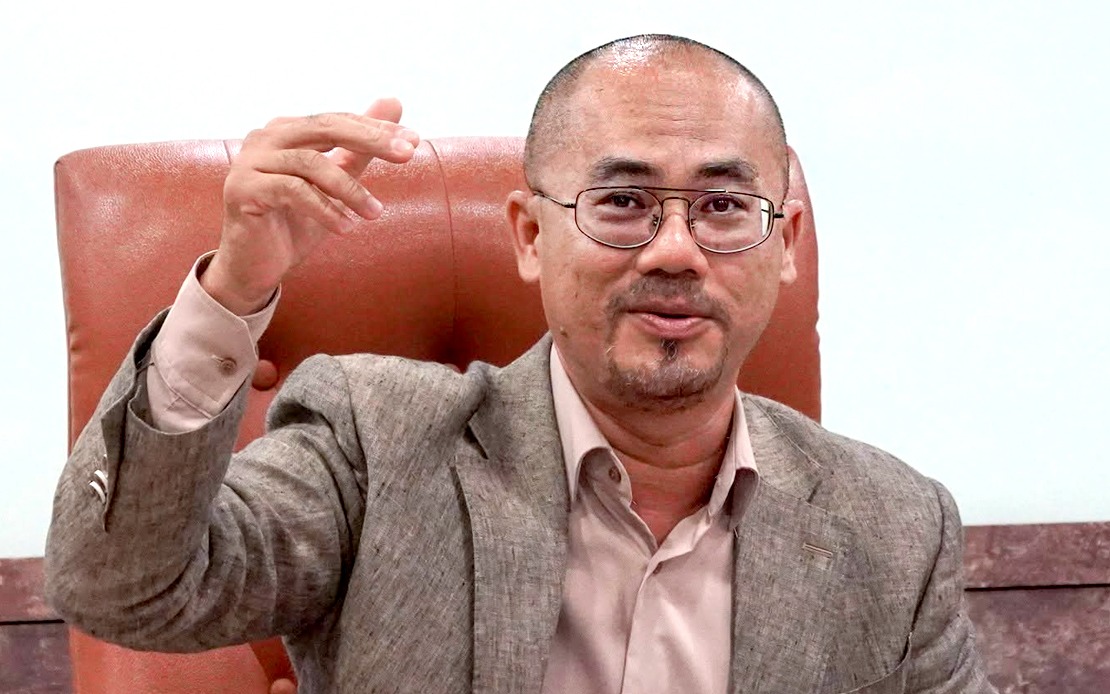
The Perak Islamic Religious and Malay Customs Council (MAIPk) has moved to quash claims circulating on social media that it had instructed traders to vacate their business premises at Jalan Panglima Bukit Gantang Wahab in Ipoh. The clarification came from chief executive officer Syamsul Hazeman Md Salleh, who stressed that a notice issued to traders was intended solely to explain the council's position regarding infrastructure problems affecting the site, not to enforce any eviction.
According to Syamsul Hazeman, the core issue revolves around a damaged main water pipeline and accumulated water bills totalling approximately RM100,000. Rather than an arbitrary decision, the council had outlined its strategy during a structured engagement with traders on July 14, explaining that a temporary water disconnection would be necessary to allow repair contractors to address the leaking infrastructure. This context is crucial for understanding the situation, as the disconnection represents a maintenance requirement rather than a punitive measure.
The confusion appears to have originated from a Threads post claiming that MAIPk had cut water supplies without providing traders with proper notice or a directive to cease operations. Syamsul Hazeman's explanation challenges this narrative by detailing the procedural steps taken to communicate with affected business owners beforehand. The council issued its clarification during the closing ceremony of the 2026 Perak State Mosque Committee Convention at the Casuarina Convention Centre, underscoring the gravity with which MAIPk viewed the misinformation.
A particularly important detail in MAIPk's account is that the outstanding debt was not accumulated through trader consumption. Instead, the arrears stem from systemic problems with the main distribution pipeline supplying the entire premises. Syamsul Hazeman made clear that individual traders have been meeting their own water usage obligations, suggesting that the financial burden was inherited by the council rather than created by the current occupants. This distinction matters significantly for traders who might have feared being held responsible for debts beyond their control.
MAIPk's assumption of ownership over the site in 2024 placed the council in an unexpected position, as the organization discovered post-acquisition that long-standing infrastructure and financial liabilities had been unaddressed. The RM100,000 debt represents a substantial burden for a religious council, particularly given restrictions on how such organizations can deploy their funds. Syamsul Hazeman emphasized that zakat and waqf allocations, which form the primary revenue sources for Islamic councils, cannot be legally applied toward resolving utility arrears, constraining the council's immediate options.
Currently, MAIPk is engaged in negotiations with the Perak Water Board to devise a solution to the accumulated bills and infrastructure damage. The council has also sought guidance from the state government, recognizing that the scale and nature of the problem exceeds its institutional capacity to resolve independently. This collaborative approach acknowledges the complexities involved in untangling years of unpaid charges and determining responsibility for repairs to critical water infrastructure.
Once the outstanding payment matter reaches resolution, MAIPk intends to proceed with necessary repairs before establishing fresh commercial lease arrangements with traders through updated contracts. This suggests a commitment to regularizing the relationship between the council and business operators on the premises, moving beyond the current crisis toward a more stable operating framework. The council's emphasis on new contractual terms indicates recognition that the previous arrangement may have lacked sufficient clarity or protective mechanisms for all parties involved.
Another consideration clouding the situation is the planned construction of the Perak Islamic Religious Department Complex at the same location. Syamsul Hazeman indicated that should this development proceed, traders would eventually need to vacate to make way for the project. However, he acknowledged uncertainty regarding timelines, as the decision falls within the state government's purview rather than MAIPk's authority. This future contingency adds another layer of complexity for traders contemplating their long-term operations at this site.
For traders currently operating at Jalan Panglima Bukit Gantang Wahab, the MAIPk explanation provides reassurance that the immediate threat of eviction is not imminent, though longer-term uncertainties remain. The water supply issue, while disruptive, appears addressable through administrative channels rather than representing a predetermined closure scenario. The council's willingness to publicly detail its position and engage with traders suggests an institutional commitment to finding workable solutions rather than implementing coercive measures.
The episode highlights broader challenges facing Malaysian religious institutions managing commercial properties while simultaneously addressing aging infrastructure and mounting debts. MAIPk's experience demonstrates how inherited liabilities can create operational crises that affect not only the institution but also dependent small business operators who have little visibility into underlying problems. The situation also underscores the importance of transparent communication between property owners and tenants, particularly when technical issues require temporary service interruptions.
Looking forward, how effectively MAIPk navigates this situation could establish a template for other religious councils facing similar circumstances. The council's emphasis on collaborative problem-solving with government agencies and traders, rather than unilateral action, suggests recognition that sustainable outcomes require stakeholder consensus. For Southeast Asian observers, the case illustrates the intersection of religious institutional management, urban commercial activity, and infrastructure governance in developing economies.

