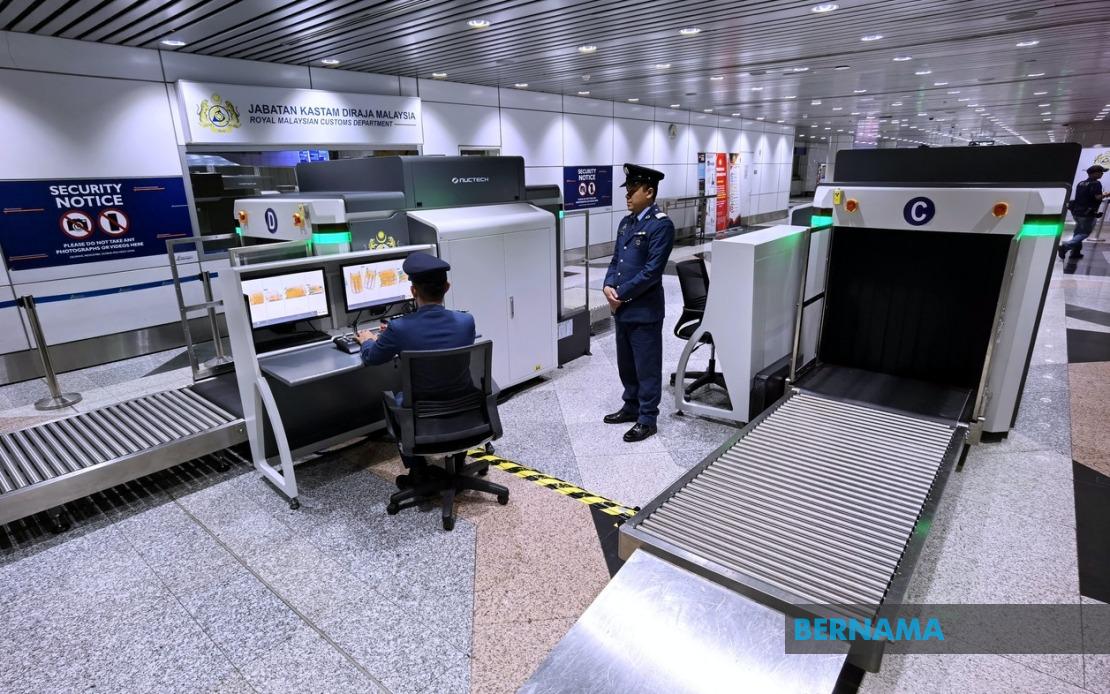
Malaysia Airports Holdings Bhd (MAHB) has doubled down on its commitment to work alongside enforcement agencies in protecting the country's borders from illegal activity, responding to recent developments in a high-profile drug case involving a Malaysian pilot detained in Indonesia. The airport operator's statement underscores the complex coordination required between multiple government bodies to combat smuggling at international transit points, a persistent challenge across Southeast Asia where geographical proximity and high passenger volumes create vulnerability to trafficking operations.
The case centres on a 39-year-old Malaysian pilot arrested on July 29 in Indonesia after arriving from Malaysia with a substantial narcotics cache. Indonesian authorities reported seizing approximately 70,114 ecstasy pills and four grammes of methamphetamine, valued at around Rp60 billion. Preliminary investigation findings suggested the suspect had engaged in repeated smuggling runs into Indonesia and potentially operated as part of a broader international trafficking network. The incident has reignited scrutiny around screening procedures at major Southeast Asian hubs and raised questions about how aviation personnel, with routine airport access, might exploit security vulnerabilities.
MAHB clarified the institutional boundaries governing security responsibilities at Kuala Lumpur International Airport (KLIA). The airport operator's Aviation Security (AVSEC) division focuses explicitly on threats to civil aviation itself—explosives, weapons, and devices designed to compromise aircraft integrity or passenger safety. The baggage handling infrastructure implements rigorous protocols designed around these aviation-specific threats, with all checked baggage, whether belonging to passengers or crew members, subjected to standardised security screening before departure. This distinction between aviation security and customs enforcement proves critical: AVSEC operates within a narrower mandate than general law enforcement.
The detection and prosecution of narcotics offences that do not directly jeopardise flight safety falls to specialist law enforcement bodies operating independently within airport premises. The Royal Malaysia Police (PDRM) and the Royal Malaysia Customs Department hold primary responsibility for investigating drug trafficking, contraband movement, and related violations, while the Department of Wildlife and National Parks manages wildlife trafficking matters. MAHB functions as a facilitating partner, providing access and operational support for these agencies to conduct investigations within airport boundaries while maintaining aviation security protocols. This separation of responsibilities reflects international best practice but also creates coordination challenges when enforcement operations must occur in time-sensitive environments.
Between January and July this year, the collaborative framework between MAHB's AVSEC team and PDRM has proven relatively effective at the operational level. The two organisations jointly intercepted more than 30 smuggling attempts involving illegal substances transiting through KLIA during this seven-month window. This statistic, whilst demonstrating some success in detection capabilities, simultaneously illustrates the volume of trafficking attempts hitting Malaysian airports—an average of more than four interceptions monthly suggests systematic exploitation of transit routes rather than isolated incidents. The figure raises uncomfortable questions about how many attempts succeed undetected and what proportion of international narcotics traffic flows through Malaysian hubs.
The pilot case presents particular complications because aviation personnel occupy a privileged position within airport security architecture. Crew members undergo different screening protocols than regular passengers and frequently move through restricted areas with minimal additional checks. Their familiarity with airport layouts, security checkpoint locations, and customs procedures potentially enables more sophisticated smuggling methodologies. International aviation security standards struggle to balance legitimate operational requirements for crew mobility against the security imperative to prevent insider threats. The incident suggests that even sophisticated screening systems may underestimate risks posed by individuals with insider knowledge and recurring airport access.
The Civil Aviation Authority of Malaysia (CAAM) has initiated a separate regulatory investigation focusing on whether established aviation security procedures were properly executed throughout the incident. CAAM's chief executive, Datuk Capt Norazman Mahmud, indicated the probe would examine both the airline's adherence to security requirements and KLIA's screening processes from a regulatory compliance standpoint. This investigation operates independently from criminal proceedings and focuses on systemic weaknesses rather than individual culpability. Such post-incident reviews often identify procedural gaps, training deficiencies, or equipment malfunctions that facilitated the violation, potentially leading to enhanced protocols across the aviation industry.
The case carries broader implications for Southeast Asian aviation hubs competing for regional traffic and investment. Enhanced security measures, whilst necessary for border protection, increase operational costs and processing times that can influence passenger experience and airline routing decisions. Malaysia's position as a major regional hub means that overly restrictive security implementations could drive traffic to competing airports in Singapore, Thailand, or Indonesia. Conversely, insufficient security measures damage international confidence in Malaysian operations and attract greater scrutiny from aviation regulatory bodies and source/destination countries. MAHB must navigate this commercial-security tension while maintaining the interagency partnerships essential for effective enforcement.
The international dimension of the case—involving Indonesian authorities, Malaysian aviation personnel, and suspected connections to broader trafficking networks—illustrates how narcotics enforcement increasingly requires cross-border cooperation. Malaysian airports serve not merely as origin-destination points but as transit hubs for regional traffic connecting Southeast Asia to Australia, East Asia, and beyond. Trafficking syndicates exploit this connectivity by routing contraband through multiple jurisdictions, requiring law enforcement agencies to coordinate investigations across sovereign boundaries with varying legal frameworks and enforcement priorities. The CAAM's regulatory review and PDRM's criminal investigation will likely inform international aviation security discussions within ASEAN and globally.
MAHB's reinforced commitment to enforcement cooperation, whilst rhetorically reassuring, ultimately depends on resource allocation and institutional capacity. Airport operators across Southeast Asia frequently report that expanded security responsibilities strain existing budgets and staffing levels. The balance between MAHB's commercial imperatives to maintain efficient passenger processing and its support obligations toward enforcement agencies requires ongoing calibration. The pilot case will likely prompt investment in advanced screening technologies, enhanced crew vetting procedures, and increased AVSEC staffing—expenses ultimately reflected in airport fees and airline costs that consumers ultimately bear through ticket pricing.
Looking ahead, the incident highlights persistent vulnerabilities in aviation security despite decades of investment and regulatory development. No screening system achieves perfect effectiveness, and determined individuals with insider knowledge and sufficient motivation will continue attempting to exploit loopholes. The challenge for Malaysian authorities involves maintaining robust border protection while preserving the operational efficiency and international competitiveness that underpin KLIA's role as a regional aviation leader. The continued collaboration between MAHB, PDRM, Customs, and CAAM will prove essential in addressing these competing imperatives, though success ultimately requires sustained commitment to both enforcement and security investment across multiple organisations.

