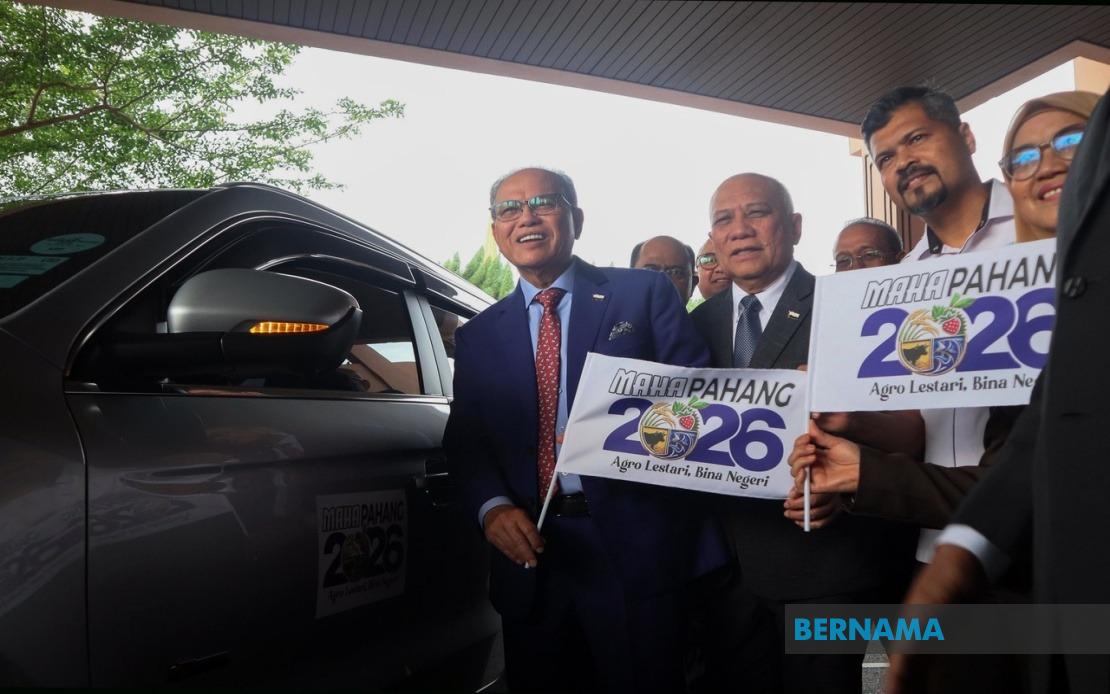
Pahang's flagship agricultural exhibition, MAHA Pahang 2026, is gearing up to become a significant economic and promotional event for the state's farming sector, with organisers projecting visitor numbers exceeding 100,000 people and total sales reaching RM1.3 million. Menteri Besar Datuk Seri Wan Rosdy Wan Ismail unveiled the ambitious targets during a flag-off ceremony at the Bera District and Land Office, formally launching preparations for the four-day showcase scheduled to run from July 30 to August 2 at Dataran Raub.
The event represents a substantial commitment from the Pahang state government to elevate its agricultural profile and support rural entrepreneurs. The participation of approximately 100 farmers, agribusiness operators, and agricultural service providers signals confidence in the sector's growth potential within the state. For many rural communities in Pahang, such exhibitions serve as vital platforms to showcase traditional and modern farming techniques, connect with consumers, and expand market reach beyond immediate geographical boundaries.
To incentivise attendance and boost visitor engagement, the state government has structured an attractive lucky draw mechanism featuring high-value prizes that reflect Pahang's commitment to rewarding public participation. The top prizes—a Wagyu cow and a Perodua Bezza vehicle—represent a deliberate strategy to generate excitement and media attention. These prizes underscore the event's positioning as more than a routine agricultural showcase; it functions as a marketing vehicle for the state's economic initiatives and rural development aspirations.
The Wagyu cattle prize carries particular significance for Pahang, signalling support for premium livestock breeding programmes that have gained traction among progressive farmers in Malaysia. Such initiatives help modernise the state's agricultural base while maintaining traditional farming values. The inclusion of a Perodua Bezza demonstrates synergy between the automotive and agricultural sectors, reflecting broader economic integration within the state's development framework.
Wan Rosdy's public acknowledgement of Agriculture and Food Security Minister Datuk Seri Mohamad Sabu and the event committee chairman reflects the multi-layered governance structure required to execute large-scale agricultural exhibitions. Federal-state cooperation on food security initiatives has become increasingly important as Malaysia pursues self-sufficiency targets in critical agricultural commodities. MAHA Pahang 2026 embodies this collaborative approach, bringing together resources and expertise from both administrative levels.
The exhibition's educational component—providing information on emerging crop varieties and agricultural innovations—addresses a critical need within Malaysia's farming community. Rural extension services and knowledge transfer remain essential for encouraging adoption of sustainable and productive farming practices. By dedicating space to crop research outcomes and horticultural innovations, MAHA Pahang 2026 positions itself as a knowledge hub rather than merely a commercial transaction venue.
For Malaysian consumers, the event offers a rare opportunity to engage directly with agricultural producers and understand the journey from farm to table. This transparency strengthens consumer trust in domestic food systems and encourages consumption of locally-grown products—a strategic objective aligned with Malaysia's broader food security policies. The RM1.3 million sales target, while significant, likely represents only a fraction of the event's broader economic impact, as visitors may establish ongoing commercial relationships and distribution channels extending well beyond the exhibition period.
Pahang's investment in agricultural promotion through MAHA reflects the state's recognition that rural prosperity drives overall economic stability. As Malaysia navigates economic diversification pressures, maintaining a vibrant agricultural sector in states like Pahang remains politically and economically significant. Agricultural exhibitions function as tangible demonstrations of government commitment to farmers and rural communities, particularly important in constituencies where agriculture remains the primary economic base.
The logistics involved in organising such a large-scale event—from vendor coordination to visitor management across four days—demand substantial planning and resource allocation. The convoy flag-off involving twenty government vehicles demonstrates the administrative machinery mobilised to ensure success. This visible government presence signals to stakeholders that MAHA Pahang 2026 enjoys high-level political backing and institutional support.
For Southeast Asian agricultural trade perspectives, events like MAHA Pahang also function as soft platforms for regional cooperation. Neighbouring countries' agricultural sectors may find opportunities to explore market linkages and knowledge exchange through Malaysian showcase events. The RM1.3 million sales figure, while state-focused, contributes to regional agricultural trade dynamics and demonstrates Malaysia's internal market strength for agricultural products.
The timing of MAHA Pahang 2026 in late July and early August positions the event during a period when farmers are transitioning between planting cycles, making it strategically advantageous for product launches and agricultural input sales. Vendors representing seed suppliers, fertiliser companies, and farm machinery manufacturers typically see strong engagement during such periods, amplifying the exhibition's commercial potential.
Moving forward, the success of MAHA Pahang 2026 may establish a template for similar exhibitions across other Malaysian states, particularly those with substantial agricultural bases. Success metrics will likely extend beyond the stated sales and visitor targets to include media coverage, vendor satisfaction, and measurable adoption of showcased innovations by participating farmers. The exhibition ultimately serves as both immediate revenue generator and long-term investment in Pahang's agricultural sector development.

