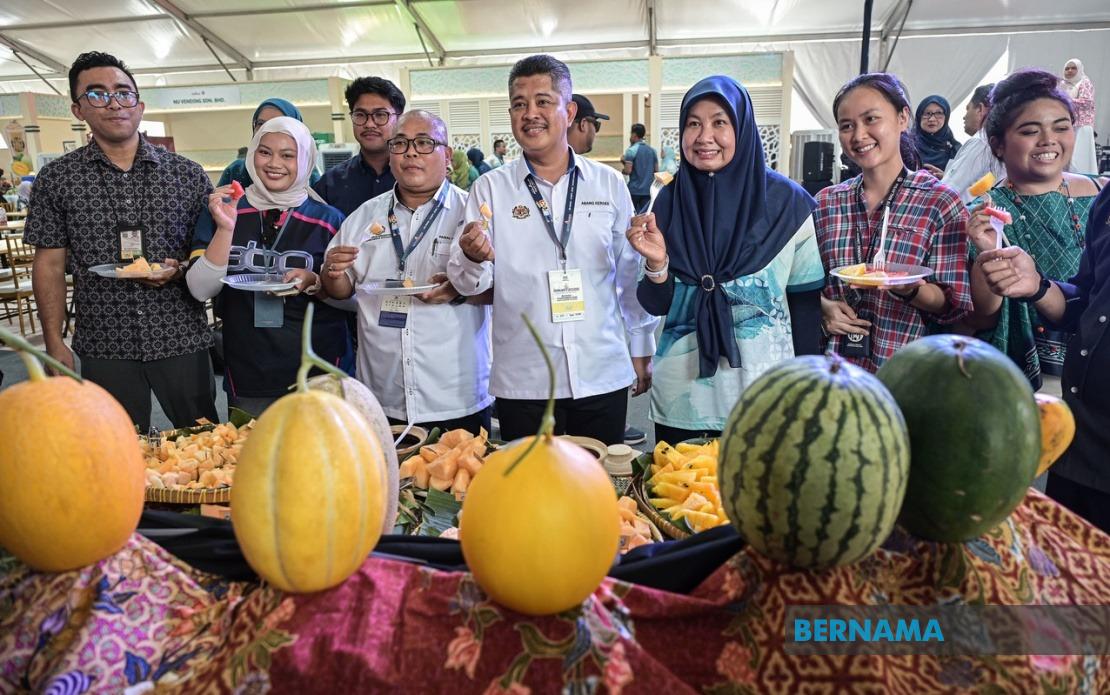
Malaysia's horticultural sector is poised to gain fresh momentum with the official unveiling of a newly developed melon variety tomorrow at the opening of Malaysia Agriculture, Horticulture and Agrotourism Exhibition (MAHA) 2026. The fruit has been designated as the festival's symbolic produce for this biennial showcase, marking a significant milestone in domestically-driven agricultural innovation. The launch will be officiated by Minister of Agriculture and Food Security Datuk Seri Mohamad Sabu, who will simultaneously announce the variety's official name, cementing the government's commitment to advancing the nation's farming capabilities through targeted product development.
The three-year collaborative effort between the Federal Agricultural Marketing Authority (FAMA) and Malaysian entrepreneurs represents a methodical approach to addressing contemporary market demands rather than pursuing incremental improvements alone. FAMA chairman Abang Ahmad Kerdee Abang Masagus emphasized the symbolic importance of establishing a recognizable fruit icon for MAHA, noting that the absence of such representation would weaken the exhibition's identity. Beyond ceremonial significance, however, the new variety embodies practical responses to evolving consumer behaviour patterns that have been reshaped by changing lifestyles and purchasing preferences across urban and semi-urban households throughout Malaysia.
The distinctive characteristics of this melon variety specifically target the segment of Malaysian consumers seeking convenient, individually-sized portions that deliver quality without premium pricing. Measuring approximately 1.3 kilogrammes with an attractive netting pattern on its exterior, the melon achieves a sweetness concentration profile of 18 Brix—a measurement indicating superior sugar content compared with competing varieties currently distributed through Malaysian markets. The flesh texture demonstrates enhanced crunchiness, a quality parameter carefully refined during the research and development phase to align with local taste preferences and textural expectations that distinguish Malaysian consumer standards from international alternatives.
Market positioning has been carefully calibrated around a target retail price of approximately RM15 per melon, a pricing strategy that balances accessibility with premium quality perception. This price point reflects deliberate calculations regarding production costs, distribution margins, and consumer purchasing power across different demographic segments. The compact size addresses a fundamental practical challenge facing modern Malaysian households—the difficulty of accommodating larger melons in domestic refrigeration units and the waste associated with consuming oversized fruits within smaller family structures. FAMA director-general Faisal Sulaiman confirmed that extensive market research conducted throughout the three-year development cycle enabled the authority to identify and respond to these specific consumer preferences with evidence-based product specifications.
The selection of a mini-sized variety demonstrates sophisticated understanding of demographic and household consumption patterns that have progressively shifted toward convenience-oriented purchasing decisions. Urbanisation and dual-income family structures have fundamentally altered the buying behaviour of Malaysian consumers, who increasingly prioritise ready-to-eat or ready-to-use products that minimise preparation time and spoilage risk. The portability of this melon variety—ease of carrying from market to home, and from refrigerator to dining table—addresses genuine practical barriers that previously discouraged regular melon consumption among time-constrained urban professionals and smaller households accustomed to international convenience food standards.
FAMA's commitment to maintaining high freshness and sweetness levels throughout the supply chain reflects recognition that quality consistency significantly influences repeat purchasing behaviour. Unlike many commodity fruits vulnerable to deterioration during extended storage and distribution, this melon variety has been optimised for stability and sensory appeal across the typical Malaysian retail environment. The combination of practical portability, reliable quality metrics, and accessible pricing creates a compelling value proposition that extends melon consumption beyond seasonal purchases or special occasions into regular household dietary patterns—a fundamental shift that could meaningfully expand the domestic melon market's overall size and revenue generation.
The broader commercial scale of MAHA 2026 will substantially amplify the visibility and trial opportunities for this new variety. FAMA plans to supply more than 150,000 melon units throughout the ten-day exhibition, encompassing nearly 100 locally and internationally developed varieties available for sampling and purchase by visiting consumers. This exhibition framework functions as both marketplace and product laboratory, enabling direct consumer feedback and real-time sales data that provide invaluable insights for subsequent cultivation and marketing strategy refinement. The simultaneous presence of multiple melon varieties allows visitors to conduct comparative taste and texture assessments, creating informed consumer appreciation for the specific qualities embedded within the newly launched domestic variety.
Participation from approximately 100 local and international entrepreneurs creates a competitive environment that challenges the new melon variety to establish market differentiation through genuine quality advantages rather than marketing rhetoric alone. Direct comparison against imported alternatives and other domestically-developed options creates transparent conditions for evaluating whether FAMA's three-year investment has successfully generated commercially viable innovation capable of capturing meaningful market share. This competitive transparency serves Malaysian consumers well, ensuring that promotional claims are substantiated by actual product performance and comparative analysis conducted by consumers themselves rather than relying solely on manufacturer-controlled messaging.
The economic implications for Malaysian farming communities and agricultural entrepreneurs warrant careful consideration within broader agricultural sector development strategies. Successful commercialisation of this melon variety could establish a significant precedent for future FAMA-directed innovation projects, demonstrating that sustained research investment combined with entrepreneurial collaboration generates economically viable products capable of capturing consumer adoption at scale. The value chain benefits extend beyond individual farmers cultivating this specific variety to encompass distributors, logistics providers, and retail establishments throughout Malaysia's agricultural product supply network. This distributed economic impact potentially strengthens overall agricultural sector viability during periods when commodity price volatility threatens farming community income stability.
MAHA 2026, hosted at the Malaysia Agricultural Expo Park Serdang (MAEPS) and operating through next Sunday as a ten-day exhibition, represents the nation's premier biennial platform for showcasing agricultural innovations and modern farming technologies. The exhibition structure integrates agrotech demonstrations, state-level pavilions, direct farm sales, and large-scale participation from both domestic and international agricultural stakeholders into a comprehensive ecosystem that facilitates knowledge exchange, business development, and consumer education simultaneously. The strategic decision to feature this newly developed melon variety at the exhibition's opening signals FAMA's confidence in the product's market readiness and commercial potential while leveraging the exhibition's visibility to accelerate market penetration and consumer awareness building among Malaysia's diverse regional markets.
Successful adoption of this mini melon variety could establish important precedent for how Malaysian agricultural institutions approach product development strategy in responding to specific market segments. Rather than pursuing generic improvements applicable across broad consumer categories, FAMA's targeted approach identifies underserved demographic segments and develops precisely calibrated products addressing their particular needs and constraints. This market-responsive innovation methodology contrasts with supply-driven agriculture oriented toward maximising production volumes regardless of actual consumer demand patterns. As Malaysian consumers increasingly demonstrate sophisticated preferences reflecting international exposure and elevated quality expectations, domestic agricultural development strategies must similarly evolve toward precision-targeted innovation that acknowledges diverse consumer segments rather than pursuing monolithic production approaches.

