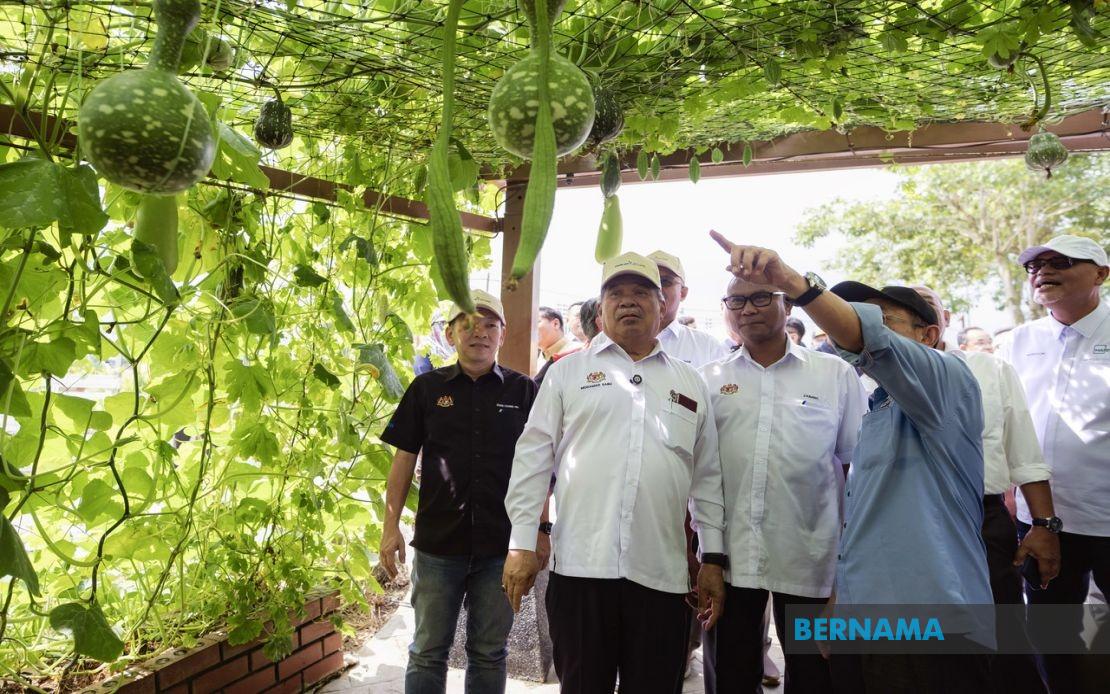
With final touches underway at the Malaysia Agro Exposition Park in Serdang, preparations for the Malaysia Agriculture, Horticulture and Agrotourism Exhibition (MAHA) 2026 have reached approximately 80 per cent completion and are on track to be entirely finished by August 27, according to Agriculture and Food Security Minister Datuk Seri Mohamad Sabu. The exhibition, running from August 28 to September 6, will officially open with Mohamad's remarks and conclude with Prime Minister Datuk Seri Anwar Ibrahim presiding over the closing ceremony.
The major structural work at the venue has already been finished, leaving the organising team to focus on final assembly and display installation across the various exhibition zones. Speaking to journalists following an on-site inspection, Mohamad expressed confidence that the venue would present an impressive and visually striking experience when doors open to visitors. This year's edition carries the theme 'Penciptaan Nilai Demi Keterjaminan Makanan'—translating to value creation for food security—reflecting a strategic pivot toward higher-value agricultural practices and downstream processing opportunities.
A central element of MAHA 2026 is showcasing technological advancement across the sector. The exhibition will highlight modern farm machinery, autonomous agricultural vehicles, and drone applications in crop cultivation ranging from paddy fields to pineapple and melon farms. These technologies mirror adoption patterns already well-established in countries such as China and the Netherlands, where mechanisation and automation have fundamentally transformed farming practices. By bringing such innovations into focus, the exhibition aims to inspire local producers to embrace similar modernisation pathways.
Beyond technology displays, the minister emphasised the importance of value-chain integration within Malaysia's agri-food ecosystem. Rather than stopping at raw material production, farmers and livestock breeders should ideally participate in downstream processing and product development, activities that yield substantially higher profit margins and entrepreneurial opportunities. Raw pineapples, cassava roots, and milk can each be transformed into dozens of differentiated products—juices, flour, cheese, yoghurt—creating openings for small and medium enterprises throughout the agricultural value chain. This approach aligns with global best practices and positions local participants to capture greater economic benefit from their production efforts.
Culture and heritage will also feature prominently throughout the 10-day event. A dedicated Perkampungan Abang Mat (traditional village space) will host daily rotating programmes featuring 'rewang', a communal cooking tradition central to Malaysian heritage, alongside displays of historical foodways and traditional games. This deliberately creates a relaxed, informative atmosphere distinct from purely commercial exhibitions, encouraging multigenerational attendance. Senior visitors and families with children will find opportunities to engage with leisure activities including congkak and other traditional games, broadening appeal beyond agribusiness professionals.
Incentive structures have been woven into the visitor experience to drive attendance and engagement. Daily lucky draw prizes include motorcycles—20 units distributed across the event's span—alongside electrical appliances as secondary prizes. These mechanisms, while modest in scale, create consumer excitement and repeat visitation motivation, particularly among younger demographic segments the organisers aim to reach through educational programming.
Projected visitor numbers suggest MAHA 2026 will command substantial public interest, with organisers anticipating exceeding four million attendees. The exhibition will simultaneously host approximately 2,000 exhibitors representing both domestic and international interests. Notably, 14 countries will participate, with Kenya establishing a pavilion for the first time. This international dimension extends beyond commercial display to facilitate technology exchange and bilateral cooperation exploration between participating nations and Malaysia. For participating countries, the platform offers valuable exposure to Southeast Asian agricultural markets and networking opportunities with local stakeholders.
Young people represent a strategic target audience, with the ministry expecting to attract around 800,000 youths through dedicated programming focused on automation, technological innovation, and sector modernisation. This youth engagement directly supports workforce development objectives, particularly as Malaysian agriculture confronts persistent labour shortages and the need to cultivate tech-savvy professionals capable of operating sophisticated farming systems. The ministry is actively pursuing formal approval from the Education Ministry to integrate MAHA activities into school co-curricular frameworks, potentially transforming the exhibition into an educational institution and career exploration platform for students.
The ambition behind MAHA 2026 reflects broader strategic priorities within Malaysia's agricultural sector. As global food security pressures intensify and supply-chain vulnerabilities become increasingly apparent, modernisation and productivity enhancement are no longer optional upgrades but essential competitive requirements. By positioning the exhibition around technological integration and value-chain sophistication, policymakers signal commitment to transitioning agriculture beyond subsistence or commodity-dependent models toward high-margin, knowledge-intensive production systems. The event therefore serves not merely as a trade showcase but as a policy instrument communicating government direction to farmers, investors, entrepreneurs, and international partners alike.
For Malaysian stakeholders across the agri-food ecosystem, MAHA 2026 represents both immediate commercial opportunity—networking, supplier sourcing, market exposure—and longer-term strategic signposting. The exhibition's emphasis on downstream processing and value addition particularly resonates with small-holder farmers seeking to escape commodity price volatility through differentiated products and niche markets. Similarly, entrepreneurs considering entry into agricultural processing will encounter potential supply partners and technological solutions under one venue. The international participation dimension opens possibilities for technology transfer partnerships and export market connections.
As final preparations continue through late August, the exhibition stands as concrete manifestation of Malaysia's commitment to agricultural modernisation and food security assurance. The convergence of technology showcase, heritage celebration, youth engagement, and international cooperation within a single 10-day event demonstrates a holistic approach to sector development. Success here—measured in attendance, business outcomes, and educational impact—will likely inform future exhibition strategies and signal to industry stakeholders and potential investors the seriousness with which government approaches agricultural transformation.

