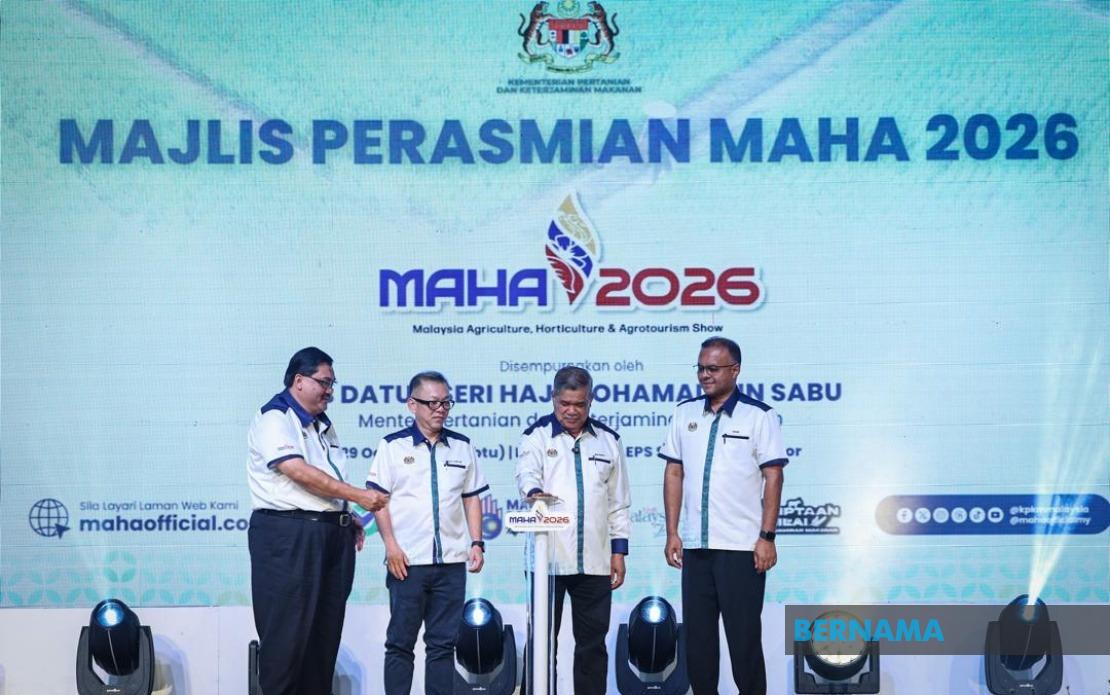
The Malaysia Agriculture, Horticulture and Agrotourism Show (MAHA) 2026, now underway at the Malaysia Agro Exposition Park Serdang (MAEPS), represents a pivotal recalibration of the nation's farming ambitions toward environmental stewardship and climate resilience. Agriculture and Food Security Minister Datuk Seri Mohamad Sabu framed the biennial showcase as more than a trade event—characterising it instead as a platform signalling the government's commitment to positioning sustainability not as a peripheral concern but as central to Malaysia's agricultural transformation.
The sustainability imperative, according to Mohamad, operates on multiple fronts with direct relevance to Malaysian consumers and policymakers. By embedding regenerative practices, efficient energy deployment, and systematic waste reduction into farming operations, the sector can meaningfully contribute to domestic carbon emission reductions while simultaneously addressing the long-term economic pressures of climate-driven food price volatility. For Malaysia's agrifood industry, which remains heavily reliant on imports despite its tropical agricultural heritage, the shift toward sustainable intensification offers a pathway to strengthen market position both domestically and in export-oriented supply chains increasingly governed by environmental compliance standards.
Mohamad's invocation of the Green Book Policy—a foundational but largely dormant framework dating to 1974 under the administration of the late Tun Abdul Razak—signals an attempt to revitalise a nationalist agenda around food self-sufficiency. That policy aimed to curtail import dependency and moderate living costs through expanded domestic production. Today's invocation carries particular resonance given contemporary concerns over food price inflation and geopolitical supply chain fragmentation. The minister's emphasis on rekindling this spirit suggests the government views agricultural resilience as integral to broader economic stability.
The modernisation agenda outlined by Mohamad encompasses targeted sectoral initiatives designed to raise productivity and competitiveness. Fisheries development centres on mechanising vessel fleets and advancing aquaculture technology, particularly in high-value species cultivation. The livestock sector is receiving similar attention through farm modernisation, technology adoption in feed production, and strengthened disease surveillance systems. These interventions reflect a recognition that Malaysia's comparative agricultural advantage in tropical products and aquatic resources remains underexploited without contemporary infrastructure and technical capacity.
The scale of MAHA 2026 underscores official expectations for the event's catalytic role. Running from August 28 to September 6, the exposition will host approximately 2,000 exhibitors and project attendance exceeding four million visitors. This magnitude—encompassing both domestic participants and international delegations from fourteen countries—positions the showcase as a significant convening point for sector-wide dialogue and commercial engagement. Mohamad's presence, alongside Deputy Minister Datuk Chan Foong Hin and Ministry Secretary-General Datuk Seri Isham Ishak, reflects the high political priority attached to proceedings.
International cooperation represents a critical dimension of Malaysia's agricultural strategy, with several bilateral and multilateral agreements anticipated to reach finalisation during the event. Yet Mohamad pointedly cautioned against treating such arrangements as ceremonial exercises terminating at signature. His emphasis on translating memoranda of understanding into substantive commercial outcomes—expanded export volumes, capital access for emerging agritech enterprises, and technology transfer mechanisms—reflects frustration with past agreements that yielded limited practical returns. For Malaysian agribusiness, particularly small and medium enterprises and innovative start-ups, these partnerships hold potential for market access and investment capital.
The agritech sector merits particular attention in Mohamad's framing. By positioning start-ups and technology-driven enterprises as intended beneficiaries of international partnerships and investment inflows, the ministry signals recognition that Malaysia's agricultural productivity gains increasingly depend on digital innovation, precision farming methodologies, and data-driven resource management. Southeast Asia's agricultural sector has historically lagged comparable regions in technology adoption, and catalysing investment flows to bridge this gap aligns with broader regional competitiveness imperatives.
For Malaysian readers, the articulation of sustainability as core agricultural policy carries implications extending beyond farming communities. Consumer food prices, environmental quality, rural economic viability, and climate adaptation all intersect with how rapidly and comprehensively the sector adopts sustainable practices. The transition also intersects with Malaysia's renewable energy objectives and climate commitments, as agricultural production accounts for significant resource consumption and emissions.
Mohamad's vision situates Malaysia within broader global trends reshaping agricultural markets. International buyers increasingly impose environmental and sustainability standards on agricultural imports, a dynamic that creates both compliance obligations and competitive opportunities for producing nations demonstrating credible sustainability commitments. By channelling this showcase toward sustainability narrative-building, Malaysia signals alignment with those market trajectories while positioning domestic producers as credible suppliers for environmentally conscious procurement.
The emphasis on food self-sufficiency, though nominally about reducing import bills and economic vulnerability, also carries geopolitical undertones particularly resonant in Southeast Asia. Regional supply chain resilience—especially during pandemics or trade disruptions—has become a recognised strategic priority. Malaysia's capacity to feed itself reduces external economic leverage and hedges against global market shocks. For a nation importing substantial quantities of rice, meat, and other staples, the revival of self-sufficiency ambitions through modernised, sustainable agriculture addresses longstanding structural dependencies.
The convergence of climate imperatives, international market standards, investment opportunities, and food security concerns suggests MAHA 2026 functions simultaneously as a commercial event, policy statement, and recalibration of Malaysia's agricultural self-conception. Whether the sustainability commitments articulated at MAEPS translate into systemic practice across farming communities remains an open question, but the ministerial rhetoric signals mounting governmental recognition that Malaysia's agricultural future depends less on incremental volume increases than on fundamental restructuring toward environmental and economic resilience.
The success of international agreements and partnership mechanisms emerging from the exposition will likely hinge on whether Malaysian enterprises can access promised capital, technology, and market opportunities, and whether sustainability commitments translate into measurable policy changes affecting farming practices, supply chains, and market incentives across the broader agrifood ecosystem.

