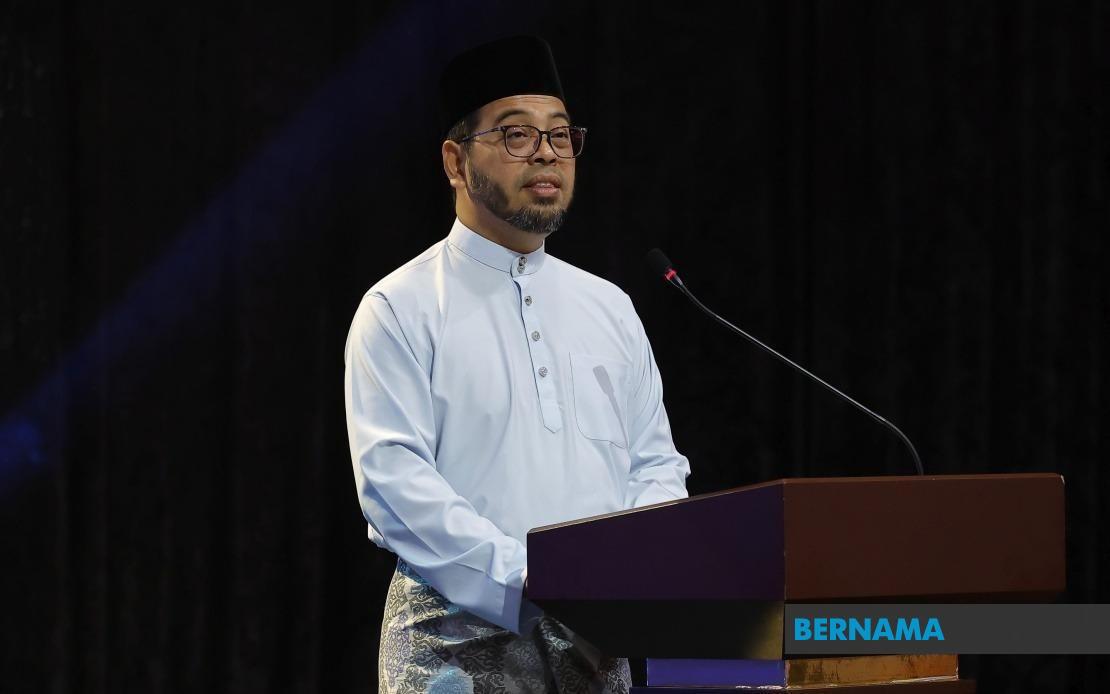
Malaysia's religious affairs minister has underscored the MADANI administration's determination to expand tahfiz education as an integral component of the nation's educational landscape, positioning it as a complementary pathway to conventional schooling rather than an isolated pursuit. Dr Zulkifli Hasan, who serves as Minister in the Prime Minister's Department (Religious Affairs), articulated this vision during the 34th convocation ceremony of Darul Quran (DQ) JAKIM, held in Kuala Lumpur on July 4.
The minister's remarks reflect a broader philosophical shift in how Malaysia approaches Islamic religious education, moving beyond the traditional perception of tahfiz institutions as solely focused on producing Quran memorisers. Instead, the government envisions these establishments as centres of holistic development where students acquire not only exceptional Quranic retention but also critical thinking abilities, professional competencies, and robust moral foundations necessary for meaningful participation in national development. This reorientation acknowledges that in an increasingly complex knowledge economy, religious education must equip graduates with transferable skills and contemporary relevance.
DQ JAKIM's Diamond Jubilee milestone—marking six decades since the institution's founding in 1966—served as the backdrop for articulating this forward-looking agenda. The celebration carries particular significance as it provides an opportunity to assess institutional achievements whilst charting an ambitious trajectory for future growth. Over these six decades, DQ has established itself as a benchmark tahfiz centre, cultivating a reputation for academic excellence and producing graduates who have dispersed across multiple professional domains within Malaysian society.
Statistics presented during the ceremony underscore the institution's extensive reach and influence across the nation's workforce. The 12,633 huffaz (Quran memorisers) produced by DQ have successfully integrated into diverse career paths spanning education, the syariah judiciary, Islamic missionary work (dakwah), academic research, public administration, and various professional sectors. This distribution pattern demonstrates that contemporary tahfiz graduates are not confined to religious roles but occupy significant positions in Malaysia's institutional machinery, contributing expertise that extends well beyond ecclesiastical boundaries.
The original institutional mandate established in 1966 envisioned DQ as a crucible for producing huffaz who would serve as guardians of Islamic knowledge, community leaders capable of addressing societal challenges, and architects of an Islamic civilisation grounded in authentic Quranic understanding. This foundational philosophy continues to resonate, though its application has expanded substantially to accommodate modern professional expectations and national development priorities. The institution's evolution reflects Malaysia's maturing approach to reconciling traditional Islamic scholarship with contemporary educational standards.
The July 4 convocation ceremony itself reflected this multifaceted approach to tahfiz education. A total of 700 graduates received credentials across four distinct academic pathways, each catering to different educational trajectories and career aspirations. The cohort included 37 Bachelor's degree recipients enrolled through a collaborative arrangement with Universiti Sains Islam Malaysia (USIM), indicating institutional partnerships designed to facilitate progression into advanced tertiary education and professional postgraduate study. Additionally, 454 graduates completed the Diploma in Quran and Qiraat programme, representing an intermediate qualification pathway, whilst 204 students finished the Tahfiz certification programme and five completed basic-level tahfiz certificates.
This tiered certification structure reveals a strategic approach to accessibility and personalised educational pathways. By offering credentials at multiple levels—from foundational certificates through to university degrees—DQ accommodates students with varying academic backgrounds, learning capacities, and post-graduation aspirations. Some graduates will transition directly into professional careers, whilst others will pursue further tertiary education. The collaboration with USIM particularly signals institutional recognition that tahfiz excellence need not be compartmentalised from broader Islamic university education, enabling seamless articulation between religious specialisation and wider academic disciplines.
Dr Zulkifli's emphasis on using the Diamond Jubilee as a launchpad for transformation rather than merely retrospective celebration carries important implications for Malaysia's educational policy trajectory. His call to let the legacy of 60 years inspire construction of the next 60 with enhanced excellence suggests that the government perceives tahfiz education not as a stable, historically validated system requiring minimal adjustment, but as a dynamic institutional space requiring continuous innovation. This forward-orientation reflects contemporary global conversations about how religious educational systems can remain relevant whilst preserving their essential spiritual and intellectual foundations.
For Malaysian policymakers, the MADANI government's public commitment to tahfiz strengthening alongside mainstream education addresses longstanding tensions within the national education ecosystem. Malaysia has historically maintained a dual educational structure, with conventional government schools and Islamic religious institutions operating with varying degrees of integration. The government's explicit pledge to develop tahfiz education in parallel suggests a recognition that religious and secular educational aims need not conflict but can mutually reinforce social cohesion, individual development, and national progress when appropriately coordinated.
The recognition extended to DQ JAKIM's leadership and staff during the ceremony acknowledges the significant institutional labour required to maintain educational standards whilst expanding capacity and relevance. Managing a large cohort of students across multiple qualification levels whilst ensuring each graduate achieves competency in Quranic memorisation alongside broader professional capabilities demands sophisticated pedagogical expertise and substantial resource allocation. The minister's acknowledgment of these efforts implicitly commits government support to sustaining and enhancing the institutional infrastructure upon which such outcomes depend.
Regionally, Malaysia's emphasis on developing tahfiz education as a professional pathway with demonstrated employment outcomes may hold relevance for other Southeast Asian nations with Muslim-majority populations. The model of producing graduates who occupy positions across government, education, judiciary, and civil society—rather than concentrating exclusively in religious roles—offers an alternative framework for reconciling Islamic educational traditions with modern nation-state requirements. As regional governments grapple with questions about religious education's role in nation-building, the MADANI government's approach provides a tested example of institutional integration and diversified graduate outcomes.
Looking forward, the success of the MADANI government's tahfiz education agenda will depend substantially on translating these public commitments into sustained resource allocation, teacher development initiatives, and employer engagement. Creating genuine pathways for tahfiz graduates into professional sectors requires not merely institutional goodwill but systematic coordination across educational, civil service, and private sector institutions. The convocation ceremony's celebration of 12,633 alumni serving in varied professional capacities suggests such coordination has achieved measurable success; maintaining momentum will require continuous refinement of qualification standards, curricular relevance, and graduate support mechanisms.

