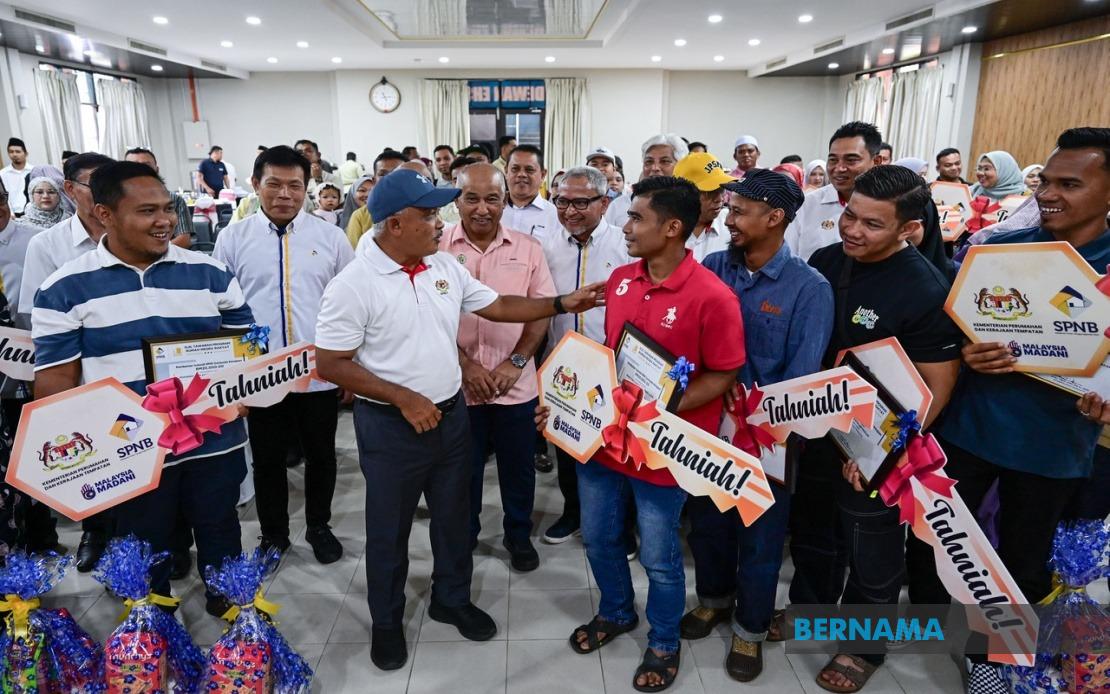
Fifty households across the Kuala Terengganu and Kuala Nerus parliamentary constituencies have benefited from the Rumah Mesra Rakyat (RMR) affordable housing initiative, with the government handing over 30 fully constructed dwellings and issuing 20 offer letters for prospective homeowners on June 28. The programme distribution took place at Dewan Ehsan in Felda Wilayah Timur during a working visit by Housing and Local Government Ministry secretary-general Datuk Dr M. Noor Azman Taib, underscoring the government's latest push to expand homeownership among lower-income groups.
The RMR scheme, managed by Syarikat Perumahan Negara Berhad under the ministry, represents a flagship MADANI initiative designed specifically for landowners who cannot afford to construct proper dwellings independently. Rather than simply delivering structures, the programme functions as a comprehensive intervention aimed at lifting living standards and creating pathways to sustainable property ownership. According to Dr M. Noor Azman, the initiative transcends conventional housing delivery by functioning as a catalyst for broader improvements in family stability and community cohesion across Malaysia's lower-income demographics.
The government has committed substantial resources to expanding the RMR footprint nationwide. Under the 2026 Budget allocation, authorities intend to construct 6,545 new RMR units across the country, representing a significant acceleration in delivery timelines. To date, implementation has reached 3,900 units, of which 2,478 have been completed and transferred to eligible recipients. A further 1,422 units remain under active construction, indicating a robust pipeline of future deliveries that should materialise over the coming months.
Terengganu State has emerged as a major beneficiary of this programme, with 680 RMR units currently in various stages of implementation supported by RM46.67 million in state-level allocation. By May of the previous year, 246 units had reached completion and been handed to qualified recipients, while 154 additional units were progressing through construction phases. This represents meaningful progress in addressing the state's housing affordability challenges, particularly in rural and semi-urban constituencies where land ownership frequently outpaces the financial capacity to develop it.
The Kuala Terengganu parliamentary constituency has seen 34 RMR units integrated into the broader rollout strategy, with 18 properties already transferred to homeowners and another 16 under construction. In the adjacent Kuala Nerus constituency, implementation encompasses 32 units, split between 25 completed properties and seven still in development. These numbers reflect concentrated effort to ensure both urban and peri-urban populations benefit equitably from the programme.
Since the RMR initiative's inception in 2002, the programme has extended housing assistance to more than 80,000 families throughout Malaysia. This two-decade track record demonstrates sustained governmental commitment to addressing housing accessibility, particularly among segments historically excluded from formal property markets. The consistency of delivery across multiple administrations suggests the scheme has proven resilient and adaptable to shifting economic conditions and demographic needs.
The timing of this expansion carries particular significance for Malaysian policymakers as homeownership remains a contentious issue in the cost-of-living debate. Property prices in major metropolitan areas have outpaced wage growth substantially, pushing conventional homeownership beyond reach for working and lower-middle-income households. The RMR programme's focus on individuals already holding land but lacking capital addresses a specific market segment that conventional financing mechanisms often overlook, potentially unlocking substantial equity in underutilised rural and semi-rural properties.
For Terengganu specifically, the programme represents strategic investment in economic stabilisation. The state's economic reliance on sectors such as oil and gas, fishing, and agriculture has historically exposed it to commodity price volatility and seasonal employment disruptions. By facilitating homeownership and improving housing quality among lower-income groups, the state government effectively strengthens household financial resilience and reduces vulnerability to economic shocks. Property ownership serves as collateral and asset base for future borrowing, enabling households to invest in education, healthcare, and entrepreneurial ventures.
The RMR model's emphasis on built quality and safety compliance distinguishes it from informal or inadequately regulated housing developments. By mandating professional construction standards and government oversight, the programme mitigates health risks and property disputes that frequently plague informal settlements. This prevents the perpetuation of substandard living conditions across generational lines and reduces future public health expenditures associated with poor housing quality.
Expanding affordable homeownership also carries macroeconomic implications for regional development. When lower-income households allocate capital to home improvement and maintenance rather than rental payments to external landlords, that spending circulates within local economies, supporting construction workers, material suppliers, and service providers. In rural constituencies like those addressed in this Terengganu rollout, such localised economic stimulus can prove catalytic for broader community development initiatives.
The programme's expansion under the 2026 Budget reflects a deliberate policy choice to prioritise housing accessibility over alternative expenditure priorities. This allocation reflects recognition that stable housing forms foundational infrastructure for educational attainment, health outcomes, and labour productivity. Policymakers across Southeast Asia increasingly acknowledge that treating housing as exclusively a market commodity creates social instability and reduces long-term economic potential, justifying direct government intervention.
Going forward, the success of this expanded RMR initiative will depend on effective implementation capacity across state housing authorities, timely fund disbursement, and responsive grievance mechanisms for beneficiary concerns. As the programme scales nationally, maintaining quality standards while accelerating delivery timelines will test administrative systems. Malaysian observers should monitor completion rates against announced targets and track whether beneficiary satisfaction reflects the programme's stated objectives of delivering safe, comfortable, and genuinely affordable homes for families historically excluded from property ownership pathways.

