The federal government is doubling down on its Ziarah Kasih programme, a grassroots assistance initiative designed to reach vulnerable Malaysians who struggle with poverty, illness, and care responsibilities. During a community engagement event in Mersing on June 23, Abdullah Izhar Mohamed Yusof, political secretary to the Communications Minister, underscored the administration's determination to sustain the scheme as a cornerstone of the Malaysia MADANI vision—a governance philosophy centred on human dignity and collective well-being.
Ziarah Kasih, which translates loosely as "visit of compassion," operates as a targeted welfare mechanism rather than a universal benefits programme. The Department of Information and Komuniti MADANI identifies eligible recipients through systematic outreach, ensuring aid reaches those facing acute distress. By concentrating resources on documented cases of hardship, the government aims to maximise impact while maintaining fiscal discipline—a balancing act increasingly important as Malaysia navigates economic uncertainties and rising cost-of-living pressures across the region.
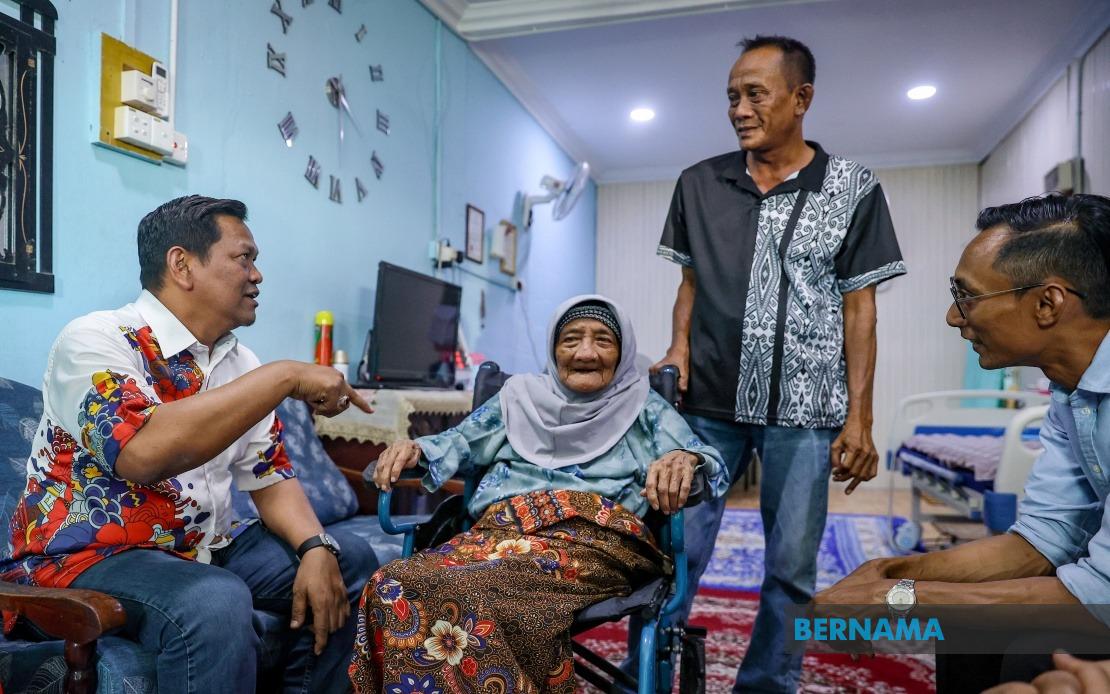
Abdullah Izhar's visit to Mersing exemplified the hands-on approach the administration favours in delivering assistance. Rather than processing applications through bureaucratic channels alone, officials conduct personal visits to beneficiaries, delivering contributions and tangible support such as healthcare equipment. This direct engagement serves a dual purpose: it ensures aid reaches those most in need while generating visible evidence of government responsiveness—crucial for maintaining public trust in institutional competence and political legitimacy.
One recipient highlighted during the Jiwa@Komuniti MADANI Sembang Santai World Cup Edition programme was Hamdan Abd Latif, a 71-year-old man whose life trajectory illustrates the precarious circumstances many elderly Malaysians navigate. Hamdan's misfortune began in 2011 when a fishing accident triggered a cascade of health complications. What should have been a routine retirement from his career as a firefighter instead became the onset of prolonged illness—subsequent medical investigation revealed a brain tumour requiring surgical intervention. Though he recovered from that initial crisis, the damage to his physical and neurological systems proved irreversible, culminating in a stroke that left him bedridden and entirely dependent on caregiving.
Hamdan's wife, Meriam Abd Wahab, aged 66, has become his full-time carer, a role that has effectively ended her own income-generating activities. Previously, Meriam supplemented the household budget through sewing work, contributing meaningfully to their financial stability. The transition to unpaid caregiving has narrowed their economic options considerably, making government assistance programmes like Ziarah Kasih essential to their survival. Both Hamdan and Meriam expressed profound gratitude for the intervention, acknowledging that while the assistance cannot reverse their circumstances, it provides breathing room in an otherwise constrained budget.
Another case profiled was Zainon Ibrahim, a 91-year-old widow whose care depends on her son Jamaluddin Ismail, himself 64 years old and well past typical retirement age. Jamaluddin made the deliberate choice to leave employment approximately two years ago to provide full-time care for his mother, a sacrifice enabled partly by financial support from his siblings. This arrangement, while functional, remains fragile—the loss of Jamaluddin's wages represents a permanent reduction in household income, and the informal family care network could easily unravel if circumstances change. Jamaluddin, who previously worked as a supervisor, recognised the value of Ziarah Kasih in helping meet his mother's daily needs, indicating how government programmes fill critical gaps that family networks alone cannot sustain.
The broader context for Ziarah Kasih reflects demographic and socioeconomic trends reshaping Malaysia and Southeast Asia more broadly. Rapid ageing of the population, combined with declining extended family structures due to urbanisation and migration, has eroded traditional safety nets. Simultaneously, medical advances have extended lifespans while often leaving individuals with chronic conditions requiring expensive ongoing care. The government assistance programmes represent an acknowledgment that modern welfare systems must step in where family structures prove insufficient, a lesson relevant to wealthier Southeast Asian nations like Singapore and Thailand, as well as middle-income countries grappling with similar pressures.
The MADANI Government's emphasis on regular implementation of Ziarah Kasih reflects recognition that episodic assistance, while valuable, cannot substitute for systematic and sustained support. By integrating the programme into routine governance practice rather than treating it as an occasional political gesture, the administration signals a commitment to structural change in how the state relates to its most vulnerable citizens. This approach also aligns with international development frameworks emphasising the importance of predictable, dignified assistance over stigmatised or ad-hoc welfare delivery.
For Malaysian readers, the continuation and strengthening of Ziarah Kasih carries practical implications beyond the immediate beneficiaries featured in media coverage. The programme's success or failure in reaching vulnerable populations will shape broader perceptions of government legitimacy and effectiveness. In an era when political trust has been fractured by competing narratives and allegations of institutional dysfunction, visible delivery of concrete benefits serves as tangible proof that government can still function in service of citizens. The personal visits by officials, the distribution of healthcare equipment, and the direct acknowledgment of recipients' struggles create powerful symbolic moments that reinforce the government's stated commitment to people-centred governance.
Looking ahead, the sustainability of Ziarah Kasih will depend on adequate budgetary allocation and bureaucratic capacity to identify and serve beneficiaries equitably across all states. Regional variations in poverty, healthcare access, and family structures mean that a one-size-fits-all approach may not be optimal—flexibility to adapt the programme to local contexts could enhance effectiveness. Additionally, integration with other social programmes and healthcare systems could amplify impact, ensuring that assistance addresses root causes of vulnerability rather than merely treating symptoms.
The government's reiteration of commitment to Ziarah Kasih, delivered during a community engagement event in Mersing, signals that the MADANI vision extends beyond rhetoric into practical policy implementation. For citizens like Hamdan, Meriam, and Zainon Ibrahim, whose lives are circumscribed by age, illness, and economic constraint, such programmes represent more than financial assistance—they affirm that their struggles are acknowledged by the state and that they retain dignity within the broader national community. As Malaysia continues navigating social and economic transitions, the quality and reach of such safety nets will increasingly determine both individual well-being and collective social stability.