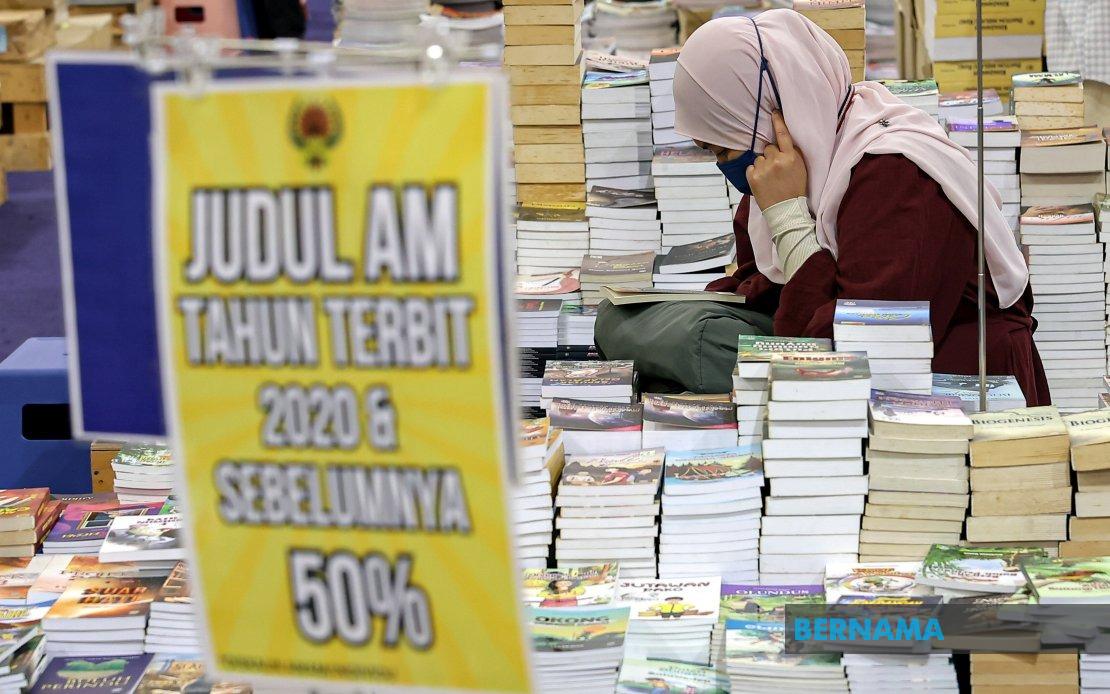
Malaysia's continuing push to democratise access to educational resources has expanded significantly with the launch of the MADANI Book Voucher Programme 2026, which brings reading materials within reach of more than 2.2 million students nationwide. Backed by a substantial RM221.6 million government investment, the scheme represents a tangible commitment to ensuring that economic circumstances do not determine a young Malaysian's ability to build knowledge across disciplines. Starting from tomorrow at 11 am through October 31, eligible students from Remove Class to Form Six, alongside those enrolled in vocational colleges, matriculation colleges, and the Malaysian Institute of Teacher Education (IPGM), will be able to redeem RM100 in digital vouchers through the BookCapital platform.
The sheer scale of participation—encompassing 2,217,579 beneficiaries across the education system—underscores the programme's role as one of the government's flagship equity initiatives. Deputy Education Minister Wong Kah Woh outlined the implementation during parliamentary question time, noting that the entirely online redemption process through BookCapital, which now partners with 1,238 registered booksellers, has been streamlined to maximise accessibility. This digital-first approach proves particularly consequential for students in remote and rural areas of Malaysia who historically faced logistical barriers when purchasing books. By centralising transactions on a single platform and enabling nationwide delivery, the Ministry of Education has effectively removed geographic constraints that once limited reading material availability to urban concentrations.
What distinguishes the 2026 iteration is its deliberate curation of content aligned with national development priorities. The introduction of the MADANI Special Title Focus category mandates that each recipient purchase at least one book from a curated selection encompassing literary classics, general non-fiction works on history and philosophy, and increasingly, materials addressing contemporary global challenges. The emphasis on geopolitics and human capital development reflects an institutional recognition that Malaysian students must develop informed perspectives on their region's complexities and their own competitive positioning in knowledge-based economies. Critically, the programme has prioritised future-oriented disciplines: artificial intelligence, information technology, STEM subjects, and digitalisation feature prominently in the recommended catalogue, signalling the government's assessment of skill requirements for coming decades.
Evaluation data from the programme's first two years of operation provides compelling evidence of its efficacy. The Darul Ehsan Institute's impact study found that 97.5 per cent of surveyed recipients agreed the voucher scheme substantially assisted their studies, with particular benefit accruing to students from lower-income backgrounds. Furthermore, 92.2 per cent of respondents reported that access to additional reading materials meaningfully improved their examination preparation. These metrics suggest that targeted reading subsidies function as more than symbolic gestures—they translate into measurable educational outcomes. The 100 per cent redemption rate achieved in 2024 further demonstrates that when digital infrastructure removes friction from the process, students and their families readily engage with such provisions.
The ministerial framing of the programme as achieving "100 per cent redemption, 100 per cent transparency and zero leakages" carries significance beyond administrative efficiency. In a Malaysian context where programme implementation and fund management have periodically faced scrutiny, the fully digital architecture—eliminating intermediaries and physical distribution networks—provides auditability and accountability. Every transaction through BookCapital generates verifiable records; no cash changes hands; no discretionary allocation decisions introduce variability based on connection or geography. This operational design reflects lessons learned from earlier incarnations of student assistance schemes and represents institutional maturation in how government deploys resources equitably.
The programme's expansion also carries implications for Malaysia's publishing and bookselling sectors. The participation of 1,238 booksellers—encompassing both independent operators and larger retailers—means that the RM221.6 million injection circulates throughout the literary ecosystem. Smaller provincial booksellers gain access to a guaranteed customer base through platform participation, potentially stabilising retail operations that might otherwise struggle amid shifting consumer patterns. Publishers, particularly those focused on educational and developmental non-fiction, benefit from predictable demand signals. The curation requirement, which channels reader choices toward specific categories, creates market dynamics that incentivise publishing investment in STEM, geopolitics, and technological literacy—domains where Malaysian scholarly output remains thin relative to regional and global production.
The universal application of the programme across diverse institutional contexts—from traditional secondary schools to vocational colleges to teacher training institutes—recognises that educational pathways in Malaysia have proliferated. Vocational students preparing for technical careers benefit equally from reading materials on technology and mathematics; matriculation and IPGM students require sophisticated texts on philosophy and history to round out their intellectual foundations. This inclusive design rejects a hierarchical assumption that academic pathways are the only legitimate recipients of government literacy investment, aligning instead with Malaysia's broadening recognition of multiple routes to productive citizenship and economic contribution.
Looking beyond immediate implementation, the MADANI Book Voucher Programme exemplifies how digital infrastructure can simultaneously serve equity and efficiency objectives. The platform's nationwide reach ensures that a student in Sarawak's interior enjoys identical purchasing options and delivery timeframes as one in Kuala Lumpur's city centre. The transparent, auditable architecture prevents leakage and manipulation. The curated content steers young readers toward materials addressing both personal development and national priorities in technology and geopolitical literacy. These dimensions converge to produce a programme whose policy architecture reflects sophisticated understanding of how public goods—in this case, knowledge access—can be distributed justly while building human capital aligned with national economic strategy.

