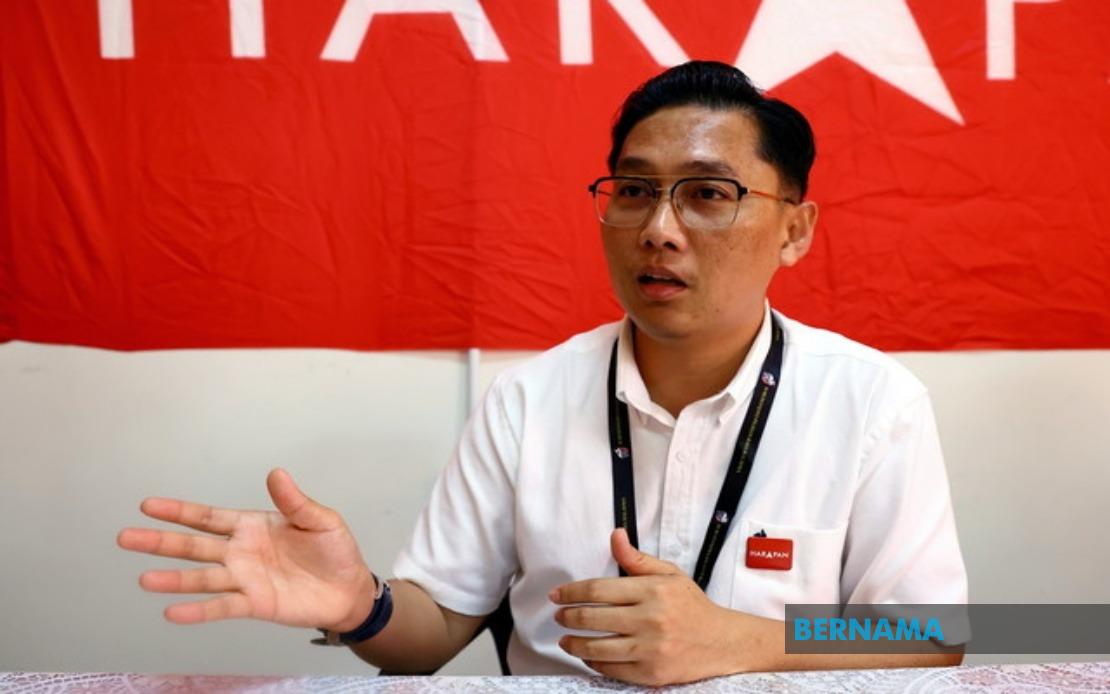
The Pakatan Harapan campaign for the Machap state seat is being led by Nur Hafiz Roslan, a legal professional who expressed unwavering confidence despite facing Johor Menteri Besar Datuk Onn Hafiz Ghazi, the sitting representative who secured the constituency with a 6,543-vote majority in 2022. Speaking at PH's constituency operations centre in Simpang Renggam, Nur Hafiz dismissed concerns that Machap's historical status as a Barisan Nasional stronghold would prove insurmountable, arguing that political fortunes are neither fixed nor predetermined regardless of a seat's traditional voting patterns.
Drawing on nearly two decades of experience in legal practice, Nur Hafiz constructed his campaign narrative around the principle that electoral outcomes ultimately remain fluid and subject to voter sentiment. He referenced historical precedent to reinforce this optimism, noting that former Johor Menteri Besars Tan Sri Abdul Ghani Othman and Datuk Seri Khaled Nordin had each experienced electoral defeat despite their prominence and seniority, demonstrating that even high-profile incumbents can lose office. His remarks carried an implicit acknowledgment of Onn Hafiz's strength as an opponent whilst maintaining that such advantages are never insurmountable if an alternative candidate offers compelling reasons for voters to consider change.
The July 11 Johor state election represents a significant test for Pakatan Harapan's revival in a state where the coalition has struggled to gain ground in recent years. Early voting is scheduled for July 7. The Machap contest appears positioned as a two-cornered affair, eliminating the complication of three-way splits that could fracture the opposition vote. For PH, securing seats in traditionally BN-dominated constituencies would constitute a meaningful breakthrough, though such contests require not merely organisational competence but also a persuasive message that resonates across community lines.
Nur Hafiz emphasised that his campaign machinery operates from a position of organisational strength and unity, characterising PH's internal cohesion since the nomination phase as stable and free from the frictional disputes that occasionally undermine opposition effectiveness. This framing serves both as confidence-building rhetoric for party members and as a subtle differentiation from BN, implicitly suggesting that the ruling coalition may harbour its own internal complications. A well-coordinated campaign infrastructure remains essential in translating policy promises into ground-level voter mobilisation, particularly in constituencies where traditional loyalties run deep.
Central to Nur Hafiz's political positioning is a deliberate break from what he characterises as outdated electoral strategies rooted in fear and divisiveness. He specifically rejected politics centred on perceptions, public shaming, and the deliberate invocation of the three R's—race, religion, and royalty—as relics unsuitable for contemporary Malaysia. This positioning reflects a broader shift within segments of Pakatan Harapan toward emphasising governance outcomes and policy solutions rather than emotional or identity-based appeals. Whether such messaging can effectively penetrate constituencies accustomed to the traditional BN approach remains uncertain, though it signals the coalition's attempt to reframe political competition around substantive rather than symbolic terrain.
The candidate articulated a vision of politics centred on material concerns and practical delivery rather than communal grievance-mongering. He questioned the sustainability of electoral strategies predicated on manufacturing fear among different ethnic communities—Malay, Chinese, and Indian voters—framing such approaches as counterproductive to genuine nation-building. This argument implicitly challenges the underlying assumptions of identity-based politics that have dominated Johor for decades, though it confronts the reality that many voters continue to perceive their interests through precisely such communal lenses. Nur Hafiz's approach thus represents a calculated gamble that appeals to voters seeking alternatives to divisive rhetoric whilst acknowledging that this constituency has consistently chosen differently.
Another dimension of Nur Hafiz's campaign strategy involves positioning himself as an effective intermediary between state and federal governments, ensuring that Machap residents receive equitable representation and resource allocation regardless of their ethnic or religious background. This bridging role reflects the unique challenge facing opposition legislators in Malaysia's power structure, wherein state representatives from opposition parties must still interface with federal machinery dominated by the ruling coalition. The pledge to provide effective liaison work acknowledges that constituent service—addressing potholes, securing development projects, processing complaints—remains a crucial basis upon which legislators are evaluated, often superseding ideological considerations.
The incumbent Onn Hafiz commands significant institutional advantages beyond mere incumbency, including his concurrent position as Johor's chief minister, which grants him access to state resources, media platforms, and the symbolic authority of leading the state government. He carries a demonstrated capacity to mobilise the BN machinery effectively within his constituency, as evidenced by his 2022 majority. For Nur Hafiz to overcome such structural advantages requires not merely organisational efficiency but a compelling narrative that persuades enough voters that change offers tangible benefits. The margin by which Onn Hafiz won previously suggests the challenge before the PH campaign, though close elections in Malaysia occasionally turn on relatively modest shifts in voter preferences.
The timing of Nur Hafiz's campaign messaging, emphasising mature political discourse over fear-based appeals, coincides with broader discussions within Malaysian political circles about the nation's electoral trajectory and the sustainability of existing coalition structures. Whether voters in Machap prove responsive to such messaging will provide a data point regarding the receptiveness of traditional BN constituencies to alternative political visions. The outcome will carry implications beyond the individual constituency, offering indicators of whether opposition parties can make meaningful inroads into historically partisan areas through emphasis on governance quality and policy substance rather than identity mobilisation.
As the July 11 polling date approaches, Nur Hafiz's campaign will attempt to convert rhetorical commitments regarding mature politics into practical campaign activities that reach voters directly. The PH candidate's willingness to contest against the Menteri Besar personally, rather than conceding the seat beforehand, signals the coalition's determination to compete across all available battlegrounds despite unfavourable odds in particular constituencies. Whether Machap proves an exception to established voting patterns or confirms the continued strength of BN's rural and semi-rural constituencies remains to be determined through the electoral process itself.

