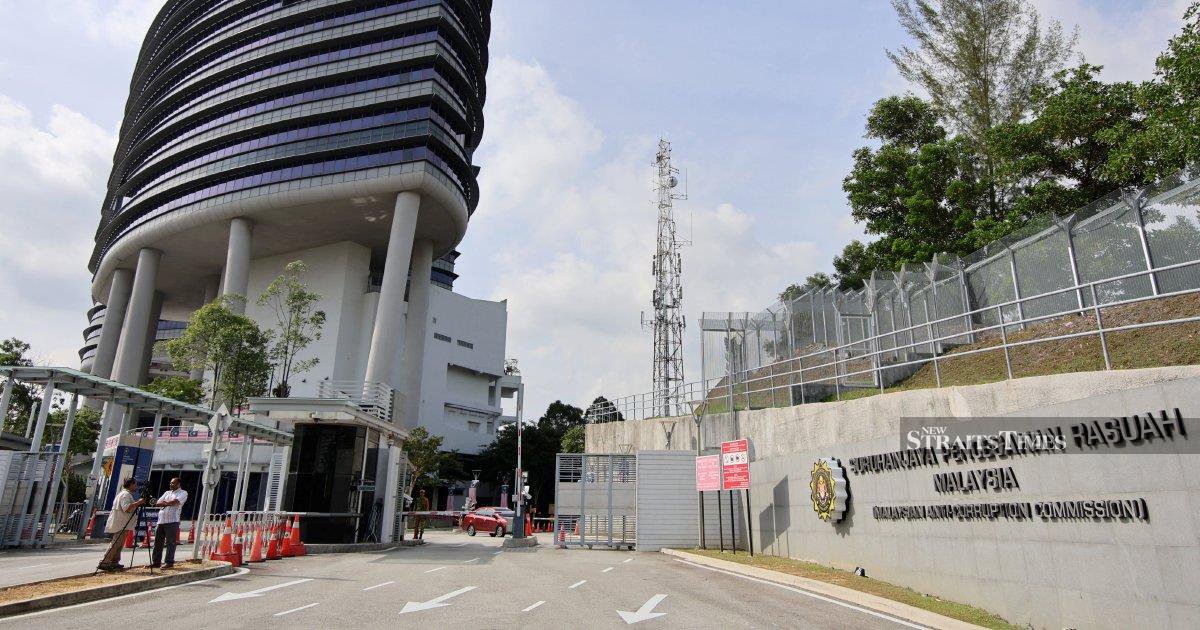
The Malaysian Anti-Corruption Commission has launched a strategic push to make whistleblower protection a cornerstone of the country's governance framework, positioning it as essential to advancing Malaysia's standing in global corruption assessments over the next five years. Officials have directed their appeal at the highest echelons of the civil service, specifically targeting secretaries-general at each ministry and directors-general across government departments, underscoring the systemic nature of the reform effort required.
This initiative reflects growing recognition within Malaysia's anti-corruption machinery that robust protections for those who report misconduct directly influence both real and perceived levels of institutional integrity. The international business community and governance watchdogs increasingly view whistleblower frameworks as bellwethers of genuine anti-corruption commitment, making this designation a priority for countries seeking to demonstrate tangible progress rather than theoretical policy. The MACC's intervention signals that the commission understands the mechanics of how Malaysia's performance is evaluated on the world stage.
The Corruption Perceptions Index, published annually by Transparency International, serves as a significant benchmark for how countries are assessed by investors, multilateral institutions, and donor organisations. Malaysia's current standing in these rankings carries practical consequences: positions influence foreign direct investment decisions, affect the terms of international credit facilities, and shape diplomatic positioning. By linking whistleblower protection explicitly to CPI improvement targets through 2030, the MACC has framed governance reform as both a matter of domestic principle and strategic national interest.
Whistleblowers occupy a uniquely precarious position within any bureaucracy. Individuals who expose financial irregularities, procurement fraud, or abuse of position typically face professional retaliation, social ostracism, and sometimes legal harassment initiated by the very officials they have implicated. Without comprehensive protection mechanisms—including provisions against wrongful dismissal, financial security during investigations, anonymity protections, and safe reporting channels—potential whistleblowers choose silence. The current Malaysian framework contains some protections under the Whistleblower Protection Act 2010, yet practitioners and transparency advocates have long identified implementation gaps and enforcement weaknesses.
The MACC's call places the onus squarely on administrative leadership rather than the legislative branch, a pragmatic choice given Malaysia's separated powers structure. Secretaries-general and directors-general wield significant discretion over departmental culture, resource allocation to ethics functions, and personnel decisions affecting whistleblowers. Their commitment to protection mechanisms determines whether policies exist in principle alone or translate into operational reality. By appealing directly to this tier, the MACC bypasses the extended timeline of parliamentary amendment processes and taps into existing executive authority.
Strengthening whistleblower protections carries implications extending beyond corruption measurement. A workplace environment where staff can report misconduct without fear establishes baseline institutional health that benefits public service delivery more broadly. Healthcare workers can report unsafe practices, education administrators can escalate improper spending, and local council officials can flag neglect—each disclosure improving service quality independently of corruption classifications. The governance architecture that enables reporting thus generates multiple dividends for citizens regardless of how international indices categorise Malaysia's performance.
Regional context adds weight to the MACC's initiative. Several Southeast Asian neighbours have expanded whistleblower frameworks in recent years, and Malaysia's relative inaction increasingly appears as comparative weakness. Indonesia's enhanced protections following anti-corruption reforms, Vietnam's tightened reporting mechanisms, and Thailand's judicial reforms around evidence submission have shifted regional baselines upward. Malaysian government agencies and private enterprises operating across the region navigate these differing standards, and harmonising Malaysia's framework with higher regional norms facilitates cross-border compliance and demonstrates institutional maturity.
Implementing the commission's recommendations will require departmental secretaries-general and directors-general to allocate staff and financial resources toward dedicated protection functions. This includes establishing confidential reporting channels, training managers to recognise and respond to disclosure situations appropriately, and creating tracking systems to prevent reprisal. Many departments currently lack such infrastructure, meaning the MACC's call translates into real operational demands on already-stretched administrative budgets.
The timeline toward 2030 provides sufficient runway for meaningful institutional embedding while maintaining urgency. A five-year horizon allows organisations to design systems, pilot approaches, gather lessons, and refine procedures—significantly more realistic than immediate implementation expectations. This timeline also aligns with broader governance benchmarking cycles, permitting Malaysian progress to register in consecutive CPI assessments and generate demonstrable trend movement rather than volatility.
Sustainability represents a critical challenge beyond the immediate reform period. Whistleblower protection systems require continuous reinforcement, regular training renewal, and genuine leadership commitment to maintain effectiveness as staffing changes occur and organisational priorities shift. The MACC's directional push must eventually embed within institutional DNA rather than remaining a temporary compliance exercise, requiring cultural change that extends beyond policy documentation.

