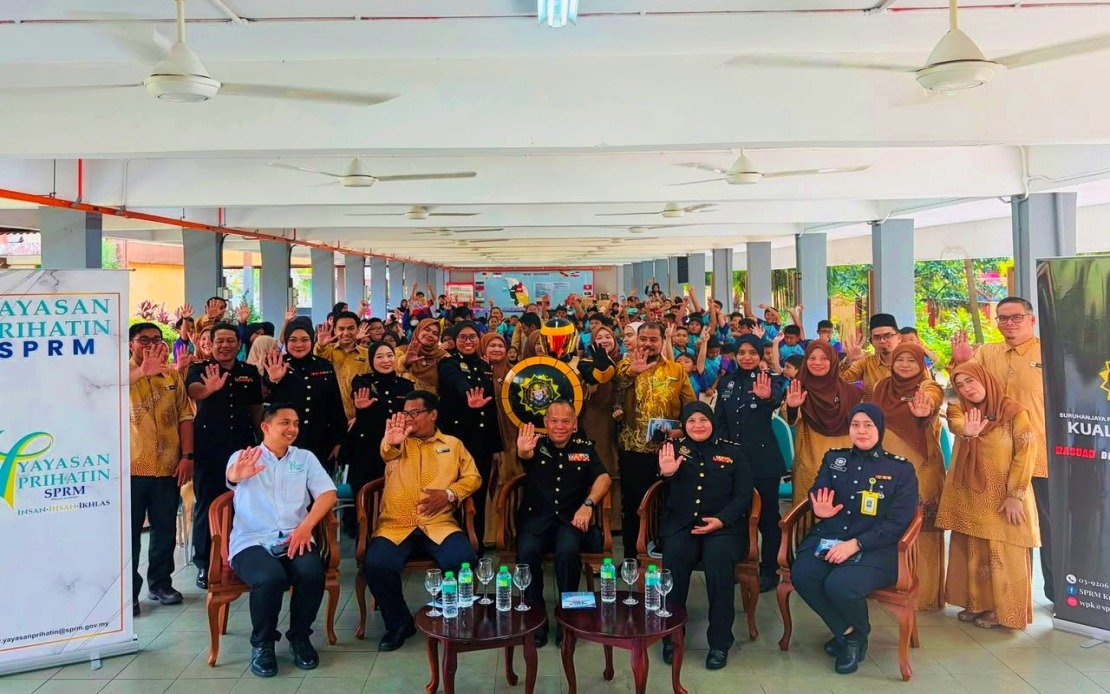
The Kuala Lumpur office of the Malaysian Anti-Corruption Commission is taking anti-corruption efforts into the classroom, rolling out the Wira Antirasuah (WAR) programme at Sekolah Kebangsaan Jalan Pasar 1. The initiative reflects a strategic shift towards prevention and education, recognising that embedding integrity values during formative years offers a more sustainable approach to combating societal corruption than enforcement alone.
According to Mohamad Zakkuan Talib, who heads the Kuala Lumpur MACC office, starting integrity lessons early represents a critical investment in cultivating a generation of Malaysians with strong moral foundations. He emphasised that genuine character is not built through heroic gestures alone, but rather through consistent adherence to ethical principles in everyday decisions and interactions. This framing is particularly significant for Malaysian policymakers, as it aligns with broader national goals to strengthen institutional accountability from the ground up.
The director stressed that integrity operates across a spectrum of human conduct, from major decisions down to routine daily choices. He highlighted that refusing to cheat, respecting others' property, declining to plagiarise, honouring commitments, and maintaining trust form the bedrock of an ethical society. By articulating this message in accessible language, the MACC aims to demystify anti-corruption work, transforming it from a matter of grand institutional reform into a personal responsibility that pupils can immediately grasp and practise.
The Wira Antirasuah programme deployed multiple engagement methods to capture students' attention and sustain their interest. An educational briefing delivered by the Community Education Branch (PenMas) provided foundational knowledge about corruption and its harms. Complementing this formal component was an interactive session featuring Kapten MACC, the MACC's mascot character, which leverages the appeal of gamification and entertainment to reinforce lessons in a memorable way. Such multi-sensory, youth-friendly approaches have proven effective in countries across Southeast Asia where similar anti-corruption bodies have invested in school-based prevention.
Beyond the immediate awareness activities, the MACC further cemented its commitment to the school's wellbeing by establishing the SKJP1 Anti-Corruption Corner, a dedicated information hub for staff and pupils. This physical space serves as an ongoing resource, extending the programme's reach beyond a single event and creating a lasting institutional reminder of anti-corruption principles within the school. The corner positions integrity as a normal, integrated feature of school life rather than an occasional external intervention.
The programme also addressed material welfare alongside moral education. Yayasan Prihatin SPRM donated a smart television to enhance the school's teaching capabilities, while the MACC provided educational support grants to 29 pupils from economically disadvantaged households. This dual emphasis recognises that sustainable behavioural change requires attention to both mind and circumstance—students struggling with poverty face genuine pressures that can erode ethical resolve, making poverty alleviation a pragmatic complement to values education.
Aligning with Malaysia's broader national messaging, the initiative incorporated elements of the Keep Malaysia Clean (KMC) campaign and synchronised with National Month festivities. Special education pupils participated in planting hibiscus flowers as part of the programme, serving multiple purposes: reinforcing environmental stewardship, affirming the inclusion of students with diverse needs, and creating a tangible symbol of collective investment in a cleaner, more principled Malaysia. Such symbolic acts, though simple, help embed anti-corruption messaging within patriotic and communal consciousness.
The selection of a primary school setting is strategically astute. Research across Southeast Asia consistently demonstrates that anti-corruption attitudes formed during childhood prove remarkably durable into adulthood. By intervening at Sekolah Kebangsaan Jalan Pasar 1, the MACC targets an age group still developing their moral frameworks and peer influences, maximising the potential for lasting behavioural and attitudinal change. For Malaysian educators and policymakers, this suggests that corruption prevention must become embedded in primary-level curricula and school cultures rather than treated as a secondary concern.
For readers in Malaysia and the broader region, this initiative carries implications beyond a single school. It signals that anti-corruption authorities are diversifying their strategies, moving beyond enforcement-heavy approaches to invest in cultural and educational prevention. As Southeast Asia grapples with rising expectations for institutional integrity and demands for greater accountability, the MACC's grassroots work in schools may serve as a template for strengthening civil society's resistance to corruption from the bottom up. Whether such early investment ultimately translates into measurable reductions in corruption depends on consistency, scaling, and integration with family and community reinforcement of these values—a challenge that extends well beyond any single government agency.

