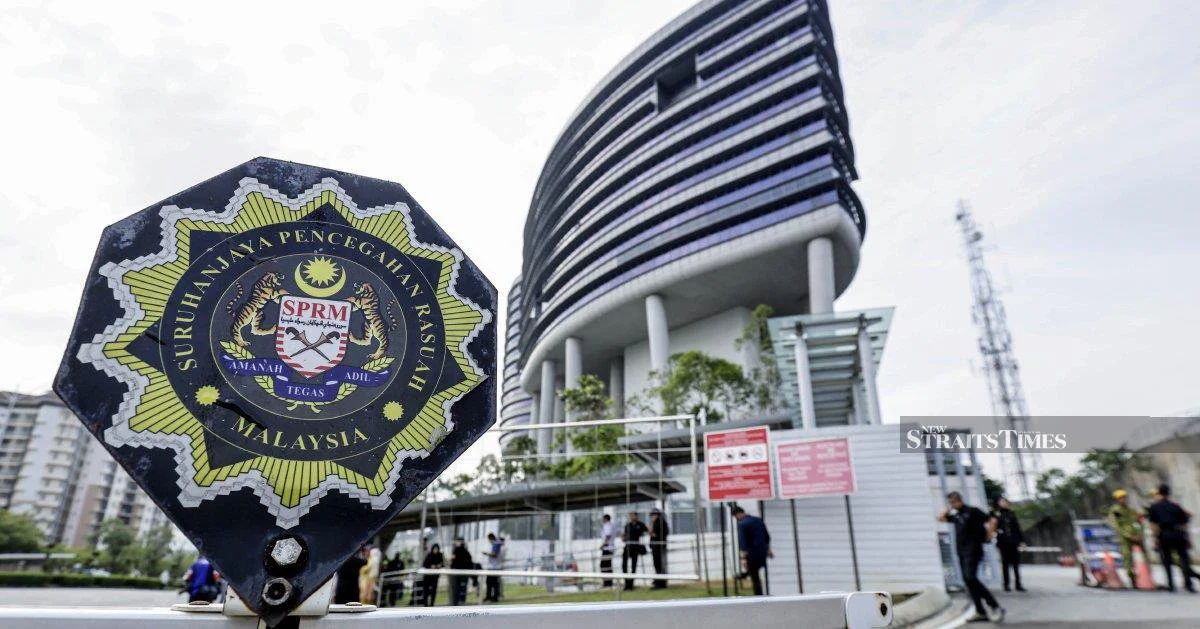
The Malaysian Anti-Corruption Commission (MACC) has initiated a comprehensive examination into structural and procedural deficiencies plaguing the Daya Kerjaya 2.0 employment incentive programme, with the investigation centred on suspected fraud involving claims worth RM9 million. The move signals an escalation in scrutiny of how the government's workforce development initiative has been administered and monitored, raising questions about oversight mechanisms that permitted such alleged irregularities to occur.
Daya Kerjaya 2.0 represents a significant component of Malaysia's employment support framework, designed to encourage businesses to recruit workers through financial incentives. The programme's mandate reflects the government's commitment to job creation and labour market activation, particularly crucial in the post-pandemic economic recovery period. However, the emergence of substantial fraudulent claims suggests that the implementation architecture may lack sufficient internal controls and verification procedures to prevent abuse or misuse of public funds.
Governance weaknesses typically manifest in various forms within large-scale incentive schemes. These might include inadequate documentation requirements for eligible participants, insufficient cross-verification between employers and government agencies, gaps in the approval workflow, or minimal post-disbursement auditing. In the context of Daya Kerjaya 2.0, such vulnerabilities would have created opportunities for dishonest actors to submit false claims or manipulate eligibility criteria without immediate detection, allowing fraudulent payments to proceed unimpeded through the system.
The MACC's decision to focus specifically on governance rather than solely pursuing individual criminal cases reflects a sophisticated investigative approach. Rather than treating this as an isolated fraud matter, authorities recognise that systemic weaknesses require institutional remedies. This broader investigation will likely examine how the programme was designed, which agencies held responsibility for oversight, what verification protocols existed, and where decision-making authority was concentrated or dispersed across the administrative hierarchy.
For Malaysian policymakers and civil servants, this investigation serves as a cautionary reminder about the risks inherent in scaling employment incentive programmes. While such initiatives generate genuine economic benefits by reducing hiring barriers for businesses and employment gaps for job-seekers, they simultaneously create financial exposure if management frameworks prove inadequate. The RM9 million in suspected fraudulent claims represents not just a loss to the public purse but a misallocation of resources intended for legitimate economic stimulus.
The investigation also has implications for other government assistance schemes operating under similar administrative structures. If Daya Kerjaya 2.0 exhibits systemic vulnerabilities, parallel programmes may warrant preventive auditing to identify comparable weaknesses before they result in financial loss. This could encompass training subsidies, skills development initiatives, or other employer-oriented incentive schemes that rely on self-certification or third-party verification of claim eligibility.
From a regional perspective, Malaysia's experience with the Daya Kerjaya 2.0 investigation reflects broader challenges facing Southeast Asian governments implementing large-scale economic assistance programmes. As nations across the region scale up employment support measures to address demographic shifts and labour market transitions, robust governance frameworks become increasingly essential. The public scrutiny surrounding this investigation may galvanise comparable moves in neighbouring countries to strengthen controls within their own employment incentive systems.
The MACC's investigation will likely produce recommendations extending beyond criminal prosecution. Institutional reforms emerging from this review could include mandatory verification protocols, enhanced documentation standards, stricter approval workflows, regular compliance audits, and clearer delineation of accountability among participating agencies. Such recommendations, when implemented, would strengthen not only Daya Kerjaya 2.0 but potentially serve as templates for other government benefit programmes.
Businesses operating in Malaysia should remain vigilant regarding compliance with programme requirements, as the investigation may lead to enhanced scrutiny of historical claims and stricter standards going forward. Companies that have participated in Daya Kerjaya 2.0 would be prudent to review their documentation and ensure claims submitted were fully consistent with programme guidelines, as the MACC's widening investigation could examine individual employers alongside systemic weaknesses.
The public finance implications extend beyond the immediate RM9 million loss. If governance weaknesses permitted fraud at this scale, similar patterns may have emerged in other periods or tranches of programme disbursement. The MACC investigation will need to determine whether the detected fraudulent claims represent an isolated cluster or symptomatic of endemic problems that accumulated over the programme's operational lifecycle.
Ultimately, this investigation underscores the importance of embedding robust internal controls and independent oversight within employment incentive schemes from inception. While no system can eliminate fraud entirely, well-designed governance architecture can substantially reduce vulnerability. For Daya Kerjaya 2.0's continuation and expansion, findings from the MACC investigation will be critical in determining what structural adaptations are necessary to maintain public confidence and protect the programme's fundamental objective of supporting Malaysia's workforce development.