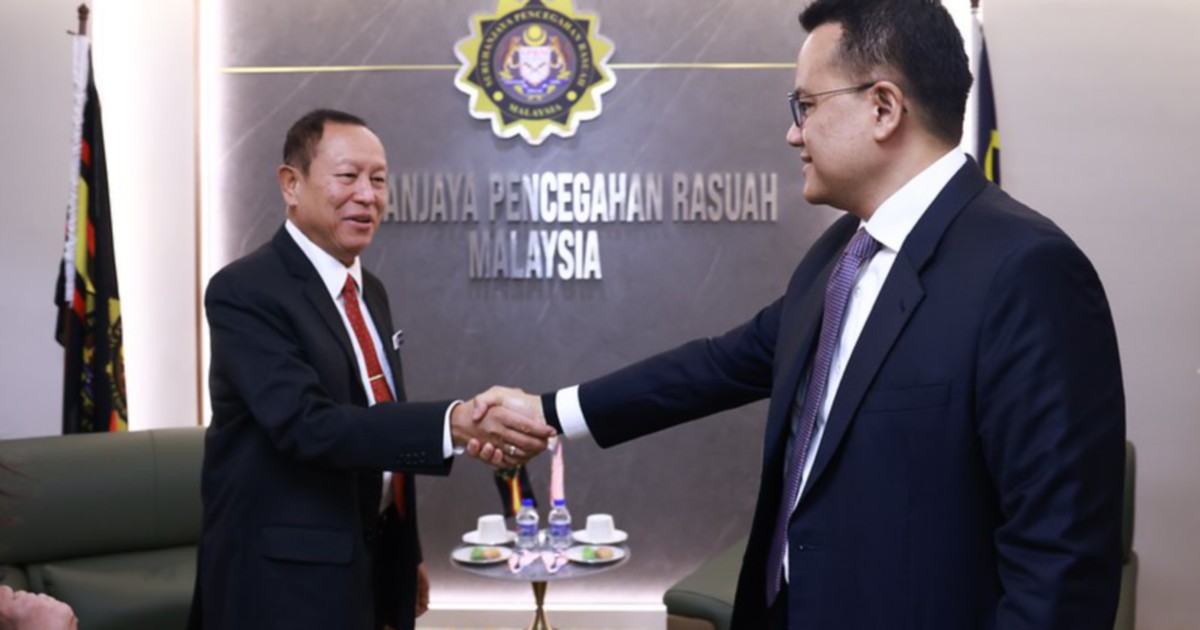
The Malaysian Anti-Corruption Commission (MACC) and Permodalan Nasional Berhad (PNB) have announced a significant deepening of their collaborative relationship, aimed at fortifying the governance frameworks and oversight mechanisms that underpin Malaysia's substantial national investment operations. The initiative, formalised in Putrajaya, represents a strategic alignment between the country's premier anti-corruption authority and one of Southeast Asia's largest sovereign wealth managers, positioning both institutions to work more closely on matters of financial integrity and institutional accountability.
The partnership reflects a broader commitment to establishing robust safeguards within Malaysia's investment ecosystem. With PNB managing assets that encompass significant stakes across banking, property development, technology, and manufacturing sectors, the cooperation with MACC introduces an additional layer of scrutiny and oversight designed to prevent misconduct and ensure that the nation's wealth is managed according to the highest ethical and compliance standards. This collaboration underscores the importance both institutions place on proactive governance rather than reactive enforcement measures.
For Malaysian investors and citizens with stakes in PNB-managed funds, the reinforced partnership carries practical implications. The MACC's involvement in strengthening internal control systems and integrity frameworks means that the investment vehicles many Malaysians depend upon for retirement savings and long-term wealth accumulation will operate under enhanced monitoring. This development addresses growing public consciousness about transparency in sovereign wealth management, particularly in a regional context where governance standards have become increasingly scrutinised by both domestic stakeholders and international observers.
The strategic nature of this collaboration extends beyond conventional compliance auditing. By working together at the institutional level, MACC and PNB can develop more sophisticated mechanisms for identifying potential corruption risks, whistleblower protections, and training programmes for staff members. The partnership likely encompasses reviewing procurement processes, investment decision-making workflows, and the approval mechanisms for major capital allocations. Such systematic approaches prove far more effective than occasional investigations conducted after misconduct has already occurred.
PNB's role as a principal investment vehicle for Malaysian workers—through vehicles such as unit trusts and equity-linked products—makes this partnership particularly significant for ordinary Malaysians. The entity manages retirement savings for millions of contributors, and any compromise in its governance structures could have cascading effects across the financial system. By formalising cooperation with MACC, PNB demonstrates responsiveness to stakeholder concerns about asset security and transparent stewardship of collective wealth.
The timing of this collaboration also reflects regional trends in asset management governance. Across Southeast Asia, sovereign wealth funds and national investment vehicles have faced increasing pressure to demonstrate compliance with international standards and transparency benchmarks. Singapore's Temasek Holdings and Indonesia's various state investment vehicles have all implemented progressively sophisticated governance frameworks. Malaysia's move to strengthen the institutional relationship between its corruption watchdog and its largest state-owned investment manager positions the country competitively within this regional landscape.
From an anti-corruption perspective, the partnership acknowledges that sophisticated financial fraud and governance breaches often manifest within complex institutional structures rather than through crude embezzlement schemes. By embedding MACC expertise within PNB's oversight processes, the collaboration can identify systemic vulnerabilities—such as conflicts of interest in investment committees, inadequate documentation of decision-making rationales, or insufficiently segregated reporting lines—that might otherwise escape detection. This preventive dimension represents a maturation of anti-corruption thinking beyond simple detection and prosecution.
The transparency component of the partnership addresses persistent questions about how Malaysian sovereign wealth is allocated. With PNB managing portfolios worth hundreds of billions of ringgit, greater institutional transparency becomes imperative. The MACC collaboration can facilitate clearer public communication about investment rationales, performance metrics, and risk management approaches. For policymakers and the investment community, this enhanced visibility provides better information for evaluating whether PNB's capital allocation strategies genuinely serve the national economic interest or whether particular investments reflect other considerations.
International observers of Malaysian governance will likely view this partnership positively, as it suggests institutional maturity and genuine commitment to integrity standards. Multinational companies evaluating investment climate stability, international funds considering exposure to Malaysian assets, and regional partners assessing institutional reliability all benefit from signals that the country's largest investment vehicles operate under rigorous oversight. This institutional cooperation thus carries implications extending well beyond domestic governance, touching upon Malaysia's international standing as a destination for investment and economic partnership.
Looking forward, the specific mechanisms through which MACC and PNB coordinate deserve scrutiny. Whether the partnership involves joint committees, shared investigations, mandatory reporting protocols, or integrated training programmes will determine its practical effectiveness. Clear operational frameworks, rather than vague undertakings, typically generate the most substantial governance improvements. Additionally, the partnership should include measurable benchmarks for assessing whether increased collaboration actually enhances integrity outcomes or merely creates the appearance of enhanced oversight.
The collaboration also signals evolving expectations for state-owned enterprises and sovereign wealth vehicles operating within Malaysia's institutional landscape. By positioning the MACC relationship as a strength rather than an imposition, PNB tacitly acknowledges that rigorous integrity standards strengthen rather than hinder investment performance. This messaging carries importance for other large institutions contemplating governance improvements, potentially catalysing sector-wide upgrades in compliance and ethical practices across Malaysia's state-owned enterprise ecosystem.

