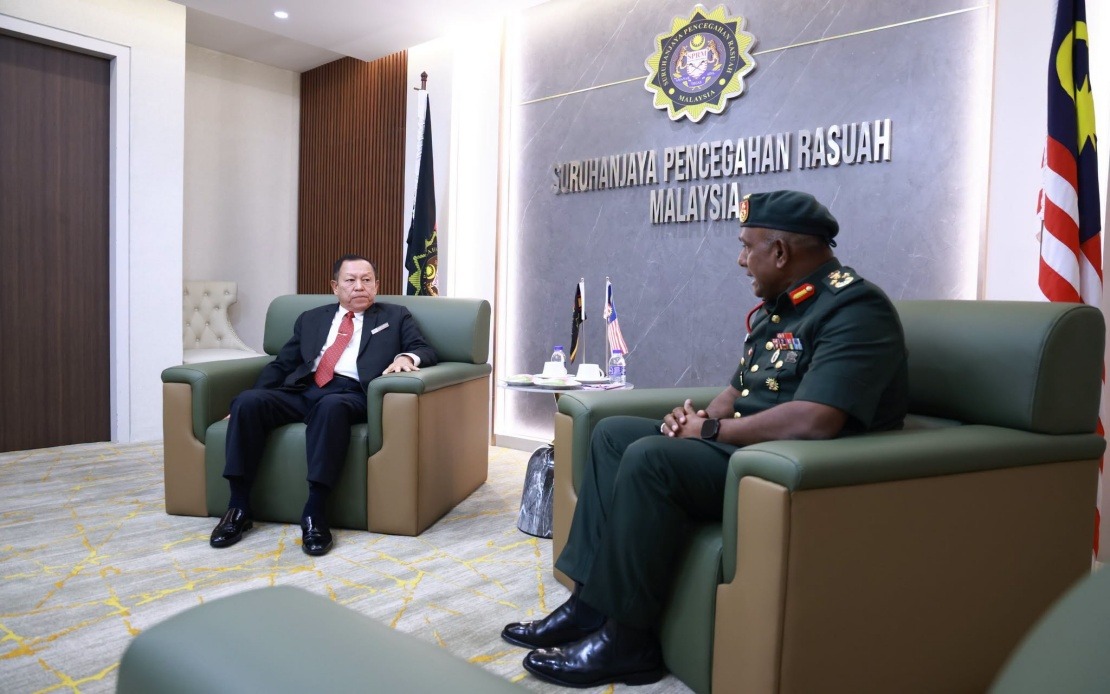
The Malaysian Anti-Corruption Commission and the Malaysian Armed Forces have moved to deepen their institutional partnership, focusing on collaborative mechanisms to combat corruption and uphold governance standards across the defence sector. The agreement came to light during a formal courtesy visit at MACC headquarters in Putrajaya, underscoring the importance both agencies place on integrated anti-corruption strategies in safeguarding the nation's integrity.
MACC Chief Commissioner Datuk Seri Abd Halim Aman used the occasion to highlight the value of sustained collaboration between the two organisations, noting that the relationship extends beyond symbolic gestures to encompass concrete operational frameworks. He articulated confidence that the existing synergy would accelerate in coming years, particularly through mechanisms designed to facilitate swift intelligence dissemination and institutional learning between the anti-corruption watchdog and defence establishment.
The focus areas outlined—intelligence sharing, information exchange, and governance enhancement—represent a shift towards more preventative anti-corruption models within the armed forces. Rather than relying solely on post-facto investigations, the partnership aims to create early-warning systems and institutional safeguards that address governance vulnerabilities before they develop into corruption cases. This approach recognises that the defence sector, given its scale of operations and resource allocation, requires tailored oversight mechanisms distinct from civilian agencies.
The visit coincided with the official appointment of Lt Gen Datuk Fazal Abdul Rahman as director-general of the Malaysian Defence Intelligence Organisation, effective May 21. His assumption of this role signals continuity in defence-MACC relations while potentially enabling fresh momentum in implementing cooperation frameworks. The timing suggests deliberate institutional sequencing, with leadership transitions used as natural junctures to formalise or upgrade inter-agency protocols.
Lt Gen Fazal articulated the armed forces' own commitment to maintaining discipline and professional standards across all operational domains. His remarks positioned governance excellence not as a burden imposed by external oversight but as an intrinsic value embedded within military culture. This framing is significant for Malaysian defence institutions, which have historically navigated complex relationships between operational autonomy and civilian accountability structures. By endorsing MACC collaboration as aligned with military professionalism rather than contradictory to it, Fazal aimed to normalise transparency within defence hierarchies.
The emphasis on close cooperation reflects broader regional and international trends toward integrated anti-corruption governance. Southeast Asian defence establishments increasingly recognise that institutional corruption undermines operational effectiveness, readiness, and international partnerships. For Malaysia specifically, demonstrated cooperation between MACC and the armed forces carries implications for bilateral defence relationships and participation in multinational security arrangements, where governance standards and transparency increasingly factor into trust calculations.
Intelligence sharing between these agencies introduces both opportunities and complexities. The potential for enhanced early detection of corrupt practices is evident, yet mechanisms must carefully delineate classified defence intelligence from anti-corruption investigation data. The presence of MACC Intelligence Division senior director Datuk Saiful Ezral Arifin and MAF Security and Counter Intelligence Directorate director Lt Col Muhamad Zainol Md Yusof at the courtesy visit suggests technical working groups may already be developing protocols for such information flows, ensuring security protocols remain intact while enabling investigative access.
For Malaysian readers and policymakers, this cooperation model offers a template for broader government anti-corruption integration. If successful, it could inform similar partnerships between MACC and other sensitive sectors such as procurement, infrastructure, and state-owned enterprises. The armed forces, representing one of Malaysia's largest institutional budgets and logistical operations, serve as a meaningful test case for how governance enhancements can be embedded without compromising organisational effectiveness.
The governance enhancement pillar of the partnership suggests focus beyond traditional corruption investigation. It likely encompasses institutional audits, procurement procedure reviews, and capacity-building initiatives designed to reduce corruption vectors. Such work requires sustained engagement rather than episodic investigations, necessitating the kind of strategic partnership both agencies have committed to developing.
For the defence sector specifically, corruption risks manifest across recruitment, procurement, training contracts, and infrastructure projects. Intelligence-sharing arrangements could enable MACC to identify patterns across these domains, while armed forces inputs could illuminate sector-specific vulnerabilities that generalised anti-corruption frameworks might overlook. This reciprocal intelligence dynamic strengthens both organisations' capacity to design targeted interventions.
Regionally, Malaysia's institutional approach to defence-sector anti-corruption carries significance. Several Southeast Asian nations grapple with similar challenges, where military establishments operate substantial budgets with varying degrees of civilian oversight. Malaysia's documented commitment to MACC-armed forces cooperation positions it as a reference point for other regional governments considering similar institutional architectures. Demonstrated success in this partnership could influence defence governance practices across ASEAN.

