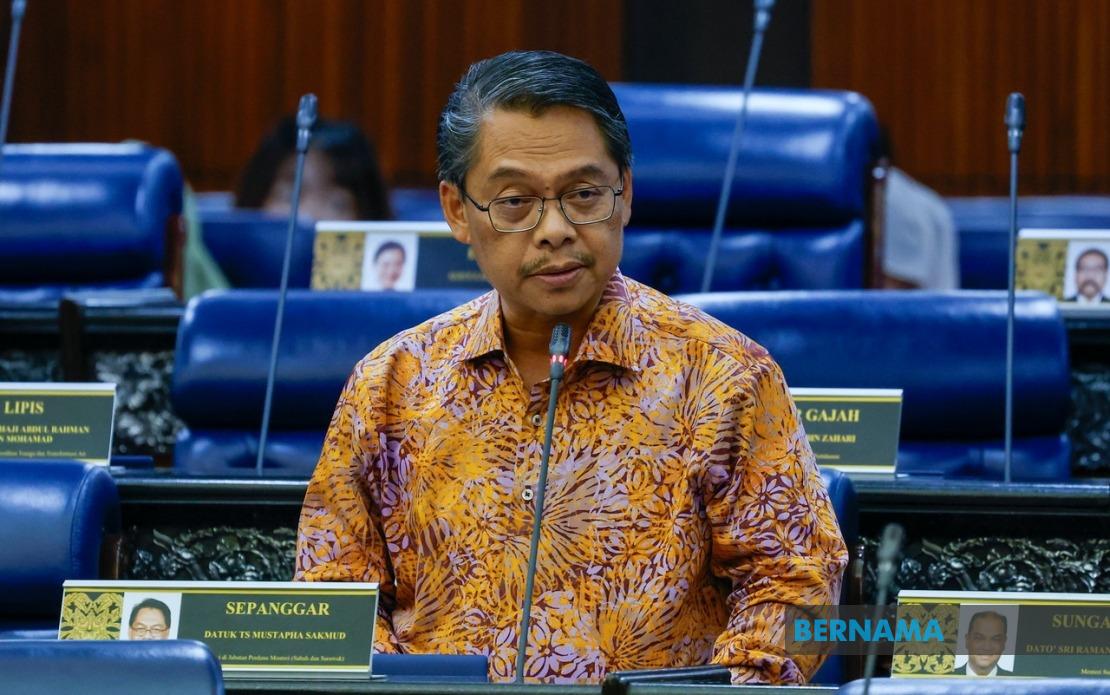
The longstanding Malaysia Agreement 1963 negotiations have reached a partial milestone, with federal authorities confirming that roughly 45 per cent of the 29 disputed matters have now been fully settled. Datuk Mustapha Sakmud, Minister in the Prime Minister's Department overseeing Sabah and Sarawak Affairs, disclosed the progress during parliamentary proceedings on June 25, signalling modest headway in a process that has dragged on for decades. The announcement reflects incremental movement within the official negotiating framework, though several critical issues—particularly those affecting the constitutional balance between the peninsula and East Malaysia—remain unresolved.
Beyond the 13 fully resolved items, the minister indicated that five additional matters have achieved what he termed interim or partial resolution following a March 2 Technical Committee gathering. This categorisation suggests these questions have advanced sufficiently to warrant provisional agreement, though formal closure may require further refinement or ratification from relevant stakeholders. The distinction between full and interim resolution carries practical significance, as interim matters may be subject to review or refinement as implementation proceeds or circumstances change.
Four of the five interim matters specifically target longstanding grievances from East Malaysian constituencies. These concern the expansion of state public service positions under Article 112 of the Federal Constitution—a mechanism directly affecting employment opportunities and economic mobility in Sabah and Sarawak. Alongside this, interim agreements have been reached regarding health and education matters, two sectors where East Malaysia has historically claimed inadequate federal investment and substandard service delivery compared to peninsular states. The fourth interim item addresses Borneonisation of the Federal public service, a policy concept seeking to ensure that positions within federal agencies stationed in Sabah and Sarawak are progressively filled by local residents.
The secretariat managing day-to-day oversight of these discussions, the Sabah and Sarawak Affairs Division (BHESS), maintains close supervision of the remaining 11 outstanding matters in collaboration with federal and state-level stakeholders. This administrative structure underscores the complex intergovernmental coordination required to navigate sensitivities affecting two East Malaysian states with constitutionally entrenched special status. The continued existence of a dedicated secretariat reflects acknowledgement that MA63 implementation demands sustained institutional focus rather than ad hoc handling.
The parliamentary seat allocation issue represents perhaps the most politically charged element of the broader MA63 debate. Isnaraissah Munirah Majilis, a Warisan member from Kota Belud, raised the long-contested demand that Sabah and Sarawak's combined representation in the Dewan Rakyat be expanded to constitute 35 per cent of all parliamentary seats. This proportional increase would acknowledge what some view as underrepresentation relative to the two states' combined landmass, natural resources, and strategic importance. The 35 per cent target carries symbolic weight for East Malaysian political movements, as it would substantially amplify regional voice in federal policymaking.
Mustapha's response clarified that seat redistribution remains contentious and is still subject to negotiation without resolution. Any redelineation exercise—the technical term for redrawing electoral boundaries and reallocating seats—falls strictly within the Election Commission's statutory remit and can only proceed following an eight-year cycle from the previous redistribution. This procedural constraint, embedded in Article 113 of the Federal Constitution, creates timing limitations independent of political will. The mechanism was designed to prevent frivolous boundary changes but functionally also insulates demographic realities from rapid parliamentary adjustment.
Crucially, expanding Sabah and Sarawak's parliamentary quota demands constitutional amendment to Article 46, which establishes the composition of the Dewan Rakyat. Such amendments require approval from at least two-thirds of parliamentary members—a formidable threshold that necessitates either cross-party consensus or overwhelming government supermajority. This procedural barrier explains why seat expansion remains stalled despite sustained East Malaysian advocacy. Any governing coalition lacking two-thirds command would require opposition cooperation, introducing political complexities that have historically stymied agreement.
The slow pace of MA63 implementation reflects deeper structural tensions within Malaysian federalism. East Malaysian states entered the federation with explicit constitutional protections and negotiated guarantees regarding autonomy, resource control, and demographic influence. Subsequent decades witnessed what many Sabahans and Sarawakians perceive as gradual erosion of these protections through federal accumulation of power, migration policies, and revenue-sharing arrangements. The MA63 renegotiation process represents attempts to recalibrate this balance, but progress hinges on willingness from federal authorities to accept power redistribution and constitutional amendment.
For Malaysian observers, the significance extends beyond administrative matters. The interim categorisation of health and education suggests federal acknowledgement that East Malaysian service standards lag peninsular norms—a politically sensitive admission that carries implications for federal budgetary allocation and responsibility attribution. Similarly, progress toward Borneonisation reflects recognition that federal institution-building has historically privileged peninsular personnel, creating bureaucratic asymmetries that disadvantage East Malaysian residents accessing federal services.
The unresolved status of parliamentary seat allocation underscores how constitutional architecture constrains political outcomes. Even with substantial political pressure and negotiating consensus between federal and state governments, the formal amendment requirement creates multiple veto points where opposition or institutional friction can obstruct change. This reality particularly disadvantages East Malaysian interests, which structurally depend on constitutional protection rather than demographic or electoral dominance.
Looking forward, the trajectory of MA63 negotiations will substantially influence East Malaysian electoral behaviour and federal-state relations. Continued slow progress risks validating arguments from autonomy advocates and opposition parties claiming that constitutional negotiation within existing federal structures yields marginal gains insufficient to address historical imbalances. Conversely, successful resolution of outstanding items might validate incremental negotiating approaches while building political consensus for more ambitious constitutional reforms addressing parliamentary representation and resource distribution.

