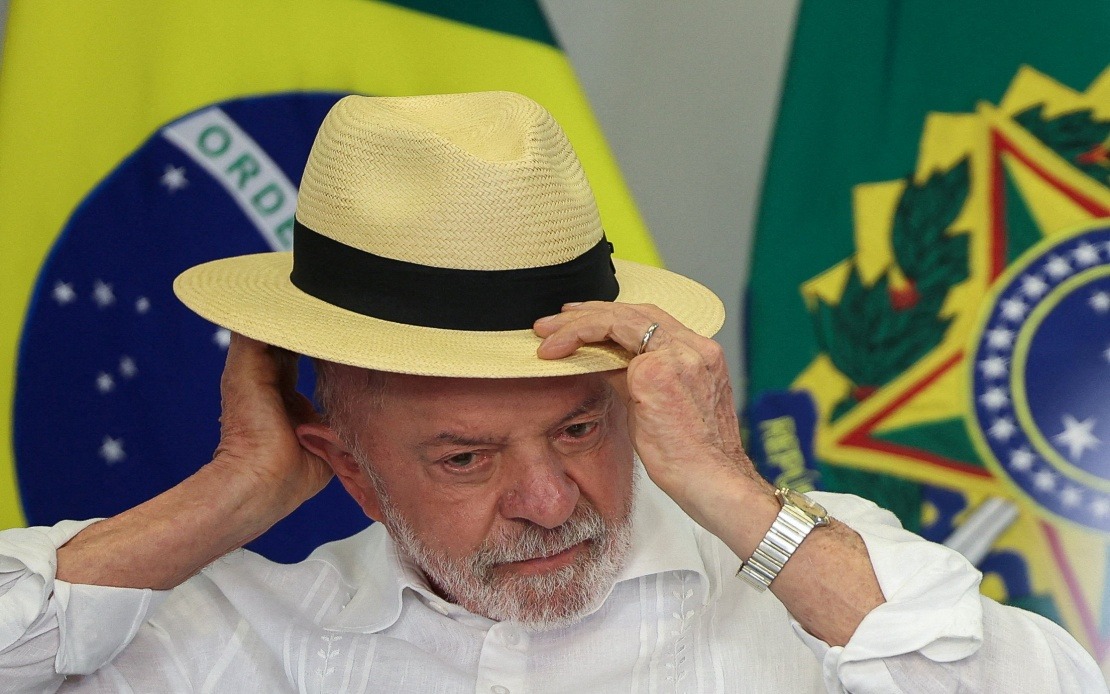
Brazilian President Luiz Inacio Lula da Silva continues to hold a slender advantage over Senator Flavio Bolsonaro in the race toward October's presidential election, according to fresh polling data released this week. A Quaest survey commissioned by Brazil's Globo media group and conducted between August 10 and 13 shows Lula commanding 43 per cent support against Bolsonaro's 40 per cent in a head-to-head runoff scenario. However, with a margin of error standing at two percentage points, the results effectively position the two candidates in a statistical dead heat, suggesting an intensely competitive contest in the final stretch before voting day.
The latest numbers reveal a slight erosion in Lula's position compared to earlier polling. A similar survey conducted just days earlier on August 5 had shown the incumbent president leading 44 per cent to 39 per cent, indicating that Bolsonaro has gained ground in the intervening week. This tightening of the race reflects the fluid nature of Brazilian electoral politics as the campaign enters its critical phase. The gradual narrowing of Lula's advantage, while still measurable, underscores the competitive environment both candidates are operating within as they seek to consolidate voter support.
The polling snapshot also captures the dynamics of a potential first-round outcome should no candidate secure an outright majority. In such a scenario, Lula would receive 38 per cent of votes, substantially ahead of Bolsonaro's 31 per cent. However, this significant gap in a multi-candidate field could narrow considerably once votes consolidate around the leading contenders in a runoff. Other potential candidates including Renan Santos and Ronaldo Caiado each registered four per cent support, while Romeu Zema attracted two per cent, suggesting limited capacity for alternative candidates to reshape the election's trajectory.
Flavio Bolsonaro's emergence as the principal right-wing standard-bearer represents a significant shift in Brazilian politics following his father's disqualification from contention. Jair Bolsonaro, the former president, was declared ineligible by Brazil's highest electoral authority after being found guilty of abusing his political authority. The court subsequently convicted him over allegations that he orchestrated a scheme to reverse his 2022 electoral defeat at Lula's hands, a move that effectively removed him from direct competition and elevated his eldest son to the forefront of the conservative movement.
Lula framed his re-election campaign launch on August 2, held at the Workers' Party convention in Sao Paulo, around themes of national sovereignty and independence. The president has positioned himself as a defender of Brazilian interests against external pressures, particularly from the United States administration. His messaging emphasizes protection of the nation's substantial mineral wealth and rare earths resources from foreign encroachment, a particularly resonant theme given current geopolitical tensions and competition among major powers for strategic resources essential to green energy and advanced manufacturing.
The sovereignty narrative adopted by Lula carries particular weight for Southeast Asian observers and policymakers navigating similar pressures from competing global powers. Lula's warnings that China, the United States, and France cannot access Brazil's mineral riches without respecting the nation's autonomous decision-making process reflect broader concerns across the developing world about maintaining genuine independence in an increasingly contested geopolitical environment. His insistence that "In Brazil, we do not accept anyone sticking their nose where it does not belong" signals his commitment to resisting foreign interference in domestic affairs.
Lula's pointed criticism of United States President Donald Trump for maintaining close diplomatic ties with the Bolsonaro family carries strategic significance. The Brazilian president publicly cautioned Trump in June against intervention in Brazil's electoral processes, drawing a clear distinction between American and Brazilian political matters. This explicit warning suggests tensions beneath the surface regarding the potential for external actors to influence Brazilian electoral outcomes, a concern that has grown more acute as Trump has demonstrated willingness to intervene in international affairs.
The complex relationship between the Bolsonaro family and the Trump administration adds an unpredictable dimension to Brazilian electoral dynamics. With Trump having maintained historically warm relations with the previous Brazilian government, questions linger about whether the incoming or continuing US administration might subtly or overtly signal preferences regarding Brazil's leadership direction. Lula's preemptive messaging appears designed to establish clear boundaries around foreign involvement while simultaneously appealing to nationalist sentiment among Brazilian voters.
For Malaysian readers and Southeast Asian policymakers, the Brazilian election outcome carries implications extending beyond South America. Brazil's positioning as a major developing economy with significant natural resources and geopolitical influence means that its electoral direction shapes global power dynamics. A Lula victory would likely reinforce a multipolar international order emphasizing national sovereignty and resistance to hegemonic pressure, aligning with concerns expressed by various regional powers about preserving autonomous decision-making capacity in an age of great power competition.
The tightening race between Lula and Bolsonaro also illustrates broader challenges confronting incumbent leaders globally as they seek re-election amid economic pressures and social divisions. Lula's three-point advantage, while measurable, cannot be considered decisive given contemporary polling uncertainties and the possibility of late campaign swings. The forthcoming two-month period will likely see intensified campaigning as both candidates attempt to mobilize their bases and persuade undecided voters, with economic performance, regional allegiances, and international positioning all potentially influencing the final outcome.

