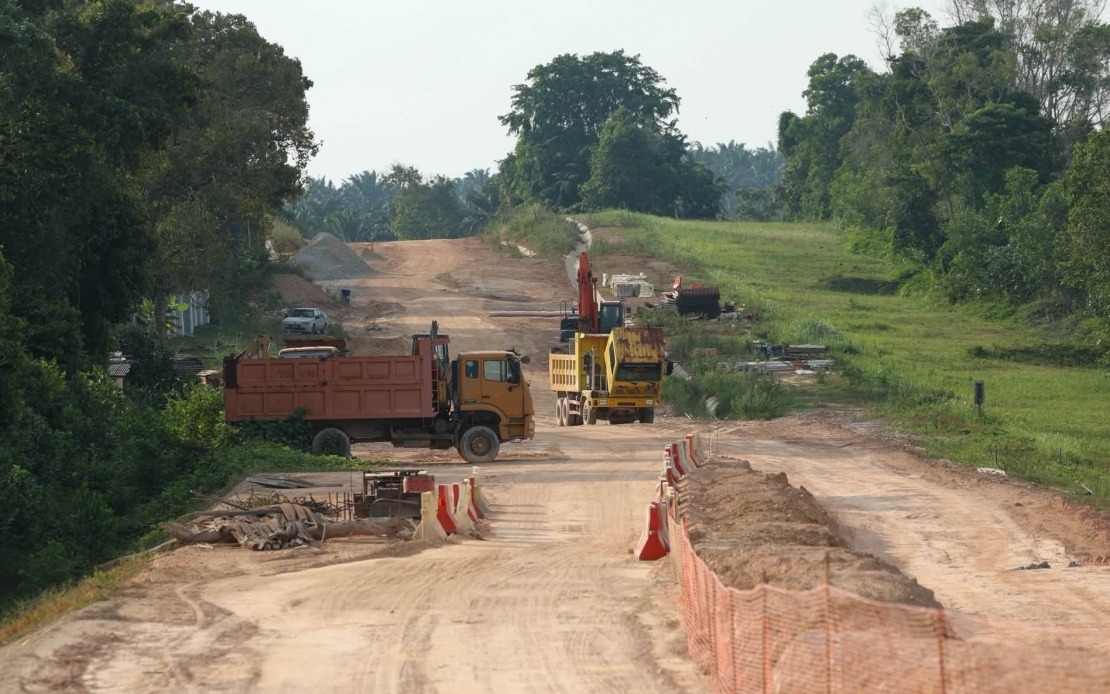
The construction of a major new road linking Lukut to Kampung Sirusa through Port Dickson has surpassed the halfway mark, with physical progress reaching 60.57 per cent and completion running well ahead of the original timeline. The Works Ministry (KKR) confirmed the project is tracking 43 days faster than scheduled, with final handover targeted for August 10, 2027. This acceleration in one of Negeri Sembilan's significant infrastructure undertakings signals both effective project management and the potential for similar initiatives across the region to meet ambitious development goals.
The RM81.92 million project represents a substantial government commitment to modernising the road network servicing Port Dickson and its hinterland communities. The initiative traverses through Kampung Paya and Kampung Bagan Pinang, creating a 10-kilometre thoroughfare engineered to Public Works Department (JKR) R2 specifications. Beyond the basic roadbed construction, the scope encompasses comprehensive supporting infrastructure including slope stabilisation works, drainage and sewerage systems, utility relocation, and structural installations. This integrated approach reflects contemporary thinking about how regional roads should function as more than mere transport corridors, but as frameworks for broader community services and connectivity.
The project's conception emerged from Federal Government development allocations channelled through the Ministry of Rural and Regional Development, with the State JKR serving as the implementing agency. This institutional arrangement demonstrates how Kuala Lumpur-directed funding mechanisms can be deployed to address peripheral infrastructure needs, though questions about sustainability and long-term maintenance responsibility often arise with such arrangements in Malaysia's federal structure. The involvement of Deputy Works Minister Datuk Seri Dr Ahmad Maslan in site inspections underscores the political priority attached to this initiative, suggesting that timely delivery carries implications for the Ministry's performance metrics and the ruling coalition's infrastructure credentials ahead of any electoral cycle.
For Port Dickson residents and businesses, the completed road promises tangible improvements in daily life. Journey times between settlements should compress significantly, while traffic flow improvements may reduce congestion on existing routes. More fundamentally, the corridor will enhance accessibility to essential services that currently require lengthy detours or inadequate alternative pathways. Schools, clinics, and recreational facilities will become more readily accessible, particularly for vehicle owners, though equitable benefits for non-motorised transport users remain dependent on parallel pedestrian and cycling infrastructure that the available information does not detail.
The broader economic implications of this project extend well beyond simple transport convenience. Port Dickson has long positioned itself as both a coastal tourism destination and industrial hub, yet regional integration has been hampered by inadequate internal road networks. By linking peripheral settlements such as Kampung Sirusa and Kampung Paya more directly to commercial and administrative centres, the road removes friction from supply chains and passenger movements. Tourism operators serving the coastal district should benefit from improved visitor accessibility, while businesses requiring spatial separation—warehousing, light manufacturing, agriculture-related processing—gain viable locations that remain connected to markets and labour pools.
The project documentation emphasises catalytic effects on local economic growth through enhanced trade opportunities, expanded employment prospects, and attraction of fresh investment. While such claims require scepticism given their routine inclusion in government press statements, the underlying logic warrants consideration. Improved infrastructure does create conditions for business expansion, though realisation of these benefits depends on complementary factors including skills development, market access, and financial capital availability. In the Malaysian context, infrastructure improvements in secondary towns frequently precede substantial private investment by years or decades, making immediate transformative economic impact unlikely despite official projections.
For Southeast Asian observers monitoring Malaysia's infrastructure trajectory, this project illustrates both strengths and questions worth noting. The acceleration of completion timelines suggests that certain implementing agencies can execute complex works efficiently, potentially offering lessons for regional counterparts struggling with project delays. The integrated approach to road design incorporating utilities and drainage infrastructure reflects international best practices that neighbouring countries are still embedding into their standards. However, the conspicuous absence of detail regarding public transport planning, cycling infrastructure, or environmental impact mitigation suggests that project conception may still prioritise motorised vehicle movement over alternative mobility modes increasingly central to sustainable development frameworks.
The technical specifications adhering to JKR R2 standards situate this project within Malaysia's established infrastructure hierarchy, ensuring compatibility with existing networks while maintaining specified safety and durability parameters. This standardisation, though unglamorous, matters significantly for long-term system functionality and maintenance cost predictability. However, R2 specifications were developed for conditions prevailing in earlier decades, and questions about whether these standards adequately address contemporary challenges including extreme weather intensity and increasing vehicle loads merit examination by policymakers considering future investments.
The Deputy Minister's site visit, framed primarily as a progress inspection ensuring compliance with schedule, specifications and standards, served the secondary function of demonstrating ministerial engagement with regional development priorities. Such visibility matters for constituency management and for signalling that Port Dickson's infrastructure needs receive adequate attention in Putrajaya's allocation processes. For local political representatives, completion 43 days early provides tangible achievements to highlight during any forthcoming electoral campaign, converting technical project management success into political capital.
Looking toward completion in August 2027, stakeholders should begin considering post-delivery operational frameworks. Road maintenance responsibilities, toll or non-toll designation, and traffic management protocols require clarity well before handover occurs. Malaysian experience suggests that infrastructure handover processes occasionally lack rigorous definition of maintenance standards and funding mechanisms, resulting in premature deterioration of assets. The early progress on this project provides opportunity for proactive planning around these dimensions, distinguishing this initiative from predecessors where maintenance considerations emerged only after deterioration became apparent.

