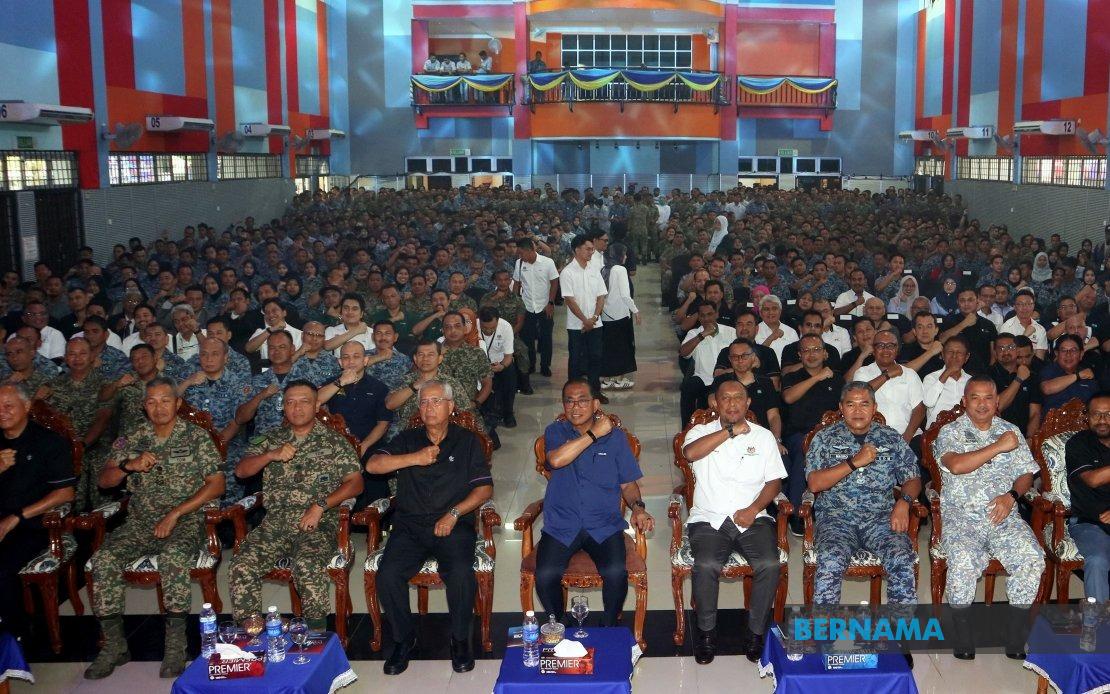
The Armed Forces Fund Board (LTAT) has rolled out an extensive nationwide engagement campaign termed 'Jelajah Wira', which has already reached 28,500 military personnel stationed across the East Coast region. This coordinated outreach effort represents a significant expansion of the fund's direct interaction with its contributor base, signalling a shift towards more ground-level engagement between institutional leadership and service members.
LTAT Chief Executive Mohammad Ashraf Md Radzi framed the initiative as a strategic response to strengthening bonds between fund management and the armed forces across all hierarchical levels. The campaign operates on a phased approach designed to eventually blanket the entire nation, ensuring that both uniformed personnel and their institutional leaders have opportunities for substantive dialogue. This approach acknowledges that many service members may have limited awareness of how their mandatory 10 per cent monthly salary contributions are managed and invested on their behalf.
A centrepiece of the 'Jelajah Wira' campaign has been the unveiling of the LTAT-Affin Debit Card, a financial instrument explicitly framed as recognition for the sustained dedication and sacrifices made by military personnel. Officials described the card's introduction as more than a transactional tool—rather, it symbolizes institutional appreciation for the unwavering commitment that defence force members demonstrate to national security. This gesture carries particular weight in the Malaysian context, where military service is often portrayed as an undervalued profession despite its critical importance to national stability.
The tour has already activated presence across multiple strategic military installations throughout the East Coast and southern regions. Participating bases and camps include Kem Desa Pahlawan in Kelantan, Kuantan Air Force Base, Kem Seri Pantai housing the 16th Royal Malay Regiment in Terengganu, Kem Sungai Udang in Melaka, the naval vessel KD Sultan Ismail in Johor, and Kem Mahkota Kluang, also in Johor. This geographic spread ensures representation across all service branches and allows the fund to gather feedback from diverse operational contexts.
LTAT's approach explicitly connects individual welfare to broader ecosystem considerations, encompassing not merely serving personnel but also their families and the communities adjacent to military installations. This holistic framing acknowledges that military personnel operate within complex social structures where financial security extends beyond individual contributors to encompass dependents and support networks. By addressing this broader context, LTAT positions itself as invested in sustainable quality of life improvements rather than mere transactional fund management.
Among personnel interviewed during the engagement tour, responses reflected genuine appreciation for the fund's mechanisms and competitive returns. Airman I Muhammad Syahmi Mohd Shobri, aged 23, highlighted the scheme's long-term savings advantages, emphasizing that annual dividend payouts have consistently outpaced competing savings vehicles available to military personnel. The trajectory of dividend increases year-over-year suggests that the fund's investment strategy has weathered economic volatility effectively, a consideration of paramount importance when individuals are entrusting a decade or more of contributions.
Retirement planning emerged as a particularly valued dimension of LTAT participation. Airman I Muhammad Izzuddin Mohd Hanapi, 25, articulated how accumulated savings combined with ongoing dividends provide crucial financial scaffolding as service members transition to civilian life. This retirement benefit structure addresses a genuine vulnerability in the military career lifecycle—the relatively abrupt nature of service termination and the necessity for accelerated financial adjustment. The assurance of accumulated capital plus dividend income creates a smoother transition pathway.
The engagement tour also incorporated entertainment and recognition elements designed to sustain morale and reinforce positive institutional associations. Royal Malaysian Air Force Air Sergeant Haidil Jafar, 39, won an electric motorcycle through a lucky draw component, exemplifying how LTAT strategically combines financial education with reward mechanisms that generate positive emotional resonance among contributors. Such elements, while seemingly modest, contribute significantly to how personnel perceive institutional commitment to their wellbeing.
Senior defence ministry and LTAT officials attended the East Coast segment, including Defence Ministry Secretary-General Datuk Lokman Hakim Ali, LTAT Chairman General Tan Sri Azizan Ariffin, and Investment Panel Chairman Datuk Khairol Anuar Mohamad Tawi. This high-level participation underscores official prioritization of the engagement initiative and signals institutional seriousness about fund management transparency and contributor relations. The presence of investment leadership proved particularly significant, as it provided direct access to personnel responsible for the financial decisions affecting long-term returns.
From a broader policy perspective, the 'Jelajah Wira' campaign reflects evolving recognition within Malaysian defence and social policy circles that military personnel require not merely competitive salaries but also sophisticated financial planning infrastructure. As service members increasingly engage with modern banking systems and investment concepts, institutional funds like LTAT must adapt communication strategies to remain relevant and comprehensible to diverse educational and technological backgrounds.
The initiative holds particular resonance for Southeast Asian defence establishments grappling with recruitment and retention challenges amid economic pressures. Countries throughout the region confront similar difficulties in attracting and maintaining quality personnel in military ranks, making competitive compensation packages—including long-term savings vehicles—increasingly important recruitment tools. LTAT's 'Jelajah Wira' demonstrates how institutional funds can transform themselves from administrative abstractions into tangible expressions of employer commitment to personnel welfare.
Looking forward, the continuation of nationwide 'Jelajah Wira' phases beyond the East Coast will determine whether this engagement model generates sustained improvements in contributor satisfaction and financial literacy among personnel. The campaign's success will likely influence broader Malaysian public sector approaches to institutional fund management and personnel relations, particularly as other uniformed services and civil service schemes consider comparable initiatives.

