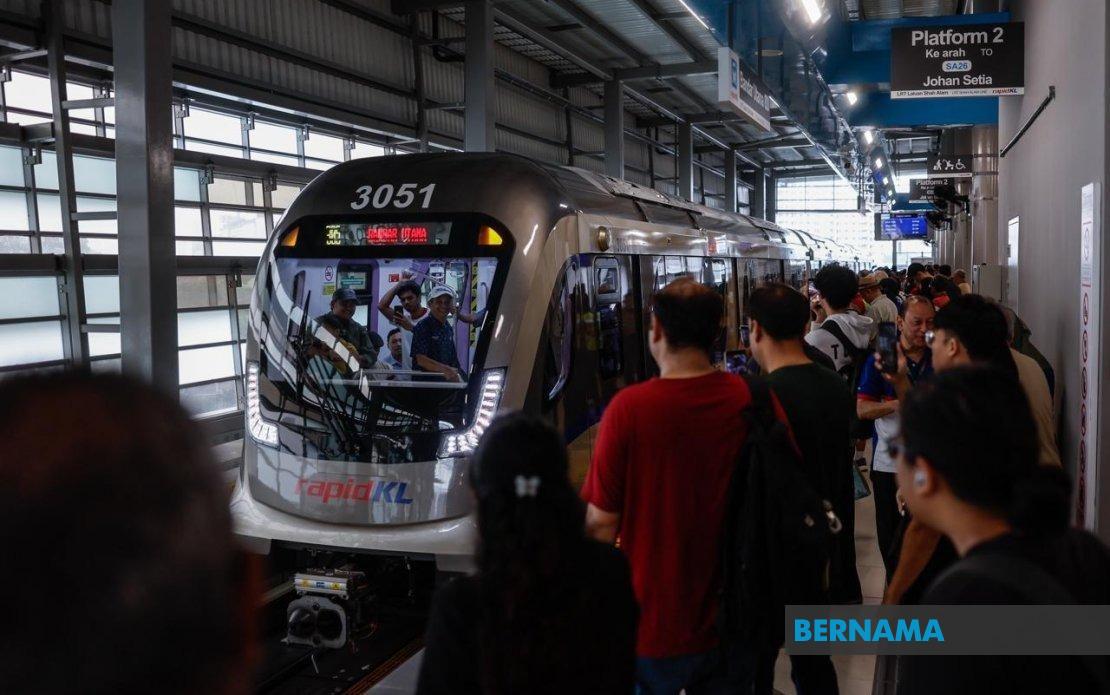
The Light Rail Transit 3 Shah Alam Line commenced service on June 29, carrying between 5,000 and 10,000 passengers during its first operational day. Prasarana Malaysia Berhad, the transport authority managing the new corridor, described the launch as smooth, with early commuters expressing enthusiasm about the service. The line began operations at 6 am, with riders embracing the opportunity to test the new infrastructure and sharing positive reactions across social media platforms. Many highlighted relief at having an alternative to private vehicles and the traffic congestion endemic to the Selangor corridor.
Prasarana president and chief executive officer Amir Hamdan contextualised the opening-day figures as a natural starting point for infrastructure expansion. He indicated that ridership would incrementally accelerate as commuters integrated the line into their regular travel patterns. The operator has established a target of 67,000 daily passengers within the first operational year, a trajectory contingent on how swiftly the travelling public adopts the new service. This measured approach reflects industry experience with new transit lines, which typically require several weeks or months before reaching mature usage levels.
The promotional environment surrounding the launch bolsters near-term adoption prospects. Prime Minister Datok Seri Anwar Ibrahim announced complimentary fares for both the LRT3 Shah Alam Line and connecting Prasarana feeder bus services for one month, extending from the opening date through July 31. This initiative removes financial barriers during the critical early phase when behavioural patterns and commuting habits are forming. The free-ride period represents a significant incentive for potential users in the Shah Alam and surrounding areas to experience the service without fare considerations influencing their decision-making.
Operational performance during the opening day met expectations, according to Prasarana management. Train frequency maintained approximately eight-minute intervals during peak hours, a schedule the operator characterised as manageable given the modest initial demand. All station facilities, including automated gate systems and ticketing infrastructure, functioned without reported disruptions. This technical stability during launch represents an important confidence-builder for passengers unfamiliar with the new line's operations and systems. The smooth operational debut contrasts with occasional teething problems experienced by some new transit projects and suggests adequate preparation by Prasarana's teams.
The LRT3 Shah Alam Line's strategic placement within the broader metropolitan rail network enhances its potential utility. Two critical interchange stations—Glenmarie 2, connecting to the Kelana Jaya Line, and Bandar Utama, linking to the Kajang Line—position the new corridor as a significant connector within the Klang Valley's expanding rapid transit ecosystem. These intersections multiply journey possibilities for commuters, enabling multi-line trips across the conurbation. The interchange stations warrant particular monitoring, as Amir noted, since congestion or operational inefficiencies at these nodes could cascade through the network.
Prasarana's management strategy emphasises adaptive operational planning based on empirical ridership data. The operator indicated willingness to increase train frequency or deploy additional rolling stock should demand warrant such measures. The possibility of stationing standby trains along specific sections during peak periods underscores this flexibility. This pragmatic approach avoids overcommitting resources during the uncertain ramp-up phase while retaining capacity to respond to stronger-than-projected demand. Such scalability proves essential for infrastructure serving a metropolitan area where commuting patterns shift seasonally and cyclically with economic conditions.
The question of service differentiation, particularly women-only coaches, remains undecided at this juncture. Prasarana indicated no immediate plans for gender-segregated facilities but flagged intention to analyse ridership composition and passenger feedback before making such determinations. This measured stance acknowledges evolving safety and comfort preferences within Malaysia's travelling public whilst avoiding premature resource allocation. Similar decisions across Malaysian rail networks have reflected diverse community perspectives, suggesting any eventual policy will require careful calibration to serve rider expectations without imposing unnecessary complexity on operations.
The Shah Alam corridor's integration into Greater Klang Valley transit infrastructure carries implications extending beyond immediate passenger convenience. The line serves portions of Selangor experiencing significant residential and commercial development, offering potential to modulate future transportation demand patterns. By providing viable alternatives to private vehicle ownership in growing suburban districts, the LRT3 Shah Alam Line may influence development densification and settlement patterns around stations. This dynamic aligns with broader Southeast Asian trends toward transit-oriented urban planning, where proximity to high-capacity public transport increasingly shapes real-estate and business location decisions.
The launch occurs within Malaysia's broader context of expanding metropolitan rail capacity. The Klang Valley's transit network has undergone incremental expansion over two decades, with successive lines extending coverage to outer suburban areas. The LRT3 Shah Alam Line represents continuation of this trajectory, serving communities previously reliant on bus networks or private transportation. For commuters throughout Selangor, the new line potentially reduces journey times and journey variability compared to road-based alternatives, particularly valuable attributes during congestion periods. The economic productivity gains from reduced commuting time and stress accumulate across the metropolitan region's working population.
Prasarana's phased approach to service optimisation reflects lessons absorbed from managing established lines. Rather than implementing comprehensive service modifications immediately, the operator plans iterative assessments informed by genuine usage data. This methodology proves more efficient than speculative adjustments and allows resource deployment proportionate to demonstrated demand. The coming weeks will reveal whether initial passenger enthusiasm translates into sustained ridership growth, how peak periods develop, and whether interchange operations proceed smoothly. These metrics will inform Prasarana's decisions regarding frequency adjustment, facility enhancement, and service configuration modifications throughout the critical first year of operations.

