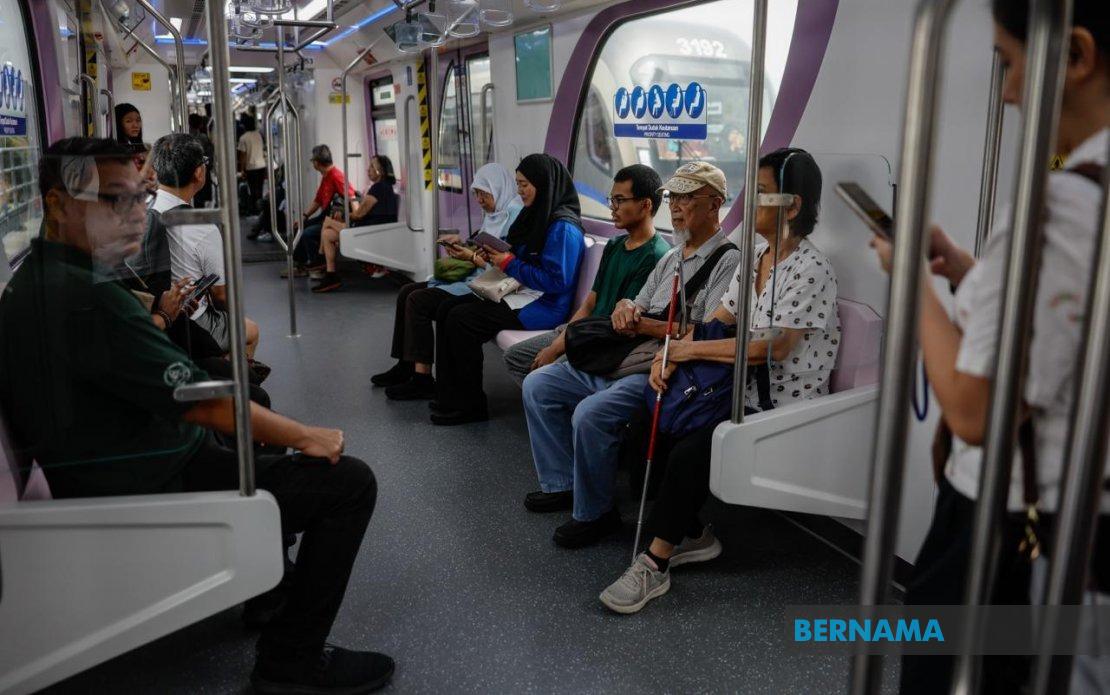
The Light Rail Transit 3 Shah Alam Line commenced operations on June 29 to widespread commuter satisfaction, marking another significant milestone in Malaysia's expanding metropolitan rail infrastructure. On its inaugural day, passengers reported positive experiences with the new service, describing it as efficient, comfortable and instrumental in shortening journey times across the Klang Valley. However, alongside this enthusiasm, users have spotlighted several areas requiring refinement to ensure the line truly serves all segments of society, particularly those with disabilities.
The RM16.63 billion project represents a substantial government commitment to strengthening public transport connectivity in the nation's most densely populated region. Prime Minister Datuk Seri Anwar Ibrahim's announcement of complimentary travel for all passengers through July 31—extending to feeder bus services operated by Prasarana Malaysia Berhad—reflects an intent to encourage rapid adoption and provide the travelling public an extended trial period. This promotional strategy effectively transforms the opening month into a nationwide assessment phase, allowing commuters from diverse backgrounds to evaluate whether the line aligns with their daily mobility requirements.
For Razlan Ibrahim, a 40-year-old visually impaired commuter, the inaugural journey from Kajang to Glenmarie 2 station demonstrated meaningful progress toward inclusive public transport design. The tactile pathways installed throughout the network, particularly at Bandar Utama Station, impressed him significantly by providing seamless navigation to critical facilities without requiring sighted assistance. These textured guiding pathways, which direct users directly to accessible toilets, prayer facilities, and lift entrances, represent a substantial advancement in universal design principles that benefit not only visually impaired passengers but elderly commuters and parents with prams as well.
Yet Razlan's assessment also identified conspicuous shortcomings that undermine the accessibility framework. He emphasised that enhanced Braille signage at key locations—specifically at facilities designated for persons with disabilities, gender-separated prayer rooms, and lift banks—would substantially improve information access for visually impaired users. Currently, while physical navigation pathways function effectively, the informational architecture falls short, creating a gap between mobility and comprehension. This disparity reflects a broader pattern in Malaysian infrastructure development where physical accessibility receives attention while wayfinding for disabled users remains underdeveloped.
The accessibility concerns raised during opening day resonate across Malaysia's disability advocacy community. Persons with disabilities comprise a significant portion of the general population, yet their transportation needs frequently receive secondary consideration in infrastructure planning. The LRT3 Shah Alam Line's partial success—excellent tactile accessibility coupled with inadequate signage—illustrates that accessibility represents a holistic challenge requiring attention across multiple dimensions simultaneously. Planners cannot reasonably expect disabled commuters to navigate a system where physical pathways exist but informational systems remain inaccessible.
Beyond accessibility considerations, female passengers have articulated preferences for women-only coaches to enhance personal security and comfort during peak hours. Samantha Fong, a 26-year-old private sector employee, praised the line's efficiency and time-saving potential, particularly the elimination of required interchanges between Bandar Utama and Glenmarie 2. However, she identified women-only compartments as a desirable feature that would address legitimate safety and comfort concerns common among female commuters across the region. Such provisions, already implemented in certain international transit systems and some Malaysian services, reflect evolving expectations regarding passenger protection and gender-responsive infrastructure design.
The introductory free-fare period presents the government and Prasarana with a valuable window to gather comprehensive feedback and implement iterative improvements before introducing standard pricing. Unlike conventional launch phases where initial momentum quickly dissipates, the extended complimentary period should enable transit authorities to identify systemic problems, assess passenger flow patterns, and prioritise remedial measures systematically. Students and workers, who comprise substantial user cohorts, can assess whether the service genuinely improves their commuting experience or merely adds convenience to existing routines.
Rainchie Lee's observation that the free-fare promotion enables diverse user groups to conduct informed evaluations highlights the strategic value of this approach. Rather than assuming the line will automatically attract passengers based on marketing claims, the government has essentially invited the public to participate in a month-long pilot evaluation. This methodology acknowledges that infrastructure adoption depends critically on demonstrated real-world utility, not promotional promises. Commuters require direct experience to determine whether service quality, frequency, reliability, and route alignment justify behavioural change.
The LRT3 Shah Alam Line's inaugural reception suggests that Malaysia's public transport infrastructure continues advancing materially. Passenger feedback indicates that route design has genuinely reduced travel friction in the Klang Valley corridor. However, the accessibility and amenity gaps identified during opening day underscore that infrastructure excellence demands continuous refinement rather than static post-opening conditions. The next several weeks should witness systematic engagement with passenger suggestions, particularly from persons with disabilities and vulnerable user populations whose needs too often receive insufficient priority.
For Malaysian policymakers, this moment represents an opportunity to establish a feedback-responsive culture around public infrastructure. The difference between adequate transportation and excellent transportation often hinges on responsiveness to user experience data collected during critical early operational phases. Transit authorities should prioritise Braille signage installation, investigate women-only coach feasibility, and systematically address other suggestions emerging from the free-fare period. Such responsiveness would signal that government infrastructure investment reflects genuine commitment to serving all Malaysians equitably, rather than merely constructing systems that technically function.

