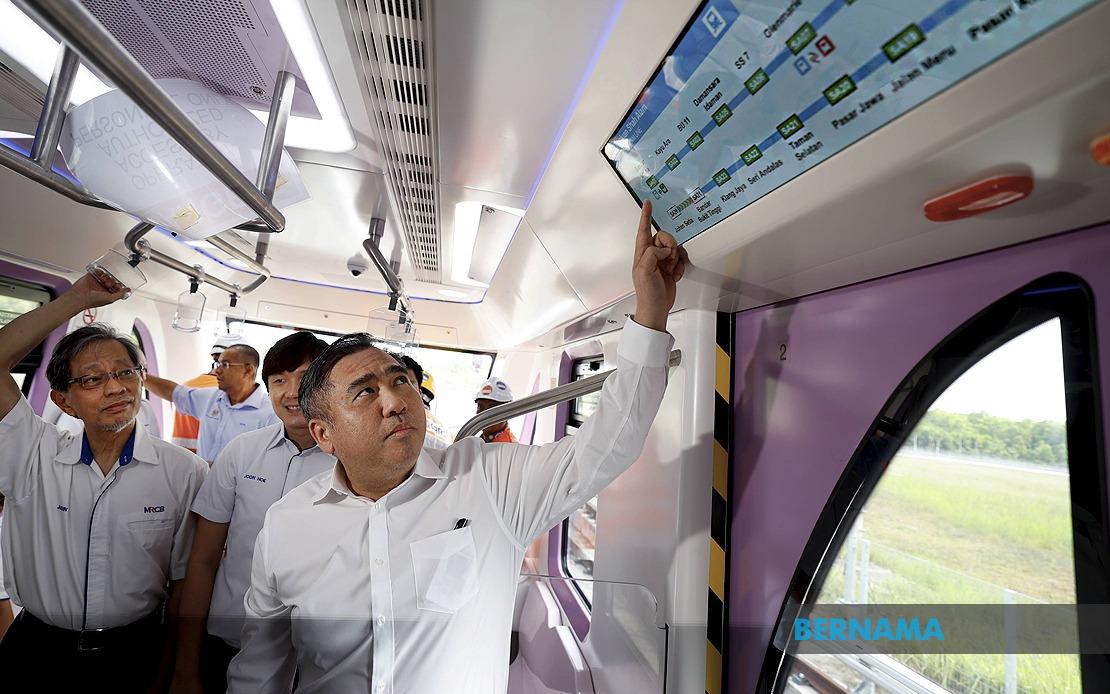
Malaysia's newest rapid transit artery, the Light Rail Transit 3 (LRT3) linking Shah Alam and its hinterland, will commence passenger service on Monday, June 29, Transport Minister Anthony Loke announced on Friday. The occasion will be marked by an official launch ceremony the previous day, with Prime Minister Datuk Seri Anwar Ibrahim slated to perform the honours. Loke disclosed the details while inaugurating a fresh Road Transport Department branch at Terminal Bersepadu Selatan in Kuala Lumpur.
The 37.8-kilometre corridor stretches from Bandar Utama westward through Selangor's urban landscape to Johan Setia, creating a new backbone for commuter movement across the western reaches of the Klang Valley. This infrastructure marks a significant milestone in the nation's rail expansion programme, which has faced considerable scrutiny regarding timelines and cost overruns in recent years. The project's completion and imminent opening represent a test of project delivery capabilities within Malaysia's public transport ecosystem.
Projections suggest the new line will serve approximately two million residents scattered across residential neighbourhoods, commercial districts, and industrial zones that dot its alignment. This substantial catchment underscores the trunk route's strategic importance to regional mobility and economic connectivity. The stations along the corridor will function as interchange points linking residential areas to employment clusters, potentially reshaping commuting patterns and real estate dynamics across the western conurbation.
Planning and design of the LRT3 reflected explicit priorities to strengthen public transit linkages across the Klang Valley's western corridor, addressing long-standing transportation bottlenecks that have constrained regional development. The route deliberately intersects with residential concentrations, office precincts, and manufacturing hubs, positioning the line as a catalyst for deeper integration between living spaces, workplaces, and commercial activity. Such deliberate spatial planning distinguishes the LRT3 from earlier generations of rail infrastructure that often overlooked comprehensive land-use alignment.
For commuters currently dependent on road networks choked with vehicles, the opening offers relief from prolonged journey times and traffic congestion. Students, office workers, and industrial labourers representing the demographic spectrum within the service corridor stand to benefit from faster, predictable transit times. The psychological and economic implications extend beyond mere convenience: reduced commuting stress translates into improved productivity, while lower transportation expenses enhance household purchasing power, particularly among lower-income segments.
The LRT3's emergence also carries implications for Malaysia's broader transport policy direction. Officials have consistently championed public rail expansion as a mechanism to reduce private vehicle dependence and lower carbon emissions from the transport sector. However, translating infrastructure availability into meaningful modal shift requires complementary policy measures including parking restrictions, congestion pricing considerations, and coordinated feeder bus services. The infrastructure alone cannot guarantee uptake; consumer behaviour and competing transport incentives will ultimately determine success metrics.
Regional stakeholders across Selangor will monitor operational performance closely during the initial weeks. Reliability metrics, passenger volumes, and integration effectiveness with existing transport networks will signal whether the investment has delivered anticipated outcomes. Early performance typically influences public perception and repeat ridership, establishing patterns that persist through subsequent years. Authorities face pressure to demonstrate that the infrastructure justifies its capital expenditure and operational complexity.
The LRT3 opening arrives amid broader Southeast Asian discourse regarding urban mobility challenges facing rapidly urbanising regions. Neighbouring nations including Indonesia, Thailand, and Vietnam have pursued similar rapid transit expansion strategies, seeking to manage congestion in major metropolitan areas. Malaysia's experience with the LRT3, whether successful or troubled, will resonate across regional planning and development communities seeking lessons in rail infrastructure delivery.
Economically, the project's completion should invigorate property development along the corridor, as investors anticipate enhanced accessibility and reduced transport costs for future residents and workers. Transit-oriented development possibilities may unlock previously underutilised land parcels within walking distance of stations, though such outcomes depend on responsive zoning policies and developer interest. The intersection of transport infrastructure and property markets remains among the most potent forces reshaping urban Southeast Asian landscapes.
Look's confirmation of Monday's commencement closes a chapter in the LRT3's protracted development narrative, which observers had scrutinised for scheduling delays and budget pressures typical of large infrastructure undertakings in the region. The imminent opening provides Malaysian policymakers and transit authorities with an operational asset and a test case for managing complex urban rail systems. As the line begins daily operations, performance indicators will provide empirical data informing future investment decisions and policy refinements across Malaysia's transport sector.