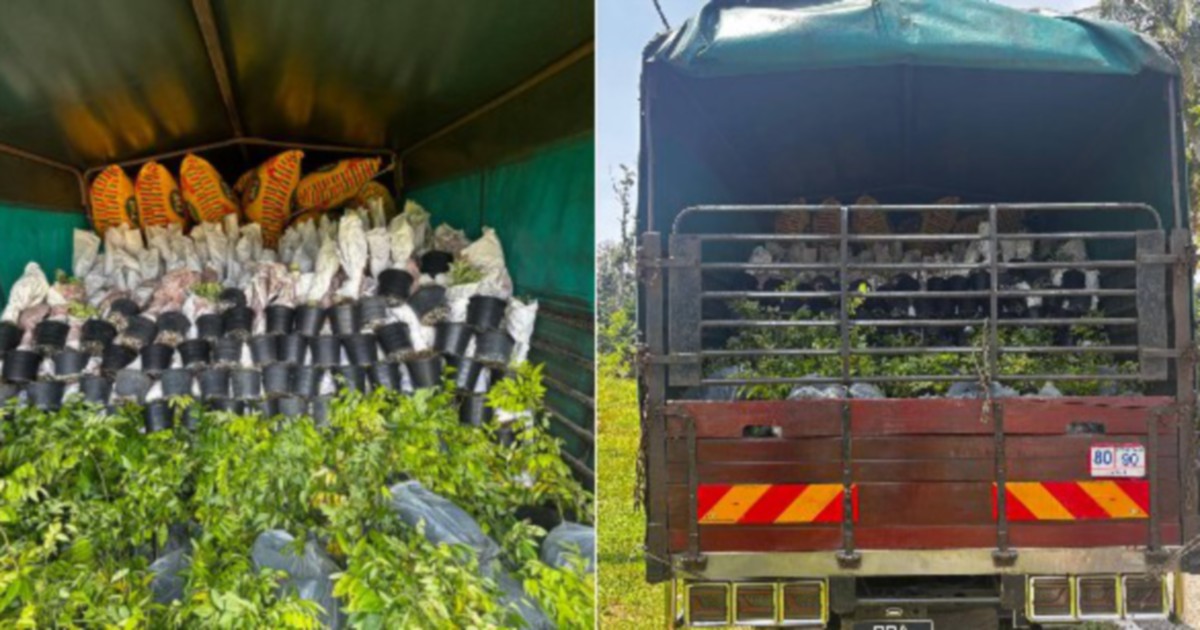
A commercial driver has been taken into custody following the confiscation of 6,000 ornamental plant saplings estimated to be valued at RM200,000 at Kampung Padang Licin in Rantau Panjang. The discovery highlights ongoing concerns about the smuggling of agricultural products across the Malaysia-Thailand border in the Kelantan region, where porous entry points continue to present enforcement challenges.
The interception represents a significant operation against the illicit horticultural trade. Authorities believe the saplings originated from Thailand and were being transported illegally into Malaysia through the Rantau Panjang area, a known trafficking corridor in the northern border zone. The scale of the seizure—involving both the volume of plants and their estimated commercial value—underscores the lucrative nature of contraband agricultural merchandise in regional trade networks.
Ornamental plants have emerged as an increasingly targeted commodity in smuggling operations throughout Southeast Asia, driven by rising demand in Malaysia's growing landscaping and gardening sectors. The RM200,000 valuation attached to this single consignment suggests substantial profit margins that incentivise traffickers to risk border enforcement. Unlike conventional contraband, plant smuggling often evades heightened scrutiny because it lacks the security associations of narcotics or weaponry, though it carries distinct biosecurity and environmental implications.
The Kelantan-Thailand frontier remains a critical vulnerability in Malaysia's border security apparatus. Rantau Panjang specifically sits at a major crossing point between the Malaysian state and Yala Province in Thailand, creating persistent operational challenges for customs and agricultural authorities. The geography of this region, combined with limited resources deployed to monitor remote entry points, enables smugglers to operate with relative impunity. This latest seizure demonstrates that enhanced vigilance has yielded results, yet also indicates the volume of attempted contraband that likely succeeds in passing through undetected.
Biosecurity considerations surrounding imported ornamental plants warrant particular attention in Malaysian enforcement policy. Smuggled botanical specimens bypass mandatory phytosanitary inspections designed to prevent the introduction of plant diseases, invasive pests, and harmful organisms into the local ecosystem. The absence of official documentation and inspection protocols creates risks that extend beyond simple customs violations—unregulated plant imports can threaten Malaysia's agricultural productivity and native biodiversity. This incident therefore carries implications for environmental protection that transcend the immediate commercial illegality.
The arrest and seizure operation reflects coordination between border security agencies responsible for controlling illicit movement of goods across Malaysian frontiers. Effective interdiction of smuggling requires sustained collaboration between customs authorities, agricultural inspectorates, and law enforcement units stationed along international boundaries. The successful detection of this consignment suggests operational effectiveness in monitoring lorry traffic through designated checkpoints, though the sheer quantity seized also implies that detection represents only a fraction of attempted smuggling.
Thailand has emerged as a major source jurisdiction for illegally exported ornamental plants destined for Malaysian markets. Thai horticultural producers and traders operating in border zones have capitalised on price differentials and regulatory arbitrage to supply contraband merchandise to Malaysian buyers willing to circumvent legal import channels. This trade dynamic reflects broader patterns of cross-border trafficking in agricultural commodities throughout the Mekong-ASEAN region, where geographical proximity and established informal trading networks facilitate illicit commerce.
The commercial demand driving this smuggling reflects genuine consumer appetite within Malaysia's expanding horticultural market. Affluent urban consumers increasingly invest in decorative plants and landscaping enhancements, creating lucrative demand that attracts both legitimate and illegal suppliers. Imported ornamental species command premium pricing, incentivising smuggling operations that undercut official import channels by avoiding tariffs, taxes, and compliance costs. Understanding this demand-side dynamic is essential to comprehending why enforcement alone remains insufficient without complementary efforts to inform consumers about biosecurity and legal sourcing.
Legal consequences awaiting the apprehended driver will be determined through judicial proceedings addressing violations of customs and import regulations. The severity of penalties in such cases varies depending on jurisdictional statutes and prosecutorial determinations. Beyond individual culpability, however, this case raises broader questions about organised smuggling networks that typically employ drivers as lower-level operatives. Dismantling trafficking operations requires intelligence work targeting the organisational structures, financing mechanisms, and distribution networks that orchestrate large-scale contraband movements across borders.
Malaysia's border security infrastructure continues evolving in response to emerging smuggling methodologies and shifting commodity priorities among traffickers. This incident contributes to an expanding evidence base demonstrating that horticultural products merit inclusion in border monitoring and intelligence frameworks historically dominated by concern for narcotics and counterfeited goods. Regional cooperation mechanisms, including information sharing with Thai authorities regarding smuggling patterns and trafficking networks, remain critical to disrupting cross-border illicit trade at its source.
The seizure underscores the importance of sustained investment in detection technology, intelligence capabilities, and personnel training at international checkpoints. As smuggling operations become increasingly sophisticated, adapting to detection methods and exploiting regulatory gaps, Malaysian authorities must maintain corresponding enhancements to border control systems. This operation at Rantau Panjang demonstrates that vigilance yields results, yet also indicates the ongoing necessity for comprehensive, multi-agency approaches to border security that address the full spectrum of illicit cross-frontier commerce affecting the region.

