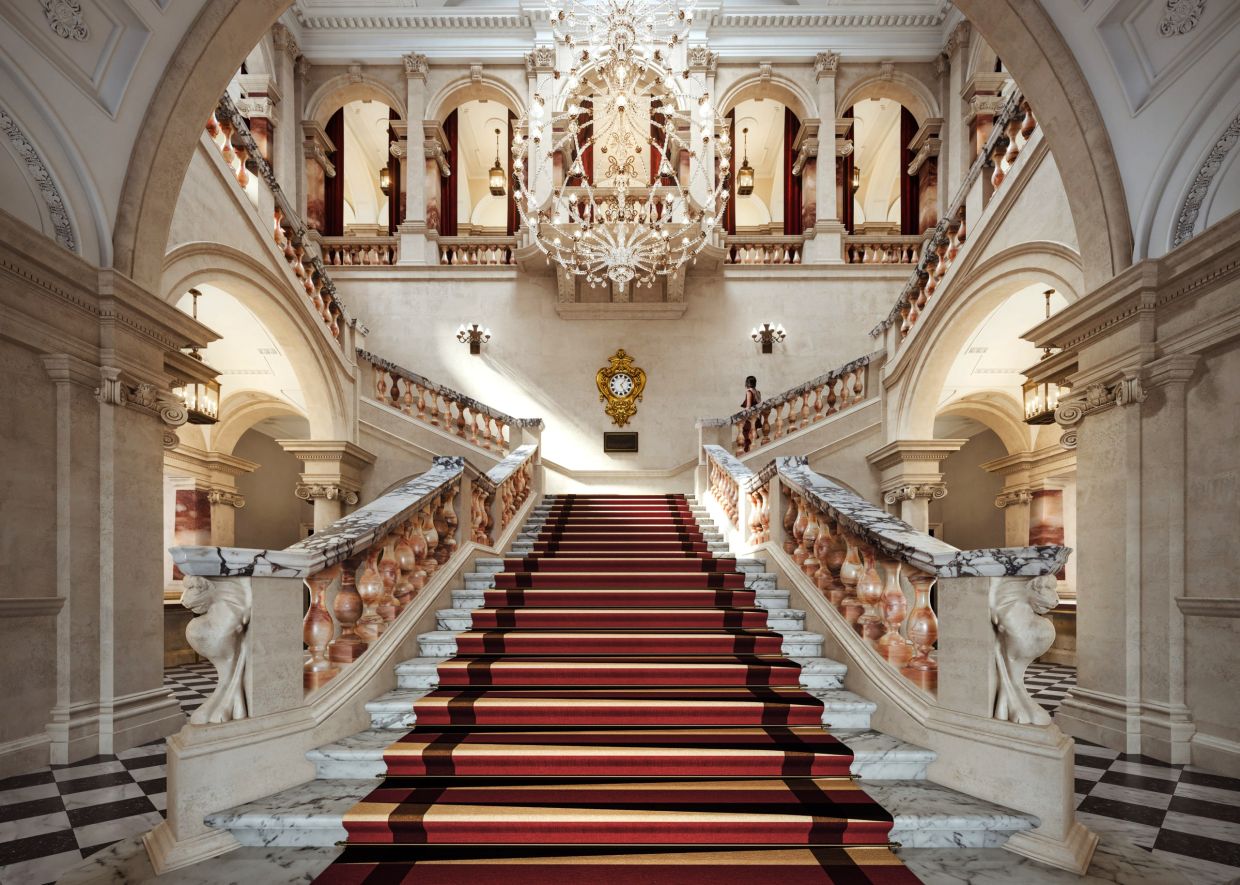
The transformation of London's most powerful institutional spaces into playgrounds for the wealthy represents a remarkable shift in how cities manage their architectural heritage. Raffles London at the OWO invites guests to sip cocktails in a basement where MI5 officers once analysed intelligence, whilst at NoMad London, visitors can sleep in a former magistrates court where Oscar Wilde faced trial. Meanwhile, in Grosvenor Square, the Chancery Rosewood occupies what was once the United States Embassy, the diplomatic seat considered one of the world's most prestigious ambassadorial postings. These are not mere hotels with premium linens and celebrated restaurants; they offer something far more difficult to manufacture—the opportunity to inhabit spaces that were previously accessible only to the political and military elite. Nightly rates exceed £1,000, with guests paying premium prices primarily for the privilege of history itself.
This phenomenon extends across Europe, where Paris, Lisbon, and Rome have each converted former government ministries and central bank headquarters into hospitality venues. Yet London stands apart in the sheer volume and recent concentration of such conversions. As the British government liquidates properties it no longer requires, the world's most established luxury hotel operators have become improbable custodians of national monuments. This shift reflects deeper structural changes in how governments occupy office space and manage their real estate portfolios.
According to hospitality consultants, these historic conversions represent a windfall for developers. The domineering facades, soaring ceilings, and period architectural details are already present, eliminating the need to construct these elements from scratch. John O'Ceallaigh, associate director at PRCO, notes that the character embedded in century-old government buildings fundamentally outweighs the interchangeable luxury of contemporary new-builds. Whereas another marble spa fades from memory, exploring a former courthouse or sleeping within the walls of Cold War-era intelligence operations creates lasting impressions that justify premium pricing. For many travellers, particularly those disillusioned with contemporary politics, there exists a particular psychological appeal in gaining entry to spaces that once symbolised impenetrable state power, now rendered accessible through commerce.
Admiralty Arch exemplifies this trend. The grand neoclassical structure, designed as an Edwardian gateway between Trafalgar Square and Buckingham Palace, will reopen this year as a Waldorf Astoria. Once the offices of naval command and government officials, it hosted luminaries including Louis Mountbatten, Winston Churchill, and Ian Fleming. Jamie Reuben, principal at Reuben Brothers, which purchased and is developing the property, frames the conversion as a return of the national monument to public life. For over a century, the building remained sealed to ordinary citizens; now, any visitor with sufficient wealth may traverse its halls.
The underlying economics driving these conversions stem from fundamental changes in Britain's office market. Whilst demand recovered somewhat from pandemic-related disruptions, occupiers have become far more selective, favouring highly efficient buildings with contemporary systems, superior environmental performance, and amenities capable of enticing employees back from remote work arrangements. Government buildings, by contrast, frequently conceal significant liabilities beneath their imposing exteriors—aging mechanical infrastructure, obsolete electrical and plumbing systems, and outdated cellular office layouts designed for hierarchical bureaucracies.
Hotels possess considerably greater flexibility in repurposing these spaces. Bright perimeter rooms naturally become guest suites, whilst darker interior spaces transform into kitchens, spas, storage areas, and service corridors. Over the past two decades, Britain's fundamental need for expansive government office buildings has contracted sharply, as hybrid working arrangements and leaner civil service structures have reduced space requirements. This transformation created a property management crisis for administrators unwilling to invest in expensive renovations for declining demand.
The Raffles London at the OWO illustrates the scale of these undertakings. The Hinduja Group's £1.4 billion redevelopment, completed in 2023, involved adding three floors above the existing structure and excavating six basement levels beneath it. The complexity of renovating protected historic buildings cannot be overstated. Fire regulations, structural integrity concerns, water ingress, and modern heating and cooling systems all required careful integration. Even apparently minor modifications, such as cutting new doorways, demanded approval from local planning authorities in consultation with Historic England. The entire process consumed approximately eight years.
Architectural teams faced the particular challenge of transforming buildings designed to project authority and exclusivity into welcoming public spaces. At the Old War Office, architects convinced Historic England to permit additional entrances, converting what had functioned as a deliberate fortress into a hotel that opens onto Whitehall through multiple restaurants, bars, and public areas. This psychological shift—from exclusionary to accessible—became central to the commercial proposition. Geoff Hull, director at EPR architects who oversaw the Raffles redesign, emphasises that Britain's changing workspace dynamics fundamentally altered the calculus for maintaining these properties.
The financial scale of these transactions deserves emphasis. The British government sold Admiralty Arch for approximately £60 million in 2012 and the Old War Office for £350 million in 2016. These sales have generated considerable controversy; a 2015 Guardian editorial characterised the Old War Office sale as "public theft," reflecting broader concerns about privatising strategically located national assets. David Brock, head of Historic England's government historic estates unit, acknowledges the risks inherent in disposing of strategically positioned buildings, yet contends that hotel conversion often represents a preferable outcome to vacant deterioration. The civil service has fundamentally downsized, necessitating different approaches to managing inherited infrastructure.
Contemporary luxury travellers increasingly reject generic, cookie-cutter hotel experiences in favour of authentic, location-specific authenticity. NoMad London leans deliberately into its institutional history, housing the Bow Street Museum of Crime & Justice, which documents London's pioneering law enforcement service. Raffles offers guided tours revealing the building's hidden histories—how Boy Scouts once cycled through its vast corridors delivering wartime dispatches, and how intelligence officers conducted operations in spaces now occupied by guest rooms. Guest reviews on Google and Tripadvisor consistently emphasise historical immersion as the primary appeal, with visitors explicitly noting the heritage tours and unique atmospheric qualities as justification for premium pricing.
London remains one of the world's strongest luxury hotel markets, measured by the concentration of rooms commanding nightly rates exceeding £1,000. Average daily rates and revenue per available room in the city's luxury sector have continued rising despite geopolitical uncertainties and the elimination of tax-free shopping post-Brexit. According to CoStar, a real estate analytics firm, heritage buildings strengthen this appeal by providing genuine distinctiveness—a quality that contemporary construction simply cannot replicate. Cristina Balekjian, director of hospitality analytics at CoStar, notes that these distinctive properties align perfectly with luxury market positioning, where authenticity and historical gravitas command premium valuations.
For Southeast Asian readers, these London conversions offer instructive parallels. Many regional capitals possess comparable colonial-era government buildings that could similarly be repositioned as heritage luxury properties. Malaysia's own architectural legacy—from Kuala Lumpur's historic administrative buildings to Penang's colonial courthouse—represents potential tourism assets currently underutilised. The London model demonstrates how strategic property redevelopment, when executed with architectural sensitivity and historical respect, can simultaneously address government space management challenges whilst creating internationally competitive luxury hospitality offerings. Whether Malaysian authorities might adopt similar approaches remains uncertain, but the proven commercial viability in London suggests that heritage-based hotel development represents a sophisticated strategy for transforming institutional spaces into revenue-generating assets.

