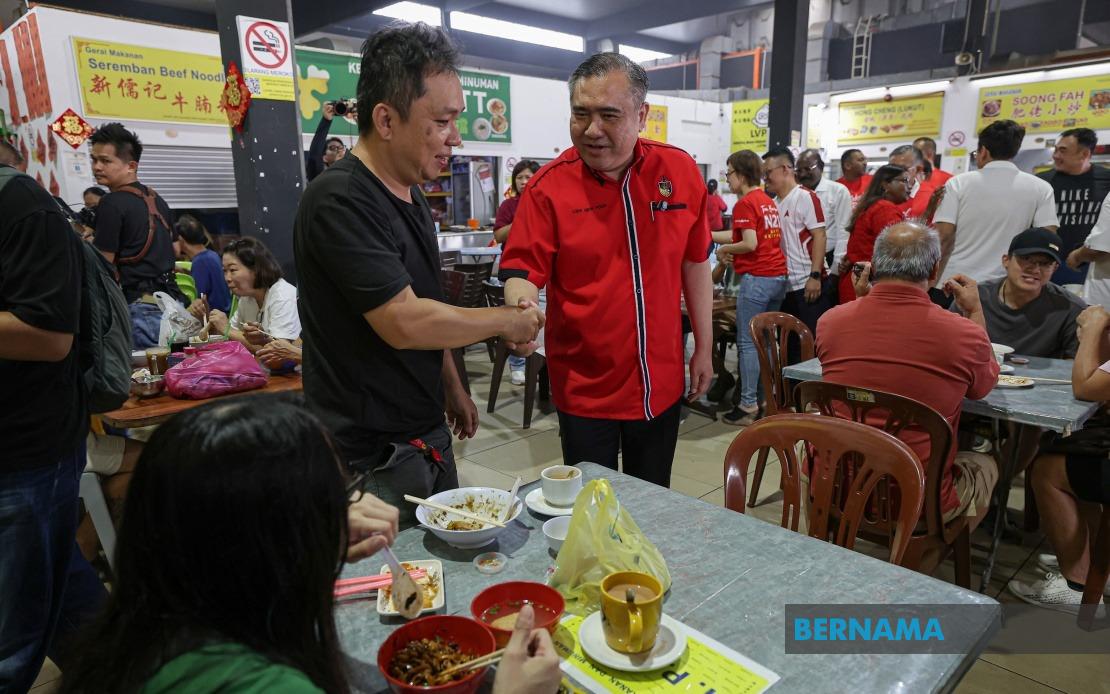
Transport Minister Anthony Loke has moved to enforce rigorous traffic compliance measures across the Negeri Sembilan state election campaign, declaring that road safety standards are non-negotiable requirements that every political party and candidate must observe. Speaking in Seremban after a walkabout with Pakatan Harapan candidates, Loke underscored that maintaining an orderly and secure campaign environment depends fundamentally on adherence to established traffic regulations, warning that winning an election cannot justify breaching safety protocols.
The DAP secretary-general has personally directed his party's campaign personnel to wear helmets consistently whenever operating motorcycles throughout the election period. This directive reflects a broader commitment to accident prevention that Loke expects all political entities contesting the 16th Negeri Sembilan state election to embrace. The minister framed helmet-wearing not as an optional safety measure but as a basic prerequisite that distinguishes responsible campaigning from reckless conduct that endangers both participants and the public.
During nomination day proceedings, Loke demonstrated his commitment by leading a convoy travelling from Pekan Titi to Kuala Klawang, establishing an explicit precondition that participants lacking helmets would be excluded from the motorcade. This practical enforcement approach signals that the Transport Ministry will monitor compliance throughout the campaign rather than merely issuing theoretical reminders. By setting a personal example and communicating expectations beforehand, Loke has positioned himself as willing to enforce traffic standards regardless of party affiliation or political considerations.
Beyond helmet requirements, Loke specifically cautioned all candidates and supporters against the practice of riding on vehicle tailgates while four-wheel-drive vehicles are in motion. He characterised this as fundamentally reckless behaviour that exposes participants to serious injury risks and contradicts basic safety principles. The warning reflects practical concern about campaign-related accidents that have historically resulted in fatalities and injuries during Malaysian elections, suggesting the Transport Ministry views the Negeri Sembilan campaign as an opportunity to establish safer precedents.
The timing of Loke's intervention carries particular significance given the election timeline. The Negeri Sembilan state assembly was dissolved on June 5, with the Election Commission establishing August 1 as polling day and July 28 for early voting. This compressed campaign period means intensive political activity concentrated over several weeks, creating heightened risks of traffic-related incidents if participants prioritise campaign momentum over safety protocols. Loke's emphasis on compliance effectively acknowledges this concentration of risk.
Negeri Sembilan's electoral profile underscores the scale of campaign activity expected during this period. The state contains 889,490 registered voters, comprising 867,151 ordinary voters alongside 16,884 military personnel and their spouses and 5,455 police officers eligible for early voting. This substantial electorate necessitates extensive ground campaigns involving numerous convoys, motorcades, and street activities where traffic safety becomes critical. The voter numbers explain Loke's proactive approach to preventing accidents that could disrupt campaign schedules or damage public confidence in the electoral process.
Loke's remarks reflect broader recognition within Malaysia's political establishment that campaign-related traffic incidents carry reputational costs extending beyond individual injuries. When candidates or party officials disregard traffic laws, campaigns risk appearing indifferent to public safety despite claiming mandates to govern. Conversely, demonstrating genuine commitment to traffic compliance during elections establishes credibility for road safety policies these parties may subsequently implement if elected. The Transport Ministry's intervention therefore serves dual purposes of accident prevention and political messaging about governance standards.
The minister's call for all parties and leaders to lead by example represents an explicit appeal to political accountability transcending partisan divisions. Rather than targeting specific parties, Loke has framed traffic compliance as an expectation applying equally across the political spectrum. This approach recognises that campaign safety depends on collective responsibility rather than regulatory enforcement alone, requiring candidates from all background to internalise safety values rather than merely comply with external restrictions.
For Malaysian voters and observers of Negeri Sembilan's election, Loke's intervention illustrates how governance standards established during campaigns carry implications for broader public confidence in institutions. Elections where participants visibly prioritise safety demonstrate commitment to rule of law and institutional respect. Conversely, campaigns characterised by traffic violations and safety breaches suggest candidates view regulations as obstacles to electoral success rather than expressions of collective welfare. This symbolic dimension explains why Transport Ministry involvement in campaign governance extends beyond technical traffic administration.
The enforcement of these standards also carries implications for Southeast Asian election practices more broadly. As a developed democracy with sophisticated electoral institutions, Malaysia's approach to campaign safety sets precedents that neighbouring countries may reference when developing their own guidelines. Demonstrating that political competition need not require sacrificing public safety creates templates for elections throughout the region, potentially contributing to systemic improvements in how Southeast Asian democracies balance electoral intensity with citizen protection.
Looking forward, the success of Loke's campaign compliance initiative will depend on sustained monitoring beyond the high-profile walkabouts that attract media attention. Ground-level enforcement at campaign rallies, convoy movements, and neighbourhood canvassing activities will determine whether the transport minister's directives translate into actual behaviour changes among candidates and supporters. The measure's effectiveness will ultimately be tested not through formal compliance announcements but through the absence of traffic-related incidents throughout the campaign period.

