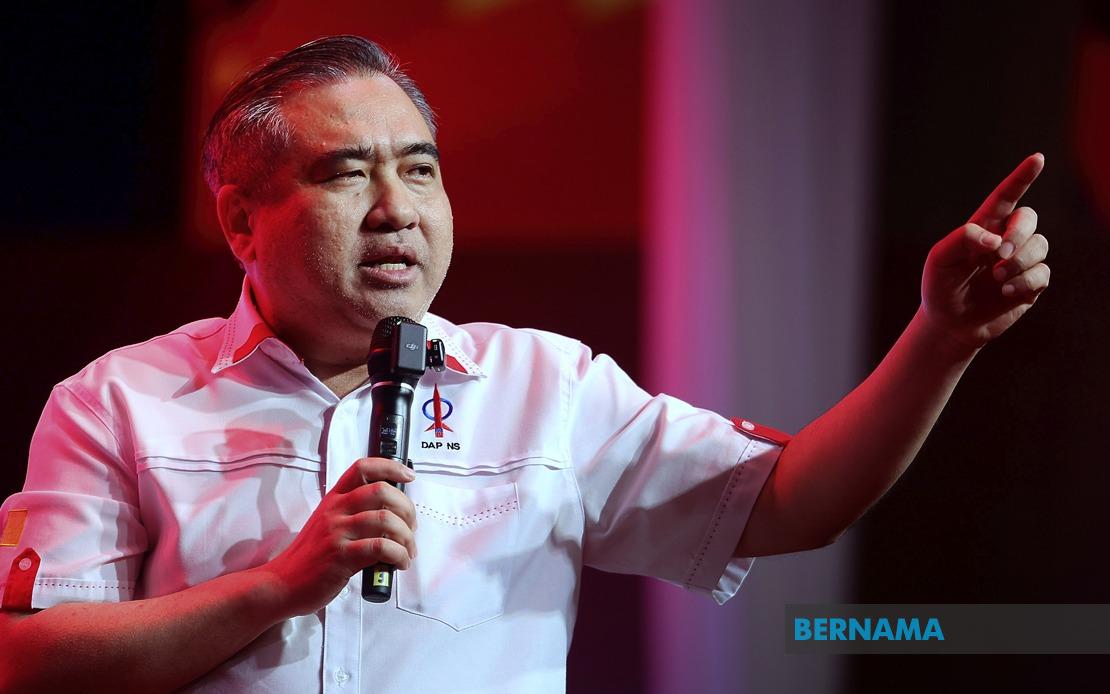
DAP secretary-general Anthony Loke has committed to running a campaign grounded in substantive policy proposals rather than personal attacks during the 16th Negeri Sembilan state election, signalling a measured approach to campaigning within the Unity Government framework. Speaking at a Pakatan Harapan dinner in Seremban on July 19, Loke underscored the importance of parties articulating their vision and objectives for constituents, emphasizing that electoral contests should ultimately be decided on the merits of competing visions rather than character assaults.
The Transport Minister's principled stance reflects broader guidance issued by Prime Minister Datuk Seri Anwar Ibrahim, who has advised government officeholders to maintain discipline and restraint when campaigning in state and federal elections. The directive represents an attempt to preserve the stability and functionality of the Unity Government coalition, which brings together parties spanning the political spectrum including Barisan Nasional, Pakatan Harapan, and other groups. For Malaysia's complex multiparty system, such internal discipline becomes essential when coalition partners contest elections against one another, as they do in the Negeri Sembilan race.
Loke's personal commitment to avoid attacking Cabinet ministers carries particular significance given the intricate interpersonal dynamics within government. He notes that coalition members meet regularly at weekly Cabinet sessions and must coordinate on matters of national importance, making antagonistic campaign rhetoric potentially counterproductive to governance. This calculus reveals how Malaysia's power-sharing arrangements, while providing political stability, require participants to compartmentalise their roles as both government colleagues and electoral competitors.
A striking demonstration of Loke's restraint concerns the Rantau state constituency, where Foreign Minister and Barisan Nasional deputy chairman Datuk Seri Mohamad Hasan is contesting. Despite the competitive context, Loke consciously opted not to campaign in that seat, a decision he frames as preserving harmony within the broader Unity Government structure. This self-imposed boundary illustrates how senior figures within coalition governments must navigate the tension between advancing party interests and maintaining institutional cohesion.
Instead of dispersing his energies across multiple battlegrounds, Loke has concentrated his campaign efforts on the Chennah state constituency, which he personally contests, as well as supporting candidates backed by his DAP party. He is also assisting Menteri Besar Datuk Seri Aminuddin Harun in campaigning for the Linggi seat, a focused strategy that permits deeper engagement with specific communities rather than superficial interventions across numerous seats.
Loke's position as Transport Minister, rather than representing a liability that distances him from constituent concerns, actually constitutes an asset for Chennah residents, according to his characterization. He argues that his ministerial portfolio enables him to direct significantly greater resources and allocations toward his constituency than would otherwise be possible for a backbench representative. This argument carries weight in Malaysian politics, where ministerial standing frequently translates into tangible benefits for represented areas through federal funding mechanisms.
The minister specifically highlighted implementation of Kampung MADANI projects as evidence of his capacity to deliver tangible improvements to Chennah. Kampung MADANI, a government initiative aimed at holistic village development encompassing infrastructure, digital connectivity, and community programmes, represents the type of federal-level intervention that only ministers can effectively champion. Residents in Chennah can expect enhanced digital infrastructure, improved facilities, and targeted development projects that reflect Loke's ministerial influence.
Beyond programmatic achievements, Loke has assembled a dedicated full-time constituency management team responsible for addressing constituent grievances and service delivery matters. This institutional infrastructure ensures that his Cabinet responsibilities do not translate into actual neglect of Chennah residents, with trained staff handling day-to-day constituent relations and problem resolution. The model reflects best practice constituency management within the Malaysian political system, where senior ministers often employ professional teams to maintain local engagement despite substantial Kuala Lumpur-based obligations.
The Negeri Sembilan state election occurs against the backdrop of Malaysia's evolving political landscape, where the stability of the Unity Government remains a pressing concern for policymakers and observers. State elections serve as important barometers of electoral sentiment and coalition stability, with results potentially influencing calculations within Kuala Lumpur. The election schedule indicates that early voting will occur on July 28, with the main polling day set for August 1, compressed timelines that require campaigns to achieve maximum impact efficiently.
Loke's emphasis on policy substance over personal attack rhetoric aligns with broader calls within Malaysian political discourse for elevating the quality of electoral competition. In a democracy where political fragmentation and coalition complexity characterize the landscape, campaigns focused on competing policy visions rather than character assassination contribute to more substantive public deliberation. The Transport Minister's approach implicitly acknowledges that Malaysian voters increasingly seek clarity on what parties intend to deliver rather than merely negative narratives about opponents.
The strategic choice to avoid attacking Barisan Nasional colleagues in government positions also reflects pragmatic recognition of electoral dynamics. In constituencies where Unity Government components compete against one another, voters may be less persuaded by negative messaging about current government partners than by affirmative arguments about what each party brings to the table. Voters who selected the current government coalition, after all, made conscious choices to support parties now competing in Negeri Sembilan, and blanket attacks on coalition partners might alienate those same voters.
Looking forward, Loke's campaign model potentially establishes a template for how senior figures across different coalition parties might conduct themselves during state elections. His example suggests that government stability and electoral competitiveness need not be mutually exclusive if participants adopt sufficient restraint and discipline. Whether other senior politicians embrace similar approaches remains to be seen, but Loke's principled stance demonstrates that substantive policy competition can coexist with institutional responsibility.

