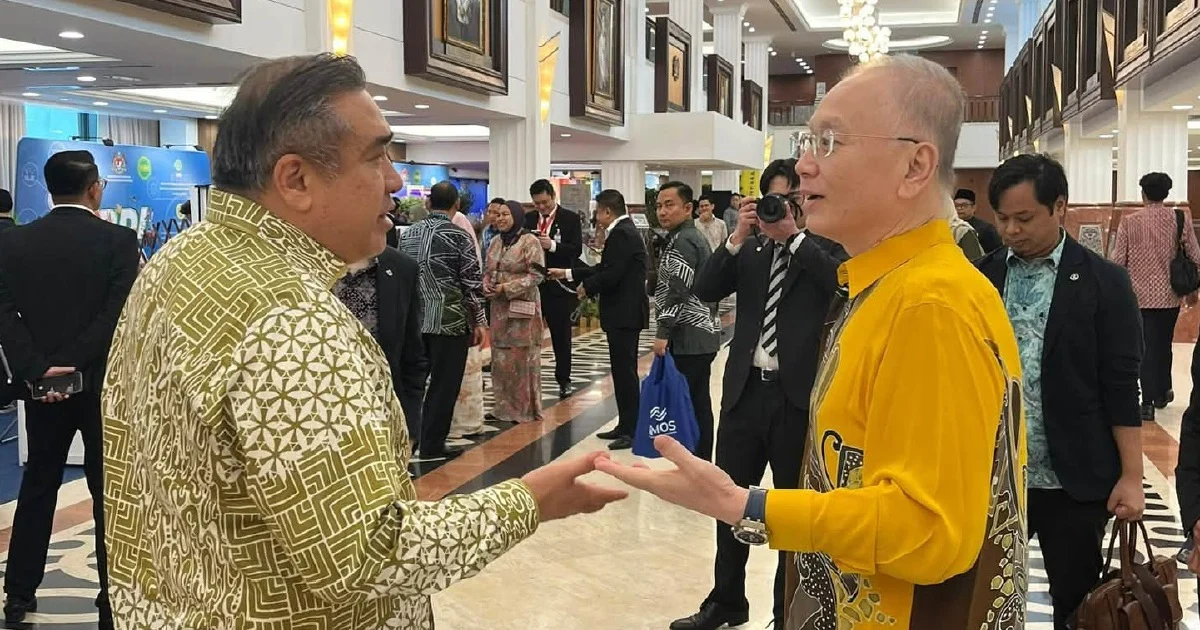
In a show of pragmatic statesmanship amid a fiercely contested campaign season, DAP secretary-general Anthony Loke has stressed that parliamentary business must remain cordial and dignified even as political temperatures rise across Johor. The assurance comes as both his party and the MCA prepare for what promises to be one of the country's most hard-fought electoral contests, with implications extending well beyond the peninsula's southern state.
Loke's message reflects a broader understanding among senior legislators that the intensity of election campaigns, particularly those involving coalition partners and rivals, should not spill into the deliberative chambers of parliament. His position carries weight given the DAP's prominence in the current Pakatan Harapan-led administration and the party's significant representation in the Johor state legislature. The emphasis on parliamentary decorum suggests recognition that public institutions function best when politicians separate campaign theatrics from legislative responsibilities.
The Johor election has become a critical proving ground for Malaysia's evolving political coalitions. For Pakatan Harapan, securing or maintaining influence in the state remains essential to validating its governance record nationally. For Barisan Nasional and its allies, the contest represents a chance to demonstrate renewed relevance after years of internal fracturing and electoral setbacks. MCA, specifically, needs a strong showing to strengthen its negotiating position within the broader Barisan framework and stake a claim to Chinese community representation against DAP's growing influence.
Wee Ka Siong's concurrence with Loke's position is noteworthy. The MCA chief recognises that while parties must campaign vigorously in Johor, parliament remains a space where even adversaries must function collegially. This recognition transcends partisan calculus; it reflects an appreciation that Malaysia's parliamentary system depends on legislators respecting institutional norms. When election campaigns translate into parliamentary dysfunction, the public loses confidence in all institutions, not merely the parties involved.
The commitment to maintaining parliamentary professionalism becomes increasingly important given Malaysia's recent history of political volatility. Since 2018, the country has experienced multiple changes in government, coalition realignments, and institutional strain. Each transition tested parliamentary conventions and sometimes found them wanting. Creating space for genuine legislative debate while campaigns proceed outside these chambers becomes a stabilising force, allowing parliament to function as intended—a forum for scrutiny, debate, and lawmaking rather than merely an extension of campaign platforms.
For Malaysian observers, the Loke-Wee understanding carries practical implications. Many voters in Johor will assess parties partly on their local campaign conduct but also on how their representatives perform in parliament and national politics. A campaign that devolves into personal attacks and institutional disrespect alienates moderate voters who believe in fair electoral competition grounded in policy differences rather than character assassination. By containing the campaign's most abrasive elements outside parliament, both DAP and MCA allow substantive policy debates to occur within the chamber, providing voters with genuine information for their decision-making.
The Johor context also matters regionally. Other Southeast Asian democracies watch Malaysia's handling of competitive elections, particularly whether parties can contest vigorously without undermining democratic institutions. Successfully maintaining parliamentary standards during hotly contested campaigns demonstrates democratic maturity—the ability to disagree sharply on policy and electoral matters while respecting shared institutional frameworks. This credibility becomes important as Malaysia seeks to project soft power and influence across ASEAN.
Behind the scenes, the Loke-Wee understanding likely reflects practical calculations as well. Both leaders understand that excessive parliamentary antagonism creates room for accusations of institutional bias or fairness violations, potentially complicating election conduct and credibility. Election observers and both domestic and international commentators scrutinise not just campaign tactics but also whether elected institutions function impartially during elections. Politicians who visibly cooperate on parliamentary matters, despite electoral opposition, demonstrate confidence in the system and their respective mandates.
The agreement also acknowledges that some parliamentarians may have constituencies both in Johor and elsewhere, requiring them to maintain relationships across state boundaries. DAP and MCA members sit together in federal parliament regardless of their Johor positioning. A commitment to parliamentary professionalism allows these cross-party working relationships to survive an intense campaign without becoming untenable. Furthermore, future coalition possibilities—whether in Johor state administration or federal government—depend on maintaining channels of communication and mutual respect.
For the broader Malaysian electorate, Loke and Wee's position sends a reassuring signal. It suggests that despite electoral contestation and competing interests, the country's political leadership recognises boundaries beyond which competition should not venture. The health of Malaysian democracy depends not merely on competitive elections but on politicians and institutions functioning appropriately within their respective domains. When parliament remains a space for professional discourse and Johor campaigns proceed as competitive electoral contests, the system works as intended.
The coming weeks will test this commitment as both parties intensify their Johor campaigns. Voters will observe whether campaign conduct remains broadly professional, whether parliamentary proceedings maintain their customary tone, and whether the Loke-Wee understanding translates into sustained institutional civility. The outcome will signal whether Malaysia's political leadership has matured beyond treating all forums as campaign extensions and whether the country can handle major state elections without permitting institutional strain.

