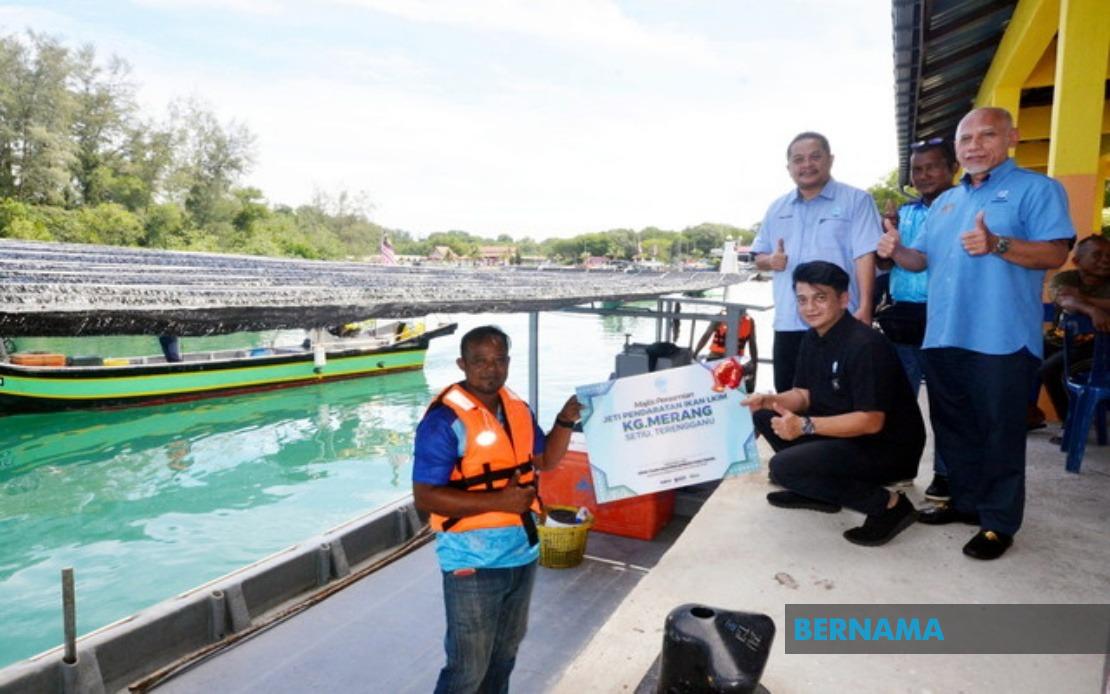
Malaysia's fisheries sector received a boost this week as the Malaysian Fisheries Development Authority announced it has channelled RM2 million since last year into repairing, upgrading and constructing fish landing jetties nationwide. The initiative represents a strategic push to strengthen the nation's fishing infrastructure and improve economic conditions for communities dependent on maritime livelihoods. LKIM chairman Muhammad Faiz Fadzil disclosed the allocation details while presiding over the official handover of the newly completed Kampung Merang Fish Landing Jetty in Bandar Permaisuri, underscoring the authority's commitment to modernising facilities that remain crucial to the country's fisheries economy.
The Merang project exemplifies the tangible outcomes of LKIM's infrastructure programme. Built at a cost of RM500,000, the facility features a modern concrete structure designed to replace ageing wooden infrastructure that had deteriorated beyond safe operational standards. The jetty began full operations immediately following its handover ceremony, serving a fishing community of 124 registered fishermen who collectively operate 68 boats from the landing point. This scale of impact demonstrates how targeted infrastructure investment can directly affect livelihoods in coastal communities, where fishing remains not merely an economic activity but a generational way of life for many families.
Within the current financial year, LKIM has accelerated its programme with the Merang completion marking a significant achievement. However, momentum continues beyond this single project. Two additional jetty initiatives are in advanced stages of development, with the Perak and Labuan schemes progressing through documentation and tender procurement phases. This pipeline of projects reflects LKIM's broader strategic vision, though Muhammad Faiz acknowledged the practical constraints limiting expansion speed. The chairman explicitly called upon the government to consider allocating additional resources in the upcoming national budget, signalling that current funding levels, while meaningful, cannot satisfy the full scope of infrastructure needs across Malaysia's extensive coastline and fishing communities.
The broader context reveals LKIM's substantial operational portfolio. The authority currently oversees 372 fish landing jetties scattered throughout Malaysian waters, complemented by 48 fisheries complexes and dedicated ports. This expansive network illustrates both the scale of Malaysia's fishing sector and the complexity of maintaining modern infrastructure across a sprawling maritime domain. The diversity of facilities reflects different regional requirements, from major commercial ports handling significant volumes to smaller community landing points serving localised fishing operations. Each facility demands ongoing investment in maintenance, upgrades and occasional complete reconstruction as materials age and operational demands evolve.
The Setiu district, where Merang is located, demonstrates the potential impact of infrastructure improvement. Current records indicate the area generates approximately 243 metric tonnes of fish landings annually, a figure LKIM anticipates will increase substantially as fishermen fully utilise the upgraded facility. This projection rests on logical reasoning: better infrastructure removes logistical constraints that previously impeded operations. A modern jetty with appropriate safety features, proper dock structures and adequate handling facilities enables faster offloading, reduces product spoilage and streamlines the process connecting fishermen directly to buyers and markets. The efficiency gains translate directly into economic benefits for individual fishing households.
Crucially, improved landing infrastructure addresses practical challenges that persistently undermine fishing community incomes. Muhammad Faiz emphasised that fishermen depend fundamentally on catch productivity and market access for household survival. When landing facilities prove inadequate, marginal costs increase while operational flexibility diminishes. A fisherman cannot choose optimal selling times if jetty congestion or unsafe conditions force rushed sales at disadvantageous prices. Modern facilities eliminate such constraints, enabling better commercial decisions and ultimately supporting income growth. This economic logic underpins LKIM's investment rationale and explains why infrastructure spending in fisheries carries genuine development implications beyond mere asset creation.
The replacement of the previous Merang jetty carries symbolic significance within Malaysia's development narrative. The original structure, constructed by villagers themselves from available materials, represented traditional community self-reliance but ultimately proved insufficient for contemporary operational standards. The transition to purpose-built, professionally engineered concrete infrastructure embodies Malaysia's broader modernisation trajectory in rural and coastal sectors. Rather than viewing these upgrades as replacing community initiative, they should be understood as government recognising and supporting essential economic infrastructure that individual communities cannot sustainably maintain to modern safety and efficiency standards.
Regional context adds another dimension to Malaysia's jetty investment programme. Southeast Asian fishing communities across Thailand, Vietnam, Indonesia and the Philippines face similar infrastructure challenges. Malaysia's systematic approach to cataloguing, maintaining and upgrading jetties offers a model of institutional commitment to fisheries support. As regional competition intensifies in maritime resources, nations investing in domestic fishing infrastructure gain competitive advantages. Modernised facilities enable more efficient catch processing, better preservation and faster market access, ultimately determining competitiveness in export markets where quality and reliability increasingly matter.
The funding question remains the central policy challenge. LKIM's RM2 million allocation since last year, while substantial, becomes modest when divided across 372 existing jetties plus the ongoing development programme. Muhammad Faiz's explicit call for enhanced budget allocation reflects realistic assessment of infrastructure needs. Beyond simple facility numbers, coastal areas continue expanding, fishing techniques modernise requiring different dock specifications, and climate impacts necessitate structural reinforcement. These cumulative demands ensure that jetty infrastructure requires sustained, not episodic, investment commitments. How the government prioritises fisheries infrastructure funding in forthcoming budgets will signal the seriousness of its commitment to supporting Malaysia's fishing communities and ensuring the sector remains economically viable through coming decades of regional competition and environmental change.

