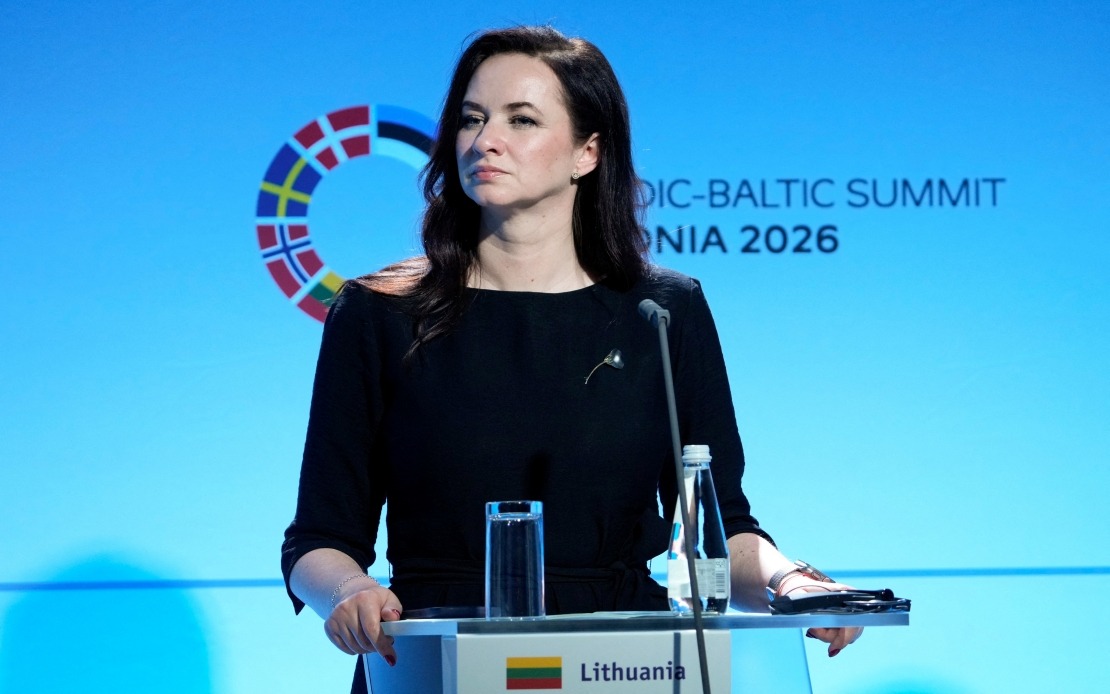
Lithuania's political landscape has shifted once again with the resignation of Prime Minister Inga Ruginiene on Tuesday, marking another significant transition in the Baltic nation's governance barely eight months after the last change of administration. The announcement sets in motion a constitutionally prescribed sequence of events that will culminate in the formation of what will be the third governing coalition assembled by the Social Democrats following parliamentary elections held in late 2024, underscoring the fragility of political alliances in the country's current parliament.
President Gitanas Nauseda formally accepted the government's resignation and moved swiftly to initiate the transition process. Under Lithuania's constitutional framework, the president now has a 15-day window to nominate a candidate for the prime minister position. The nominated individual must then secure the confidence of the Seimas, the country's unicameral parliament, a procedural requirement designed to ensure parliamentary oversight of executive appointments.
Mindaugas Sinkevicius, who chairs the Lithuanian Social Democratic Party, stands as the overwhelming favourite to receive the presidential nomination. If parliament votes to approve his candidacy, Sinkevicius will then face the challenging task of assembling a functioning cabinet and articulating a coherent governing programme within 15 days. Following that initial phase, he will have an additional 15 days to submit the complete list of cabinet ministers for parliamentary approval, creating a compressed timeline for coalition negotiations and administrative preparation.
The repeated restructuring of Lithuania's government reflects deeper structural challenges within the Social Democratic-led governing majority. Since winning the late 2024 elections, the party has now attempted to form three separate governing coalitions, suggesting ongoing tensions either within the party itself or between coalition partners regarding policy priorities and resource allocation. This pattern of instability raises questions about whether the Social Democrats can maintain sufficient parliamentary support to govern effectively, particularly given the apparent difficulty in maintaining stable coalitions with potential partners.
The outgoing Ruginiene government, which assumed office in August following the resignation of her predecessor Gintautas Paluckas, conducted its final cabinet meeting on Tuesday morning. During this gathering, ministers unanimously approved a resolution formalizing the administration's resignation, suggesting that the decision reflected either internal consensus or an orchestrated transition rather than a sudden political crisis. Ruginiene acknowledged in remarks to her departing cabinet that despite confronting numerous substantial challenges, the government had compiled achievements worthy of recognition.
President Nauseda has requested that the outgoing cabinet continue operating in a caretaker capacity until a new administration can be properly constituted and sworn in. This arrangement ensures governmental continuity and prevents administrative paralysis during the transition period, allowing essential state functions to continue uninterrupted while negotiations over the new coalition composition proceed. Such caretaker arrangements are standard practice in parliamentary democracies facing governmental transitions.
For Malaysian observers, Lithuania's political situation illustrates the complexities that can emerge in parliamentary systems where no single party commands an overwhelming majority. Coalition governments require careful balance and sustained cooperation among partners with potentially divergent interests, a challenge that evidently confronts the Social Democrats despite their electoral victory. The rapid succession of coalition formations suggests that simply winning an election provides no guarantee of stable governance if internal party cohesion or inter-party relations prove fragile.
The implications extend beyond Lithuania itself. Baltic states form part of the broader European Union and NATO frameworks, and political instability—even when managed constitutionally—can complicate their engagement with European security and economic policy-making during periods of governmental transition. The current geopolitical environment, with Russia's continued aggression in Ukraine and ongoing security concerns affecting the Baltic region, makes governmental stability particularly important.
The Social Democrats' apparent struggle to maintain viable coalitions may also reflect broader ideological or policy divisions that have not been fully resolved through the electoral process. Whether Sinkevicius, if confirmed as prime minister, can successfully negotiate a more durable coalition arrangement remains unclear. His success will likely depend on identifying policy compromises and resource-sharing arrangements that satisfy coalition partners more effectively than previous attempts have managed.
The constitutional timeline established for Lithuania's government formation is deliberately structured to prevent prolonged political uncertainty. With roughly 45 days allocated for nomination, parliamentary approval, cabinet formation, and final ministerial appointments, the country should have a fully functional new government within roughly six weeks. This compressed schedule, while creating pressure on incoming administrators, reflects a deliberate design to minimize governance gaps and maintain institutional effectiveness throughout transitions.