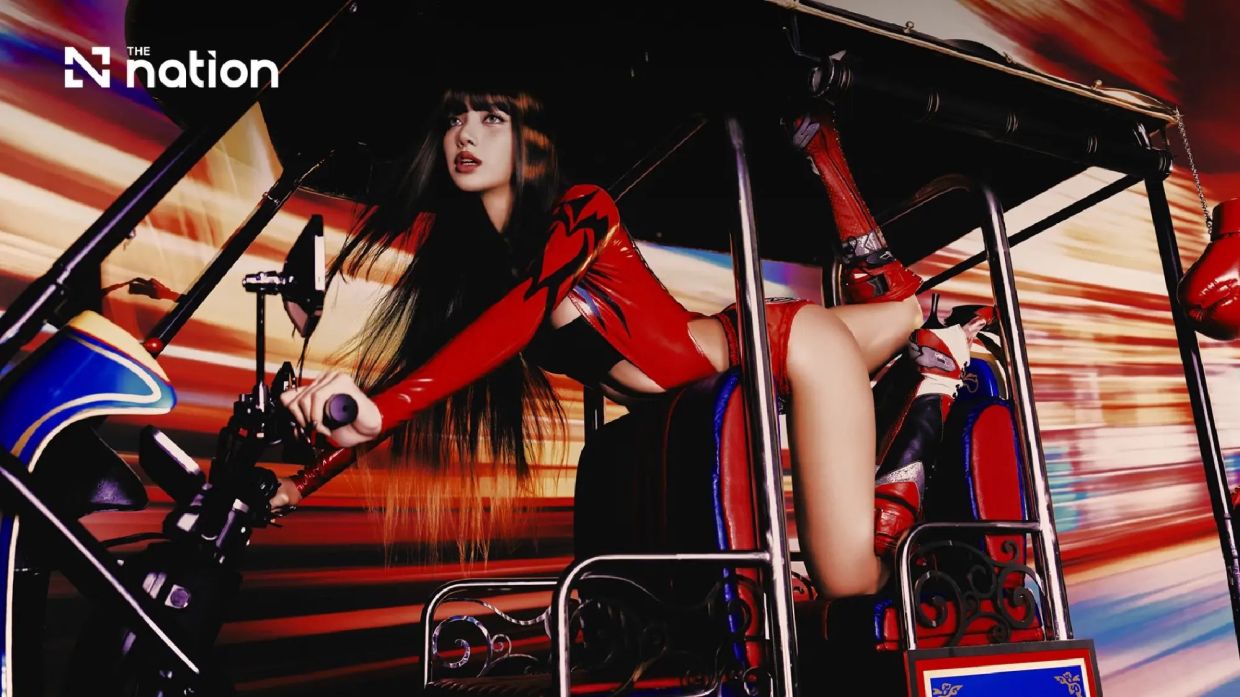
Thai pop star Lalisa Manobal, known internationally as BLACKPINK member Lisa, is preparing to release her new single "SaWaDiKa" by merging two potent symbols of Thai identity—the ancient martial art of Muay Thai and the ubiquitous tuk-tuk—into a contemporary high-fashion visual campaign. The teaser materials unveiled this week showcase Lisa in reimagined versions of traditional Muay Thai attire, signalling a deliberate effort to position her latest music project within a distinctly Thai cultural framework while maintaining the polished, aspirational aesthetic her global fanbase expects.
The campaign imagery demonstrates a nuanced approach to cultural representation that stops short of literal traditionalism. Rather than presenting classic Muay Thai ring outfits unchanged, the creative team has fashioned modern interpretations that marry combat-sport references with futuristic sportswear design. In one shot, Lisa wears boxing shorts emblazoned with her name across the waistband in contemporary styling. In another, she stands atop a vivid blue-and-red tuk-tuk dressed in a leather bodysuit paired with high-heeled lace-up boots that echo boxing footwear and broader Muay Thai aesthetic language. Streaking light effects around the vehicle convey kinetic energy, suggesting speed and dynamism rather than stillness.
The song title itself—"SaWaDiKa"—represents a stylised English rendering of "sawasdee ka", the polite Thai greeting embedded in everyday conversation across Thailand. The decision to name a globally distributed music release after this phrase carries symbolic weight, placing the Thai language and cultural greeting at the commercial and artistic centre of the campaign. This choice carries particular resonance for Thailand's tourism and cultural diplomacy agenda. Thapanee Kiatphaibool, governor of the Tourism Authority of Thailand, publicly welcomed Lisa's approach, commenting that the greeting's international promotion reinforces perceptions of Thai warmth and hospitality among overseas audiences.
Lisa's connection to Thailand's official cultural ambassadorship adds institutional dimension to what might otherwise appear as a personal artistic choice. Since 2025, she has held the formal title of "Amazing Thailand Ambassador" appointed by the Tourism Authority of Thailand, tasked with representing the nation's character and identity to international audiences. The tuk-tuk visual, in particular, functions as a globally recognisable symbol of Thai urban transport culture, one that carries both nostalgic and modern connotations. By centring it in promotional imagery distributed across multiple continents, Lisa effectively transforms a humble local vehicle into an internationally legible marker of Thai identity.
The campaign's rollout strategy revealed itself gradually, building anticipation among her fanbase. Before the single's official title was announced, oversized red outdoor displays bearing the message "HELLO สวัสดีค่ะ [Sawasdee ka]" materialised in major global cities including Bangkok, New York, Los Angeles, and Mexico City. These installations initially sparked speculation among dedicated followers monitoring her activity, only to be retrospectively revealed as components of the music campaign's coordinated global launch strategy. This scaffolded approach to revelation—where partial information precedes formal announcement—has become standard practice in contemporary pop marketing, particularly among artists with digitally engaged international fanbases.
"SaWaDiKa" serves as the lead single from Lisa's forthcoming six-track EP titled "PRESS PLAY", scheduled for full release on October 23, 2026. The single itself drops at 5pm Pacific Time and 8pm Eastern Time on Thursday, September 3, which translates to 7am Friday morning in Thailand—a timing that ensures simultaneous global availability while recognising her domestic audience's temporal location. The EP's official description frames the project as a homecoming of sorts, narrativising Lisa's artistic trajectory from her Thai origins through her ascent to international superstardom as a BLACKPINK member.
This latest campaign continues a visual thread Lisa has deliberately woven through her recent solo work. Her 2021 solo debut "LALISA", released after she began pursuing individual projects alongside her group commitments, prominently featured traditional Thai dress, dance-inspired imagery, and subtle musical references to Thai musical traditions. Lisa publicly stated at that time that she had actively requested Thai cultural elements be incorporated into the production, taking the song's title directly from her given name. The accompanying music video presented her in an ornate gold costume drawing on Thai design sensibilities, positioned against architectural backdrops evoking her birthplace of Buri Ram province in northeastern Thailand.
Her 2024 single "Rockstar" evolved this cultural throughline by transposing it into contemporary Bangkok's visual landscape. That video's setting featured Yaowarat Road, the celebrated Chinatown thoroughfare in the capital, alongside other recognisable Bangkok locations. Rather than retreating to historical or traditional aesthetics, the production merged the city's actual streets with futuristic pop visual language, suggesting that modern Thai identity and cutting-edge global pop culture need not exist in tension. "SaWaDiKa" now extends this trajectory further by adding Muay Thai, the tuk-tuk, and most significantly the Thai language itself to her expanding repertoire of cultural symbols.
For Malaysian and Southeast Asian observers, Lisa's campaign strategies warrant close attention. As an artist from the region who has achieved unprecedented global prominence through a K-pop group, her approach to representing Thai identity at the international scale offers both template and cautionary tale. The success of her cultural integration hinges on her ability to render Thai symbols and language legible and desirable to audiences who may possess limited familiarity with Thailand beyond tourist stereotypes. By pairing Muay Thai with luxury fashion presentation and the tuk-tuk with futuristic visual effects, she neither exoticises nor dilutes Thai cultural references, instead positioning them as contemporary and cosmopolitan.
The integration of Thailand's tourism authority into this campaign's promotional apparatus also illuminates how Southeast Asian governments increasingly recognise popular musicians as instrumental to cultural soft power. Rather than constraining Lisa's artistic vision, the "Amazing Thailand Ambassador" role appears to facilitate and amplify her existing inclinations toward Thai cultural representation. This alignment between commercial pop music interests and state-level cultural diplomacy represents a relatively new phenomenon in the region, one that could reshape how both industries approach artist development and brand positioning.
The phased release schedule—single first, then full EP weeks later—reflects standard contemporary pop practice designed to maintain audience engagement and media attention across an extended promotional window. For regional listeners, "SaWaDiKa" arrives at 7am on Friday, September 4, ensuring that Thai audiences and others across Southeast Asia experience the release during their morning hours. The full "PRESS PLAY" EP follows on October 23, providing downstream content for sustained engagement with Lisa's solo artistic vision as she continues balancing individual projects with her BLACKPINK commitments.
Looking ahead, Lisa's approach to cultural representation in popular music carries implications extending beyond her personal career trajectory. As Southeast Asian artists increasingly command global platforms and commercial resources, their decisions about how to represent, package, and promote regional identity inevitably shape international perceptions of the entire region. Lisa's combination of high production values, contemporary design sensibilities, and deliberate Thai cultural anchoring suggests one successful model for asserting regional identity within global pop frameworks—one that neither subordinates nor isolates cultural specificity, but instead integrates it as essential to contemporary artistic vision.

