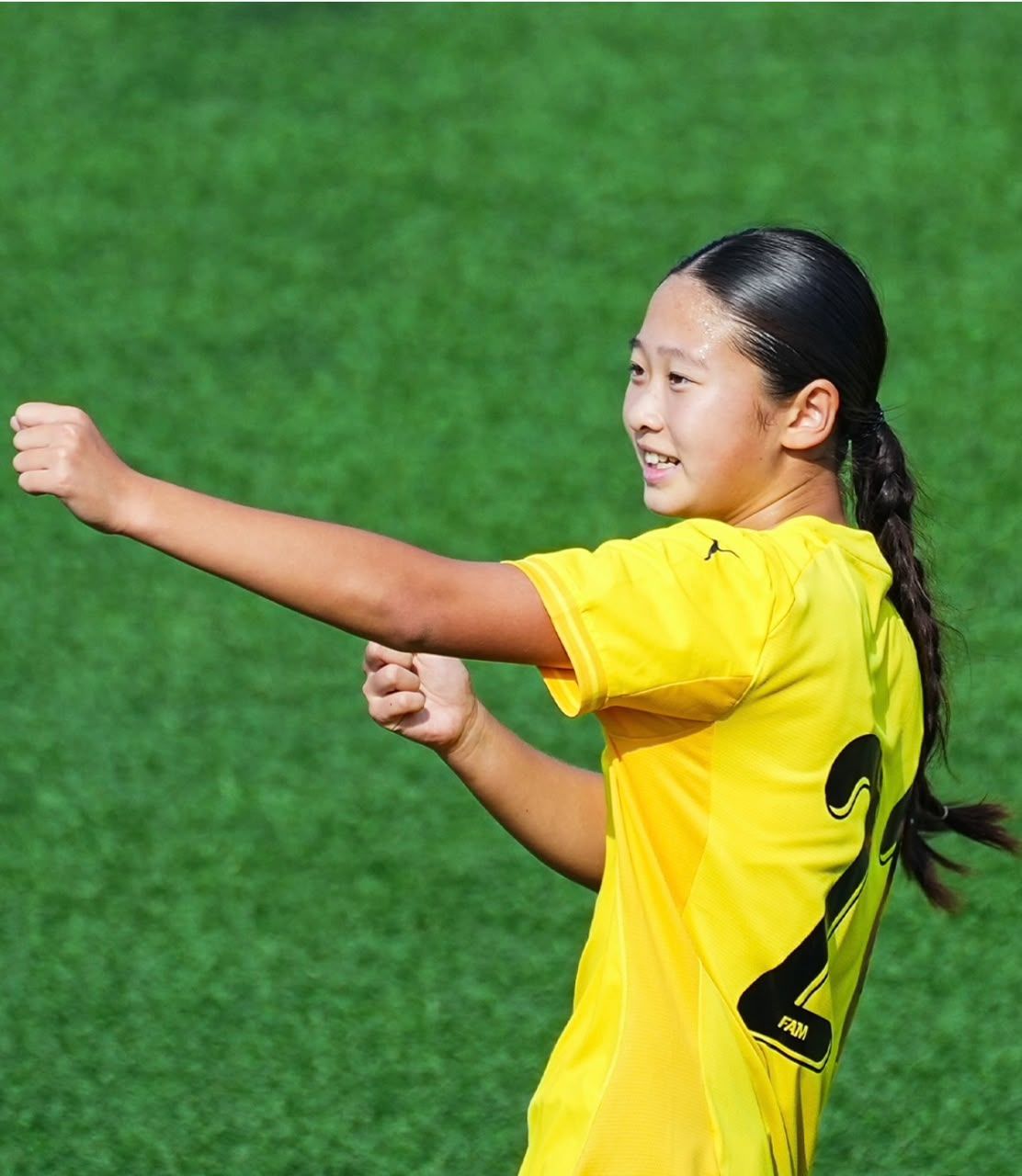
The left foot has long been a rare commodity in football, a genetic gift that separates ordinary players from exceptional ones. For 14-year-old Lim You, that advantage has become the cornerstone of her emerging talent. Making her debut for Malaysia's Under-17 women's squad at the 2026 Srikandi Merdeka Cup in Kudus, Indonesia, the young striker delivered a performance that underscored the precision and specialisation her father cultivated from childhood. Lim You struck seven times against Saudi Arabia on Tuesday as the Malayan Tigress demolished their opponents 9-0 in a Group A encounter, every goal executed with the favoured foot that has defined her footballing identity.
The significance of this performance extends beyond the scoreline. In women's football across Southeast Asia, left-footed players remain relatively uncommon, making left-sidedness a tactical weapon when developed properly. Lim You's father recognised this advantage early, dedicating considerable time to honing her weaker foot until it became her stronger one. Rather than allowing her to develop as an ambidextrous player with balanced capabilities on both sides, the family strategy focused on maximising her distinctive attribute, turning what might be viewed as a limitation into a specialised strength. This unconventional approach has proven prescient, with the results now visible on the international stage.
What makes Lim You's seven-goal haul particularly noteworthy is the consistency with which she executed her technique. She netted in the eighth minute, then added goals in the 22nd and 27th minutes, establishing dominance early. The pattern continued in the second half with strikes in the 57th, 75th, 83rd, and 85th minutes, including a composed penalty conversion. Each goal represents not merely opportunistic finishing but evidence of a player who has internalised the technical foundation laid during years of preparation. At 165 centimetres tall, Lim You does not possess the physical advantages some of her peers might enjoy, making her technical proficiency even more valuable in the context of youth football development.
Despite the clinical nature of her finishing, Lim You displayed a mature perspective when discussing her achievement, demonstrating the self-awareness increasingly expected of elite young athletes. Speaking during a virtual press conference organised by the Football Association of Malaysia, she deflected sole credit for the victory, acknowledging the crucial role her teammates played in creating opportunities. This humility should not be mistaken for false modesty—recognising the collective nature of football success represents genuine understanding of how the sport functions at competitive levels. Her teammates Putri Mia Alysa Ahmad Zakiyamani and Ku Nur Qaleysha Qaisara Ku Zainon contributed the remaining goals, padding Malaysia's advantage in what became an exercise in dominance.
Making the transition to a national squad environment carries challenges beyond tactical and technical adjustment. Lim You confronted an unexpected obstacle that many young athletes from diaspora communities face: language. Having grown up primarily in Taiwan and the United States, her fluency in Malay initially posed difficulties, creating an additional barrier to seamless integration with her new teammates. However, her adaptation proved swift and successful, suggesting either natural facility with language acquisition or a deeper commitment to belonging within the squad that transcended communication difficulties. This rapid adjustment carries implications for how Malaysian youth football programmes manage diverse player backgrounds, an increasingly relevant question as the country's pool of talent extends internationally.
The player's background itself reflects broader patterns of Malaysian talent distribution and diaspora engagement with the homeland. Lim You was born in Taiwan and currently resides in Washington with her family, yet maintains meaningful connection to Malaysia through her parents, who were born and raised in Johor. She visits Malaysia every two to four years and retains close family ties in Johor and Kuala Lumpur, creating the familial anchors that often motivate diaspora athletes to represent their ancestral nation. This pattern of overseas-born, Malaysia-connected players represents a growing feature of Southeast Asian football, as globalisation creates opportunities for talent development abroad while maintaining emotional and familial links to the region.
Malaysia's path through the group stage reflects the competitive dynamics at this age level. After an opening goalless draw against Hong Kong, the team suffered a 0-3 defeat to hosts Garuda Pertiwi, a setback that made the Saudi Arabia victory crucial for tournament progression. Despite the loss to Indonesia, Malaysia advanced to the semi-finals as Group A runners-up with four points, benefiting from Hong Kong's identical points total but superior goal difference. This semi-final placement guarantees exposure to stronger opposition, likely Group B winners, with Thailand, Jordan, and Singapore still contending for that position as the group stage concludes. The tournament structure thus ensures Malaysia faces elevated competition in the knockout rounds.
Lim You acknowledged the psychological weight accompanying sudden prominence. Scoring seven goals in a debut naturally attracts attention and raises expectations, a pressure that younger players may find overwhelming. Her response, however, suggested maturity beyond her years—admitting to feeling pressure while maintaining that her fundamental passion for football supersedes external expectations. This psychological resilience, combined with technical excellence and tactical intelligence, may ultimately prove as important as her left foot in determining her trajectory. Many young players with exceptional debut performances struggle to sustain momentum; Lim You's awareness of these dynamics and her stated commitment to enjoying the game regardless of opposition suggests awareness of the mental dimension of elite sport.
The broader implications for Malaysian women's football extend beyond one player's individual achievement. The emergence of talents like Lim You, combined with the national squad's competitive showing at the Srikandi Merdeka Cup, indicates growing depth in youth development pipelines. However, the reliance on diaspora talent also highlights questions about domestic player development and the retention of Malaysian footballing talent abroad. Whether Lim You's career ultimately leads to sustained representation at higher competitive levels, or becomes one of many promising debuts that plateau, will partially depend on the ecosystem developed to nurture such emerging talent. The Football Association of Malaysia's capacity to manage international participants with different language and cultural backgrounds will similarly shape how effectively the country can mobilise its extended global talent pool for regional and international success.

