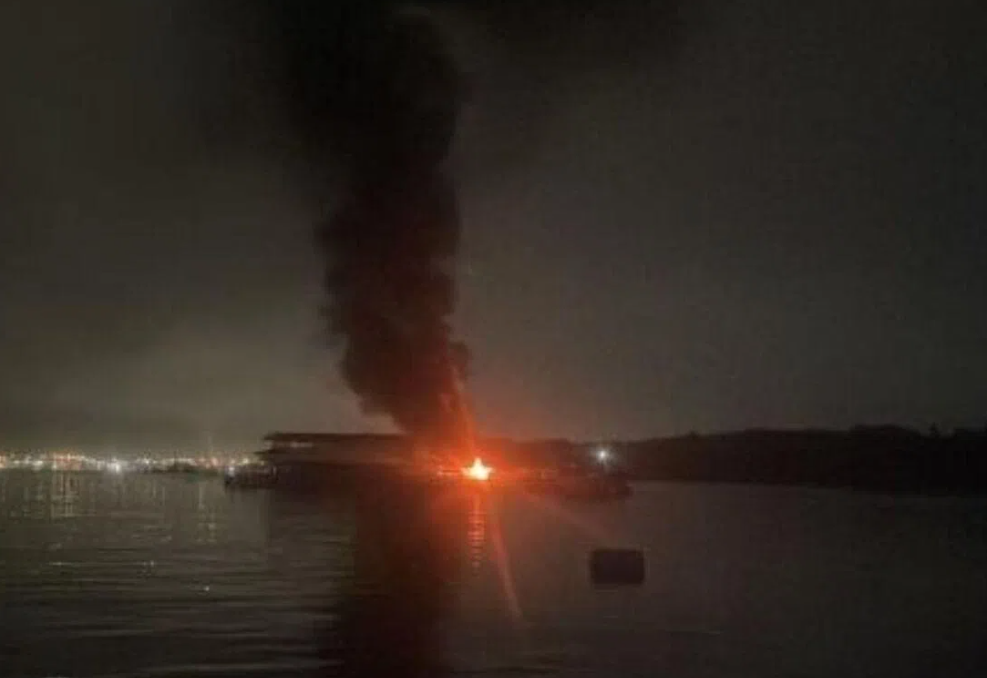
Firefighting crews spent several hours extinguishing a fire that swept across at least two floating fish farms positioned near Pulau Ubin on June 24, marking another incident in Singapore's aquaculture sector. The Singapore Civil Defence Force received an alert at approximately 8.10pm and deployed marine vessels alongside personnel from the Maritime and Port Authority of Singapore to combat the flames. Fortunately, no injuries emerged from the incident, though the economic toll proved substantial for operators dependent on these offshore installations.
The fire originated at one farm before progressing to neighbouring operations, suggesting rapid horizontal spread across the tightly clustered facilities. According to reporting by Chinese publication Lianhe Zaobao, investigators have identified a lightning strike hitting the farm's solar panel infrastructure as the probable cause. The incident underscores a persistent vulnerability in Singapore's modern aquaculture systems, where renewable energy installations have become standard equipment yet remain exposed to weather hazards that conventional farms might better withstand.
The affected fish farms sit in shallow waters off the Lorong Halus jetty near Pasir Ris, positioned between Pulau Ubin and Pulau Ketam—strategically located sites for aquaculture operations serving Singapore's local food production needs. This proximity to populated areas means such incidents carry implications beyond individual business losses, touching on food security considerations and the viability of marine farming in high-value, heavily utilised waterways. The area's importance to both fishing communities and recreational users adds another dimension to understanding the operational constraints facing farms in this region.
One farm owner quantified losses at approximately S$120,000, a figure encompassing diverse categories of destroyed or damaged property. Solar panels—the presumed ignition point—represented only part of the destruction; generators, fish feed supplies, and fishing equipment including boats and traps fell victim to the flames. The inventory of losses reflects the capital-intensive nature of modern aquaculture, where operational continuity depends on maintaining multiple systems simultaneously, and any catastrophic event threatens the entire operation's functionality.
Particularly troubling for the affected operators is the apparent absence of insurance coverage for this category of loss. The farm owner's statement that he could not file an insurance claim highlights a gap in risk management frameworks available to Singapore's aquaculture sector. This vulnerability likely extends across the industry, leaving farmers exposed to potential bankruptcy from single incidents. For a nation seeking to enhance food self-sufficiency through expanded aquaculture development, such insurance limitations represent a structural impediment to sector growth and stability.
The owner's account of prior lightning damage to solar panels that crews had contained immediately reveals a pattern of recurring hazards specific to these installations. The critical variable determining outcome was workforce presence at the critical moment. When workers were available during previous incidents, rapid response prevented escalation into major fires. This time, the absence of personnel on-site allowed the initial damage to develop unchecked into a multi-farm catastrophe. The incident therefore highlights questions about staffing protocols and continuous monitoring requirements for farms operating in exposed marine environments prone to sudden electrical storms.
The material consequences extended beyond machinery and structures into the operational backbone of aquaculture. At least half the farm's fish stock escaped through damaged netting, representing direct loss of inventory alongside the destruction of production infrastructure. This dual impact—simultaneous equipment destruction and asset escape—compounded the financial devastation far beyond what replacement of damaged items alone would entail. Farmers face both immediate recovery costs and lost revenue from compromised stock.
Response efforts mobilised personnel from multiple government agencies, including marine vessels from the Maritime and Port Authority of Singapore and Airport Emergency Service resources. Notably, workers from neighbouring fish farms volunteered to assist in containing the blaze, demonstrating community solidarity within Singapore's aquaculture network despite competitive dynamics. This collaborative emergency response likely prevented further spread to additional facilities, suggesting that proximity, while creating fire transmission risks, also enables collective mitigation efforts.
The incident invites scrutiny of broader resilience planning within Singapore's aquaculture sector, particularly given the nation's strategic emphasis on enhancing domestic food production capacity. Modern floating farms incorporating solar technology represent innovations aimed at improving sustainability and operational efficiency, yet the June 24 fire exposes technological vulnerabilities requiring better protective engineering. Whether through improved lightning protection systems, enhanced insurance frameworks, or adjusted operational protocols, the sector faces pressure to develop countermeasures preventing similar incidents from recurring.
For Malaysian aquaculture operators and policymakers monitoring regional developments, the Singapore incident offers instructive lessons. As Southeast Asia gradually intensifies offshore farming operations to address growing protein demands, understanding how neighbouring jurisdictions manage environmental risks informs domestic regulatory development. The confluence of technological advancement, environmental exposure, and insurance gaps evident in the Pulau Ubin case represents a cautionary template for the region's expanding aquaculture footprint.

