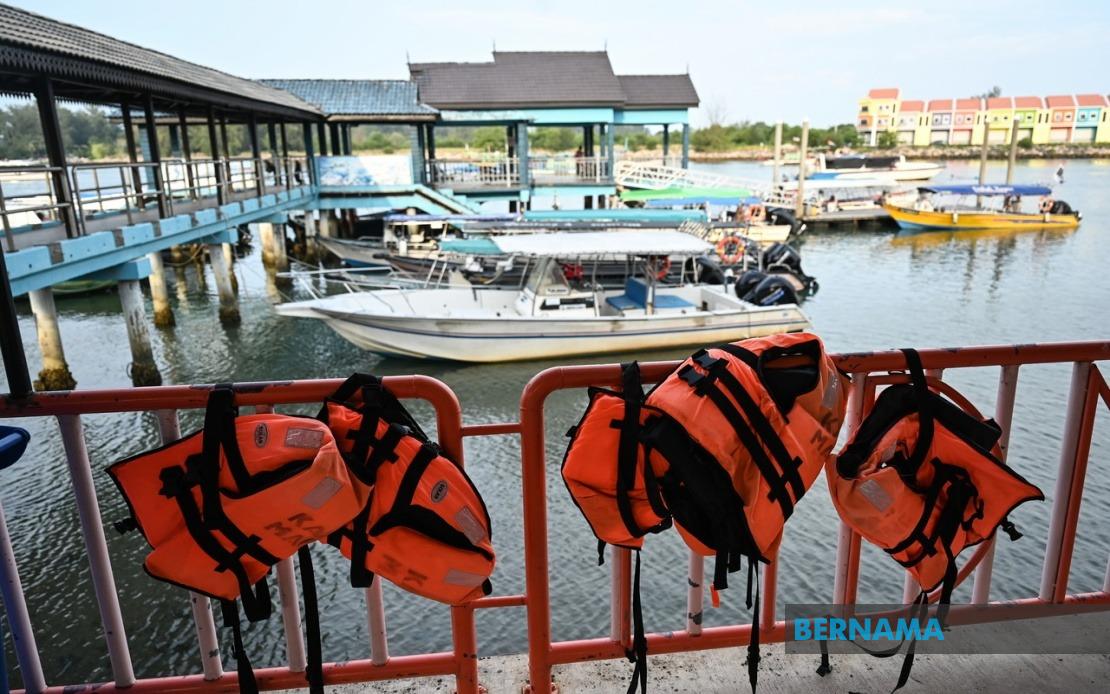
A capsize incident off the coast of Kuala Nerus has prompted fresh calls from Terengganu's state government for mandatory and continuous use of life jackets among all passengers and crew on fishing and tourism vessels. The tragedy, which claimed one life and left three others injured, has reignited discussions about maritime safety compliance in an activity that has long been popular among locals and tourists seeking the nocturnal thrill of squid jigging.
Datuk Razali Idris, chairman of the State Tourism, Culture, Environment and Climate Change Committee, has stressed that wearing life jackets should be viewed as non-negotiable throughout any sea journey, even during periods of rest or sleep. His intervention underscores growing concern that current practice may see participants removing protective equipment during downtime, creating dangerous vulnerabilities if emergencies occur when vigilance is lowest.
The incident, which unfolded around 9 pm on a night when seas were described as rough but without storm conditions, saw the vessel take on water through its engine compartment before ultimately sinking. According to Kuala Terengganu police chief ACP Azli Mohd Noor, Ahmad Nasaruddin Mohmad Jalil, a 37-year-old crew member, died in the accident. Three squid jigging participants—Faris Ibrahim, Ahmad Danial Iman, and Fatin Fariesya Rohaizan, aged 33, 24, and 26 respectively—sustained injuries, with two treated as outpatients at Hospital Sultanah Nur Zahirah and one remaining under ongoing medical supervision. Eight others were rescued from the water.
Razali noted that all passengers were wearing life jackets at the time of the capsize, suggesting that the safety equipment likely prevented a far more catastrophic outcome. This observation forms the crux of his advocacy: that consistent adherence to life jacket protocols saves lives, and any lapse in discipline introduces unacceptable risk. He framed the incident not as an indictment of existing procedures but as validation of their necessity, making his call for stricter compliance particularly compelling.
Boat operators and skippers have been reminded to conduct formal safety briefings before departure, covering weather assessments, trip duration, sea conditions, and proper life jacket application. Razali drew parallels with established practices on tourist ferries to islands, which routinely conduct pre-departure safety discussions as standard protocol. He acknowledged that skippers possess intimate knowledge of prevailing sea conditions and possess the authority—and responsibility—to cancel or postpone trips when conditions deteriorate beyond safe thresholds.
The state government has also urged participants not to pressurise skippers into proceeding with journeys when maritime conditions are judged unsafe. Razali characterised most Terengganu-based boat operators as responsible professionals willing to refund customers when cancellations become necessary for safety reasons, framing such refunds as evidence of professionalism rather than commercial loss.
Regarding the specific vessel involved in the capsize, Razali confirmed that it had been in sound mechanical condition prior to the incident and was helmed by an experienced skipper. The cause remains under official investigation. The unexpected ingress of water into the engine compartment points toward either mechanical failure, design vulnerability under specific sea conditions, or an unforeseen operational hazard. These details remain unclear, but the incident highlights how even well-maintained vessels operated by skilled personnel can encounter sudden crises at sea.
Terengganu's state government has indicated it will not revise existing standard operating procedures for squid jigging activities, maintaining that current guidelines remain adequate. Instead, the emphasis has shifted toward enforcement and compliance rather than regulatory overhaul. This position reflects confidence in the regulatory framework while acknowledging that safety outcomes depend as much on human adherence as on written protocols.
The Malaysia Marine Department retains primary jurisdiction over vessel licensing and operational approval, meaning the state government's role remains advisory. Razali reminded squid jigging operators and participants to observe all warnings issued by the Marine Department, particularly prohibitions against operating during adverse weather windows. This delineation of regulatory authority reflects Malaysia's tiered approach to maritime safety, where national agencies establish baseline standards while state and local enforcement mechanisms ensure compliance.
For Malaysian recreational fishing enthusiasts, particularly those engaged in squid jigging along both coasts, this incident carries practical implications. The activity's growing popularity has expanded participation beyond experienced fishers to include tourists and casual participants with varying familiarity with maritime hazards. Enhanced vigilance around life jacket usage and pre-trip safety protocols could meaningfully reduce fatality rates in what remains a relatively hazardous pursuit.
The broader context extends beyond Terengganu to encompass Southeast Asian maritime safety standards more broadly. Many fishing communities across the region maintain traditional practices that predate modern safety regulations, sometimes viewing protective equipment as cumbersome or unnecessary. Malaysia's emphasis on life jacket compliance aligns with international maritime safety norms and serves as a regional model for balancing cultural fishing traditions with contemporary risk mitigation.
Looking forward, this incident may catalyse renewed attention to maritime safety education among recreational fishing participants and operators throughout Malaysia's coastal regions. While existing procedures may be technically sound, their practical implementation among diverse participant groups—from experienced fishers to casual tourists—remains inconsistent. The tragedy serves as a sobering reminder that robust protocols matter only when consistently observed, making Razali's repeated emphasis on compliance particularly timely.

