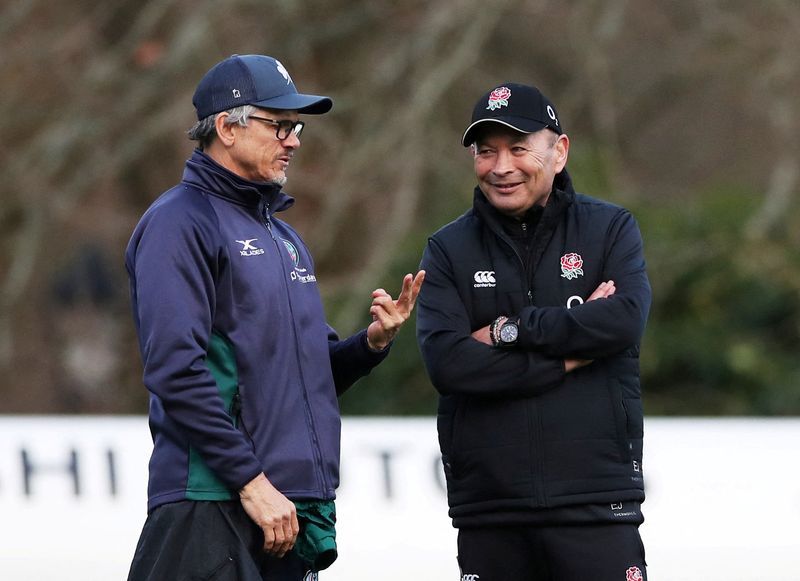
Les Kiss has taken the helm of the Australian rugby team at a pivotal moment, and his first major decision signals a meaningful shift in how the Wallabies will approach player selection moving forward. The newly appointed coach indicated at his inaugural Sydney press conference that he would not shy away from tapping into global talent pools if doing so strengthened the team's prospects in the upcoming World Cup campaign. This represents a notable departure from the more conservative stance adopted by his immediate predecessor Joe Schmidt, who rarely ventured beyond Australia's domestic competition when assembling squads during his two-year tenure.
Kiss unveiled his opening squad on Thursday ahead of a two-test series against Japan in August, largely retaining the playing group that Schmidt had employed throughout the Nations Championship. Yet his comments about pursuing talent "far and wide" suggest a recalibration of philosophy. While Rugby Australia's existing policy does technically restrict coaches from selecting overseas-based players to incentivise domestic competition, Kiss made clear he would exercise whatever discretionary powers available to him. His public statements at the press conference emphasised the primacy of competitive advantage, with the coach stating plainly that he would prioritise assembling the strongest possible lineup to "give us what we need to win games".
The pragmatism underpinning Kiss's approach reflects the stark reality of Australian rugby's current predicament. The Wallabies have hemorrhaged form in recent matches, losing nine of their last eleven tests and slipping to eighth position in the world rankings. This represents a precipitous decline for a nation that has historically positioned itself among rugby union's elite. Against this backdrop, the conventional wisdom that Australian players must remain domestic to thrive appears increasingly untenable. Kiss's willingness to challenge this orthodoxy suggests confidence that winning, not adherence to established protocols, should be the guiding principle.
Intriguingly, Kiss has already begun reaching out to overseas-based prospects, including fullback and centre Jordan Petaia, who is currently based in Japan and working through injury rehabilitation. This proactive engagement suggests the coach is serious about casting his net internationally rather than merely paying lip service to the idea. The inclusion of Petaia in preliminary conversations demonstrates Kiss's intent to identify players who can contribute meaningfully rather than simply augment numbers. Such selective outreach also indicates strategic thinking about where talent gaps exist within the current squad.
The challenge Kiss faces extends beyond simply identifying overseas-based talent. The Wallabies must maintain an identity and playing philosophy that resonates with supporters and maximises the team's natural strengths. Like most Australian coaches, Kiss articulated a commitment to the "Australian way" of rugby—a free-flowing, creative approach centred on innovation and ball-in-hand skill that delivered World Cup victories in the 1990s. However, he acknowledged this philosophy has yielded inconsistent results in recent years, primarily due to shortages of world-class personnel rather than conceptual flaws. Kiss appears determined to recalibrate this classic Australian template while simultaneously emphasising competitiveness and tactical nous alongside flair.
The question of how to best utilise high-profile signings remains unresolved. Joseph Suaalii, the A$5 million recruit from rugby league, represents both Kiss's greatest opportunity and most immediate headache. The 22-year-old showed promise during Australia's recent Northern Hemisphere tour but has subsequently delivered only glimpses of his reputed brilliance in Wallabies colours. Considerable debate surrounds whether Suaalii's natural position lies at fullback—where he has excelled previously—or at outside centre, where Kiss intends to deploy him. The coach's decision to persist with Suaalii at centre, following Schmidt's template, represents a calculated bet that positional stability will unlock the young player's considerable potential.
The broader context for Kiss's tenure involves navigating the tension between immediate results and longer-term development. With the World Cup looming, there is scant time for experimentation. Yet simultaneously, the Wallabies must restore public confidence and competitive credibility after a series of disappointing performances. Kiss's emphasis on seeking overseas talent where it genuinely strengthens the team strikes a balance between these competing imperatives. Rather than wholesale overhauls or stubborn adherence to past methods, his approach suggests measured pragmatism.
For Southeast Asian rugby followers, Kiss's appointment and his stated philosophy carry broader implications. The region has developed increasingly competitive rugby programmes, and Australia's strategic flexibility could shape how regional rivals approach their own player recruitment and development strategies. Should Kiss successfully integrate overseas talent into a cohesive winning team, other unions might reconsider their own domestic-focused policies. Conversely, if overseas recruitment fails to deliver tangible results, it could reinforce arguments for maintaining stricter domestic competition requirements.
The Nations Championship performances that preceded Kiss's appointment painted a mixed picture of the Wallabies' capabilities. A narrow loss to Ireland, a heavy defeat to France, and a comfortable victory over a fatigued Italy demonstrated both the team's potential and its vulnerabilities. These results underscored why Kiss feels justified in exploring unconventional solutions. The coach's confidence that he can construct a winning formula through intelligent recruitment, combined with renewed emphasis on Australian rugby's traditional strengths, provides a compelling narrative heading into the Japan tests and beyond.

