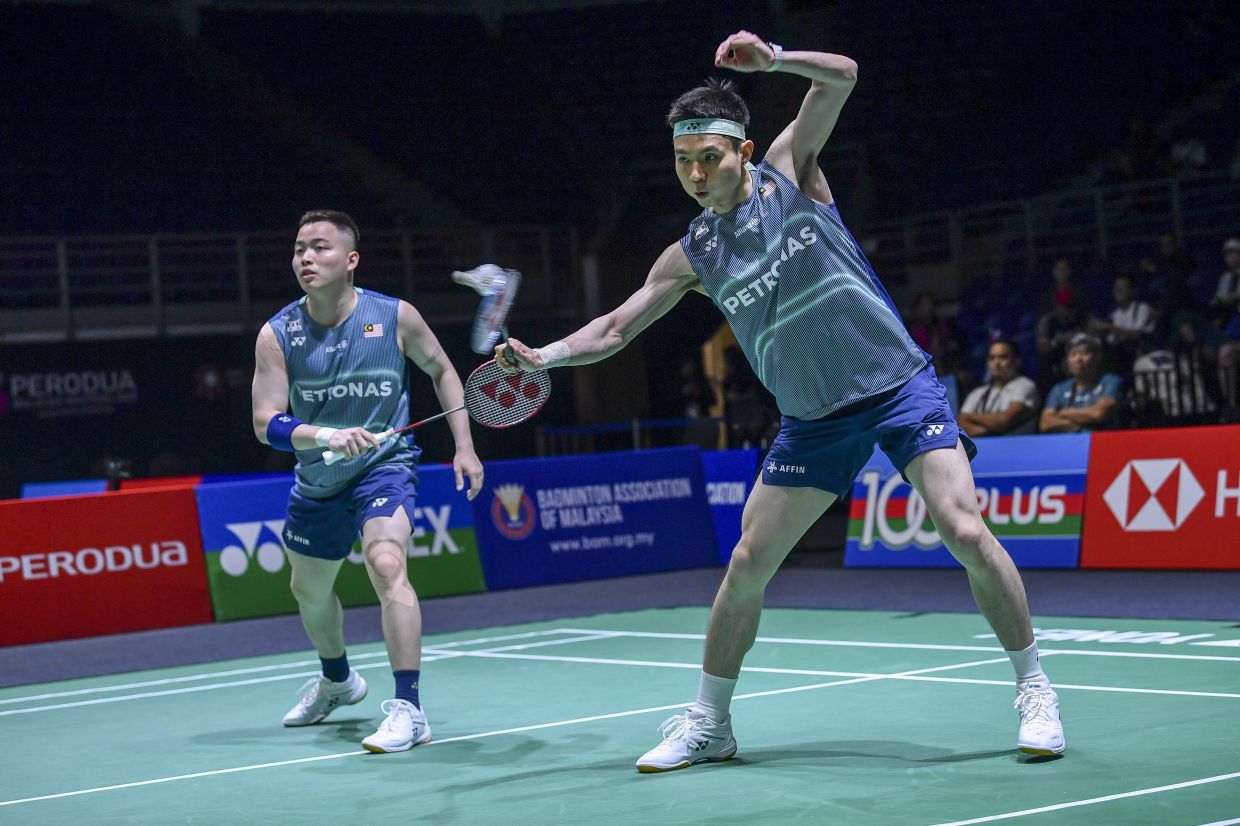
The Badminton Association of Malaysia's new leadership has drawn a firm line on player conduct, with performance committee chairman Datuk Seri Lee Chong Wei declaring that no athlete should attempt to pressure the national body by threatening to leave the system. His warning represents a significant shift in how BAM intends to manage its roster during what promises to be a critical period leading to the 2028 Los Angeles Olympics, establishing clear boundaries between player agency and institutional authority.
Lee's comments emerged following remarks by men's doubles player Soh Wooi Yik regarding his willingness to explore all available paths if it meant maintaining his partnership with Aaron Chia through to the Olympic Games. The pair's recent silver medal triumph at the World Championships in New Delhi has reinforced their status as Malaysia's premier doubles combination, yet internal considerations about pairing configurations have created tension between player aspirations and coaching staff priorities.
According to Lee, the national association remains genuinely receptive to player concerns and maintains an open-door policy for substantive dialogue. However, he emphasised that BAM cannot be manipulated through veiled ultimatums or conditional statements about remaining within the national framework. The chairman stressed that the current management structure represents a departure from previous governance approaches, and this administration possesses the resolve to implement unpopular decisions when they align with strategic objectives.
Lee's comments underscored an important philosophical principle underlying BAM's developmental mission. He reminded players that their formative years within the national system—from grassroots development through elite preparation—represent crucial investments by the association. The pathway from junior programmes through to world championship podiums involves institutional resources, coaching expertise, and systematic support that players ought to acknowledge when negotiating their status or circumstances.
Central to Lee's message was a rejection of using major competition outcomes as leverage points. He pointedly noted that while World Championships results deserve recognition and carry weight in strategic discussions, they should not become bargaining chips in negotiations over contractual arrangements or partnership configurations. This approach signals BAM's intention to separate performance metrics from administrative negotiations, ensuring that competitive success does not automatically translate into unilateral decision-making authority for individual athletes.
The Aaron-Wooi Yik partnership situation exemplifies the complex dynamics facing the national body. The duo has demonstrated their complementary strengths and winning potential, factors they have explicitly cited in requesting continued collaboration. However, the coaching contingent is simultaneously exploring alternative pairings as part of a broader strategy to develop multiple competitive combinations and test different tactical approaches for the Olympic cycle. Over recent months, Aaron has competed alongside Aaron Tai, achieving runners-up finishes at the Taiwan Open, while Wooi Yik has partnered with Man Wei Chong and subsequently with Aaron Tai, reaching finals at the Korean Masters.
The coaching team's rotation strategy reflects a methodological approach to identifying optimal pairings, with another significant shuffle scheduled during the China Masters commencing September 1. At that tournament, Aaron will combine with Wei Chong while Wooi Yik partners Aaron Tai, demonstrating BAM's commitment to comprehensive evaluation before finalising Olympic preparation protocols. Such testing periods are standard in elite sports management but inevitably generate friction when players harbour different preferences about their competitive arrangements.
For Malaysian readers and regional observers, the standoff carries significant implications. Southeast Asia's badminton prowess depends substantially on institutional cohesion between federation leadership and athlete populations. When players and administrators enter adversarial postures, particularly involving threats of departure or contractual confrontation, the consequences extend beyond individual careers. Malaysia's competitive standing in international badminton tournaments relies on stable, unified systems where disputes are resolved through collaboration rather than confrontation. Lee's firm stance represents an attempt to reset this dynamic and establish protocols where player agency operates within defined parameters.
Should Aaron and Wooi Yik pursue independent status outside BAM's structure, the consequences would prove severe and potentially career-limiting. Both players remain contractually bound to BAM through 2028, meaning unilateral departure would trigger substantial financial penalties and potential contractual disputes. Additionally, athletes operating outside the national federation face significant barriers to international tournament participation and may encounter restrictions on ranking point accumulation—the currency required for Olympic qualification. This regulatory framework essentially traps players between accepting BAM's authority and accepting substantial career and financial jeopardy.
Lee's warnings thus carry genuine teeth beyond rhetorical emphasis. The chairman is communicating not merely institutional preference but also the concrete limitations facing players who resist BAM's strategic direction. This represents a fundamental recalibration of power dynamics within Malaysian badminton, tilting decisively toward administrative control and away from player autonomy in partnership selection and career trajectory management. Whether this approach ultimately produces superior competitive outcomes or generates lasting resentment within the player population remains an open question as the Olympic cycle progresses.

