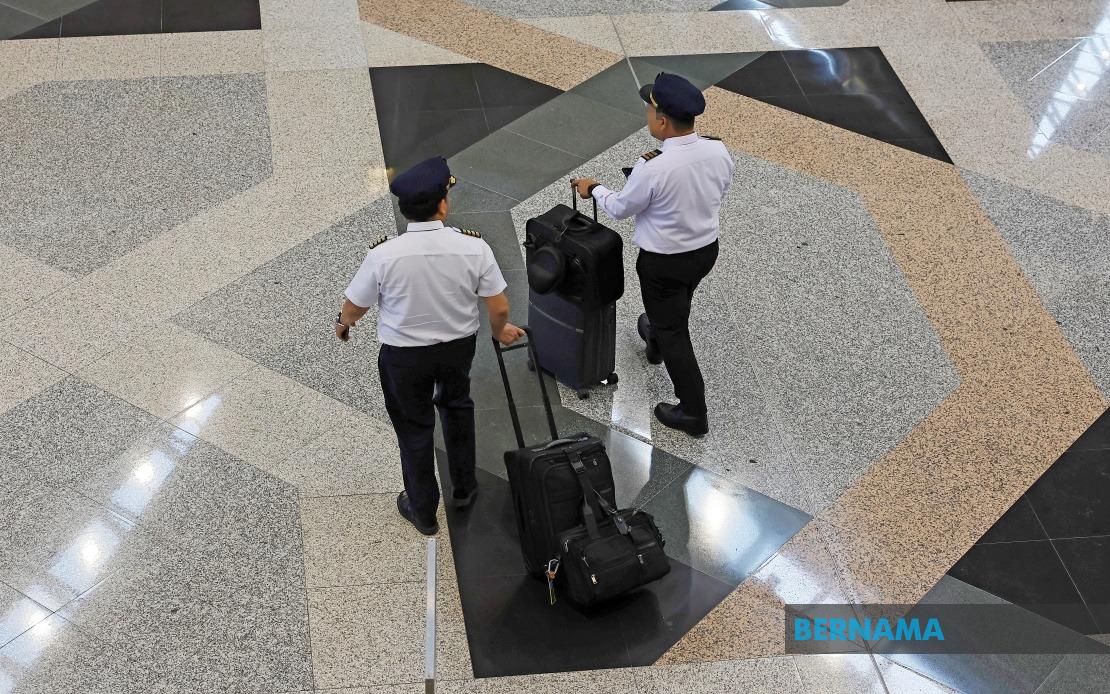
A prominent civil society leader has demanded urgent action to review security screening processes at Kuala Lumpur International Airport following the arrest of a 39-year-old Malaysian pilot at Jakarta's Soekarno-Hatta International Airport. Tan Sri Lee Lam Thye, who chairs Alliance For A Safe Community, raised critical questions about how the suspect purportedly cleared KLIA's security checks while allegedly carrying approximately 25 kilogrammes of drugs that were only discovered at the Indonesian terminal.
The incident, which unfolded at Terminal 3 of Soekarno-Hatta International Airport, has prompted serious concerns among observers about potential vulnerabilities in Malaysia's aviation security infrastructure. Although Lee acknowledged the necessity of allowing due legal process and respecting the presumption of innocence, he nonetheless contended that the episode reveals fundamental questions regarding the effectiveness and robustness of existing protocols designed to prevent contraband passage through the country's primary international aviation hub.
Lee's intervention reflects broader anxieties within Malaysia's security and civil society circles about whether current screening procedures adequately protect against determined smuggling attempts, particularly when personnel connected to the aviation industry may be involved. The timing of his statement underscores the political and public interest dimensions of the case, especially given Malaysia's ongoing efforts to maintain its reputation as a secure and well-regulated aviation gateway in Southeast Asia.
The Alliance For A Safe Community chairman articulated a specific concern about whether screening procedures maintain consistent standards across all categories of airport users. He questioned whether flight crew members and airport personnel benefit from any informal exemptions or expedited processes that might inadvertently create security gaps. This distinction matters considerably, as aviation workers naturally move through airports more frequently than ordinary passengers and may encounter different security verification routines.
Lee's statement called upon multiple agencies to undertake a coordinated review of existing protocols. The scope of his recommendations encompasses airport security operators responsible for daily screening functions, law enforcement bodies including the police, and the Civil Aviation Authority of Malaysia, which holds regulatory responsibility for the aviation sector. This multi-agency approach reflects recognition that security effectiveness depends on coordinated action across various institutional hierarchies and operational divisions.
The emphasis on maintaining public confidence emerged as a central theme in Lee's intervention. He stressed that Malaysia's aviation security system carries significant reputational weight, particularly given the country's position as a major regional air transport hub connecting Asia-Pacific, Middle Eastern, and global routes. Any perception that security procedures lack rigour could damage investor confidence, passenger confidence, and Malaysia's standing among international aviation authorities monitoring compliance with global security standards.
Lee articulated a principle that resonated through his statement: security measures must operate uniformly without exception based on professional status or position. This approach counters potential criticisms that might emerge if investigations subsequently revealed that aviation personnel or airport staff received differential treatment compared to ordinary passengers. The consistency principle also reflects international best practices and standards established by the International Civil Aviation Organization, which Malaysia adheres to as a contracting state.
The incident raises practical questions about how Malaysian authorities might strengthen detection capabilities at KLIA without creating excessive bottlenecks that disrupt airport operations. While improved screening technology and protocols might enhance interdiction rates, airport operators must balance security imperatives against passenger flow efficiency and commercial viability. Malaysian authorities will likely review advanced screening equipment capabilities, staff training protocols, and intelligence-sharing mechanisms with regional partners including Indonesia.
Regional aviation security networks hold particular significance in this context. Indonesian authorities' successful interception at Jakarta illustrates how neighbouring countries' screening capabilities can provide a secondary defense layer when substances escape detection at departure points. Enhanced cooperation mechanisms and information-sharing between Malaysian and Indonesian aviation authorities might prevent future incidents involving aviation workers attempting to exploit transit routes through the region.
The case also intersects with broader regional drug-trafficking concerns affecting Southeast Asia. Malaysia occupies a strategically vulnerable position within trafficking networks connecting production areas in the "Golden Triangle" with destination markets globally. Aviation channels, being faster and less intrusive than maritime or land routes, attract smuggler attention despite heightened security awareness at airports compared to other transit points.
Lee's intervention represents the kind of independent civil society scrutiny that democratic systems depend upon to maintain institutional accountability. Rather than accepting official assurances that existing procedures prove adequate, civil society actors can productively press for continuous improvement and transparent examination of potential weaknesses. This dynamic proves particularly valuable in security matters where government agencies might face institutional pressures to minimize publicizing vulnerabilities.
Looking forward, the incident and subsequent calls for review may accelerate implementation of procedural enhancements already under consideration. Technology upgrades, staff retraining initiatives, and protocol refinements take time and resources to implement effectively. However, the public attention generated by Lee's statement and media coverage of the pilot's arrest creates political momentum that may expedite bureaucratic approval for previously proposed security improvements at KLIA and other Malaysian airports.

