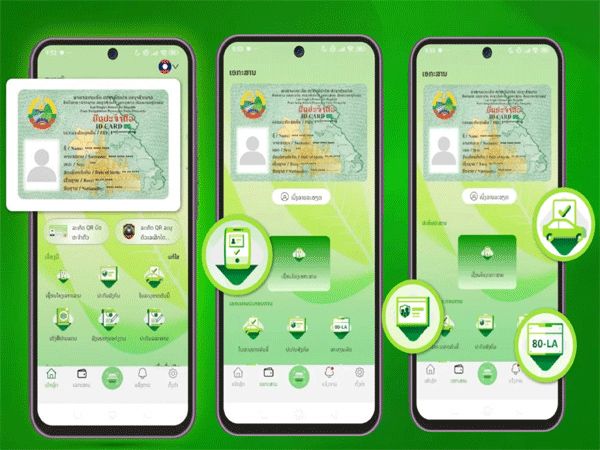
Laos has taken a decisive step toward digital governance by decommissioning its traditional paper-based identity system in favour of the LAeID mobile application, which centralises citizens' personal documents on their smartphones. The Ministry of Public Security formally introduced the LAeID platform while simultaneously declaring the white and green identity cards and paper household registration books obsolete, signalling a comprehensive overhaul of how Laotians interact with government institutions. This transition reflects a broader commitment across Southeast Asia to leverage technology for administrative modernisation, though each nation's implementation trajectory differs significantly based on infrastructure capacity and digital literacy rates.
Effective from 18 July, the old identity cards lost their validity for any official government transactions, compelling citizens to migrate toward digital registration. The Ministry of Public Security's office distributed nationwide notifications to all government agencies, ministries, and public organisations, directing them to cease accepting paper-based identity documentation. This coordinated rollout ensures consistency across the administrative system, preventing the confusion that might arise from a piecemeal transition where some agencies continued accepting outdated documents while others refused them.
For ordinary Laotian citizens, the practical implications are considerable. Rather than accumulating a stack of physical documents—identity cards, household registration books, and various certificates—residents can now consolidate this information within a single application accessible from their mobile devices. The time burden of visiting multiple government offices to present different papers for various transactions substantially diminishes under this arrangement. Those who have already completed digital identity registration no longer maintain paper household registration books; instead, this information becomes embedded within the LAeID system, which authorities recognise as the authoritative source for household-related government matters.
The LAeID framework operates as a progressive digital wallet designed to eventually encompass an extensive range of personal documentation. Currently, the initial phase offers only the digital identity card functionality, but the architecture permits gradual integration of additional databases and documents. The long-term vision encompasses birth certificates, marriage certificates, health insurance data, social security records, vehicle registration particulars, driving licences, and passport information all accessible through a single platform. This phased approach acknowledges the technical complexity of linking disparate government databases while allowing the system to function immediately, rather than delaying launch until all integrations were complete.
Citizens wishing to participate must register for a digital identity card at their district or provincial public security office. The registration process assigns each person an electronic identification account, with their national identity number serving as the username. The Ministry of Public Security generates and transmits passwords via short message service following account approval, though users retain the option to establish their own credentials during the initial registration phase. This dual-method password assignment balances security considerations with user convenience, accommodating those who prefer system-generated authentication and others comfortable creating personalised passwords.
From an administrative efficiency standpoint, LAeID delivers substantial advantages to both government agencies and the citizenry. The reduction in physical paperwork translates directly into lower operational costs for public institutions—fewer printing requirements, reduced storage demands, and diminished handling of physical documentation. Simultaneously, citizens benefit from expedited administrative procedures and potentially lower transaction fees once full digital integration occurs. Government agencies gain improved data management capabilities, as information stored within the LAeID system can be accessed and verified more rapidly than manual file searches.
This digital transformation aligns with Laos' broader modernisation agenda, positioning the nation alongside regional peers pursuing similar initiatives. Thailand's e-ID project, Indonesia's digital population registry initiatives, and Vietnam's efforts toward comprehensive digital governance share conceptual similarities with LAeID, though implementation timelines and technological sophistication vary. For Malaysia and other Southeast Asian economies monitoring Laotian developments, the LAeID rollout offers case study material regarding phased digital identity deployment and citizen adoption patterns.
The transition away from paper-based household registration represents a particularly significant shift within Laotian administration. Historically, such documents served as foundational records for numerous government services, from school enrolment to employment verification. Migrating this function to a digital platform requires robust cybersecurity measures and backup systems to prevent data loss or unauthorised access. The Ministry of Public Security's management of the system places responsibility for data integrity and security squarely on government shoulders, necessitating substantial investment in infrastructure and personnel training.
Regional observers note that successful implementation hinges substantially on citizen adoption rates and digital literacy levels across Laos' diverse population. Urban centres with higher smartphone penetration and internet access will likely experience smoother transitions, while rural and remote areas may face temporary disruptions as public security offices deploy registration services and residents gain familiarity with the application. Laos' experience could inform how other Southeast Asian nations manage similar transitions, particularly regarding strategies for ensuring equitable access across geographic and demographic divides.
The LAeID system's architecture incorporates progressive feature additions, meaning users should anticipate regular updates introducing new integrated services as government databases migrate onto compatible platforms. This approach contrasts with comprehensive launches requiring simultaneous connection of all systems, which often encounter implementation delays. By offering immediate utility through digital identity functions while planning future expansions, Laos encourages early adoption and accumulates user experience data to refine subsequent phases. The government's phased strategy suggests recognition that successful digital transformation demands balancing technological ambition with practical implementation constraints.

