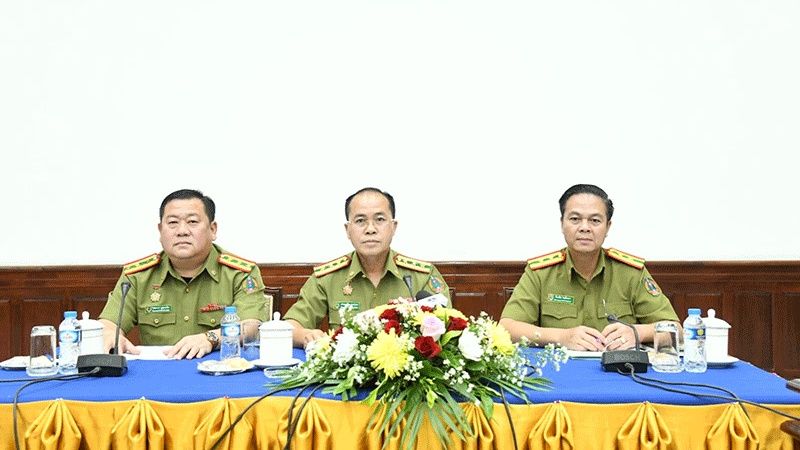
Laotian police have moved to prosecute the owner of the Tiger Vodka distillery alongside management and workers at Nana Backpackers Hostel in connection with the deaths of six international visitors who died in Vangvieng during the final months of 2024. The announcement, delivered at a press briefing convened by the Ministry of Public Security on Friday, represents the most comprehensive public disclosure of the investigation's direction and findings. However, authorities have acknowledged a significant legal constraint: the inability to definitively establish causation in five of the six deaths due to the absence of post-mortem examinations, a limitation that complicates the broader criminal case despite accumulating circumstantial evidence.
Investigators discovered that alcohol produced at the Tiger Vodka distillery, a privately operated facility located in Xaimoungkhoun village within Naxaithong district of Vientiane, contained methanol concentrations exceeding permissible thresholds. This finding proved consistent with clinical evidence obtained through the Australian Embassy, which confirmed that Aek Udon Hospital in Thailand had identified methanol in the bloodstream of two deceased Australian nationals. Deputy Chief of the Vientiane Province Police Command Colonel Khamfong Vongdalasane presented these technical findings as central to the investigation, yet acknowledged that Lao legal standards require more robust evidence to establish criminal culpability in individual deaths.
The six victims represented an international cross-section: James Louis Hutson from the United States; Freja Vennervald Sorensen and Anne-Sofie Orkild Coyman from Denmark; Bianca Jones and Holly Bowles from Australia; and Simone White from the United Kingdom. The temporal clustering of these deaths within a single venue during November 2024 initially triggered suspicions of a common cause, prompting the involvement of multiple government ministries and diplomatic missions. The press briefing itself underscored the diplomatic dimensions of the case, with attendees including representatives from the Ministry of Foreign Affairs and embassies of all four nationalities involved.
The distillery owner faces charges under Article 275 of the Lao Penal Code for manufacturing and distributing goods injurious to public health, complemented by accusations of unlicensed commercial operation under Article 297. Prosecutors initially considered whether food safety legislation might apply but ultimately determined that insufficient evidence supported that approach. Instead, they directed investigators toward the broader charge concerning hazardous consumer goods, a legal avenue prosecutors deemed more defensible given available documentation. The case has been forwarded to the Vientiane Province People's Court for trial proceedings.
Parallel to the distillery investigation, authorities pursued a separate criminal matter involving the hostel. When American national Hutson died in Room 205 on November 13, hostel personnel relocated his body to Vangvieng District Hospital without immediately notifying police, thereby preventing officers from conducting a forensic examination of the death scene. This action prompted charges against the hostel proprietor and ten staff members under Article 383 of the Penal Code for obstruction of justice through evidence tampering. The Vangvieng District Court convicted all ten defendants; however, prosecutors from the Vangvieng People's Prosecutor's Office subsequently appealed, contending that assigned sentences were insufficiently stringent and requesting that the Vientiane Province People's Court impose harsher penalties upon review.
The timeline of Hutson's death illuminates the procedural complications that would define the entire inquiry. Police initially learned of the fatality on November 14, when they received notification that an American had expired at Vangvieng District Hospital. Subsequent investigation established that death had actually occurred at the hostel twenty-four hours earlier. Examination of Room 205 revealed beer containers, glasses bearing residue of Tiger Vodka, soft beverages, bottled water, pharmaceutical items, and a handwritten note suggesting suicide. Hutson's family declined authorization for an autopsy, enabling the authorities to release the body for funeral arrangements, thereby forfeiting the opportunity to conduct scientific analysis of the actual cause.
The two Danish women experienced acute illness manifesting as respiratory distress, dizziness, and gastrointestinal upset prior to admission to Vangvieng District Hospital. Following initial treatment, they were transferred to Hospital 103 in Vientiane, where both subsequently died. Their next-of-kin similarly refused post-mortem authorization, effectively closing that investigative avenue. The two Australian women, having registered at the hostel on November 9, developed severe illness and underwent treatment progression identical to their Danish counterparts, ultimately being airlifted by medical personnel to Thailand for advanced care. Both died in Thai hospitals without autopsies being performed at their families' explicit request.
British national Simone White's clinical course diverged slightly in timeline but not in outcome. She was transferred from Mahosot Hospital to Kasemrad International Hospital in Vientiane on November 13 after losing consciousness, succumbing on November 21. The Australian women's movements throughout their hostel stay remained partially undocumented, and investigators acknowledged inability to reconstruct definitively what they had consumed during their residence. This investigative gap parallels broader challenges in tracing the precise consumption patterns and timing of alcohol ingestion across the deceased individuals.
The investigative obstacles surrounding autopsies represent a critical constraint on the prosecution's leverage. Although methanol exceeding legal standards was verified in Tiger Vodka samples and methanol presence was confirmed in the Australian women's blood samples, Colonel Khamfong emphasized that existing evidentiary materials fell short of Lao legal requirements for establishing that any particular person's deliberate actions directly caused the deaths. This distinction between demonstrating chemical contamination and proving criminal causation in individual fatalities creates a prosecutorial paradox: authorities can establish that a hazardous substance was produced and sold, yet cannot legally demonstrate that this substance was the direct cause of the deaths without autopsy findings.
The distinction carries particular significance for regional observers, as it illustrates how investigative procedures in some jurisdictions may prioritize family wishes regarding remains over public health accountability. Southeast Asian countries have increasingly grappled with tensions between respecting bereaved relatives' cultural preferences and religious practices concerning post-mortem examinations, on one hand, and developing comprehensive epidemiological understandings of mass mortality events on the other. This case exemplifies how such tensions can substantially impair criminal investigation even when circumstantial evidence appears compelling.
Authorities have indicated that investigations will persist, with police pledging to accumulate additional evidence in compliance with the Law on Criminal Procedure while maintaining coordination with diplomatic missions representing the deceased. The Nana Backpackers Hostel remains shuttered pending resolution of legal proceedings, and both the proprietor and affected staff members have had travel documents confiscated and have been restricted from departing Lao territory. Colonel Khamfong extended formal condolences to the families and affirmed police commitment to executing a transparent, equitable, and legally sound investigation, statements that reflect both the gravity of the case and the heightened international scrutiny attending it.
The case carries implications extending beyond the immediate criminal proceedings. For Malaysian travelers and other Southeast Asian nationals who frequently visit Laos, the incident underscores risks attendant to alcohol consumption in jurisdictions where regulatory oversight may be inconsistent and where contaminated products can circulate despite formal legal prohibitions. The investigation's progression will likely influence how Lao authorities and other regional governments approach consumer protection standards, particularly regarding distilled spirits produced in informal or inadequately regulated settings. Additionally, the autopsy refusals, while respecting family autonomy, have demonstrated to public health authorities across the region how the absence of systematic post-mortem examination protocols can substantially complicate efforts to identify and respond to potential poisoning events or contamination episodes.

