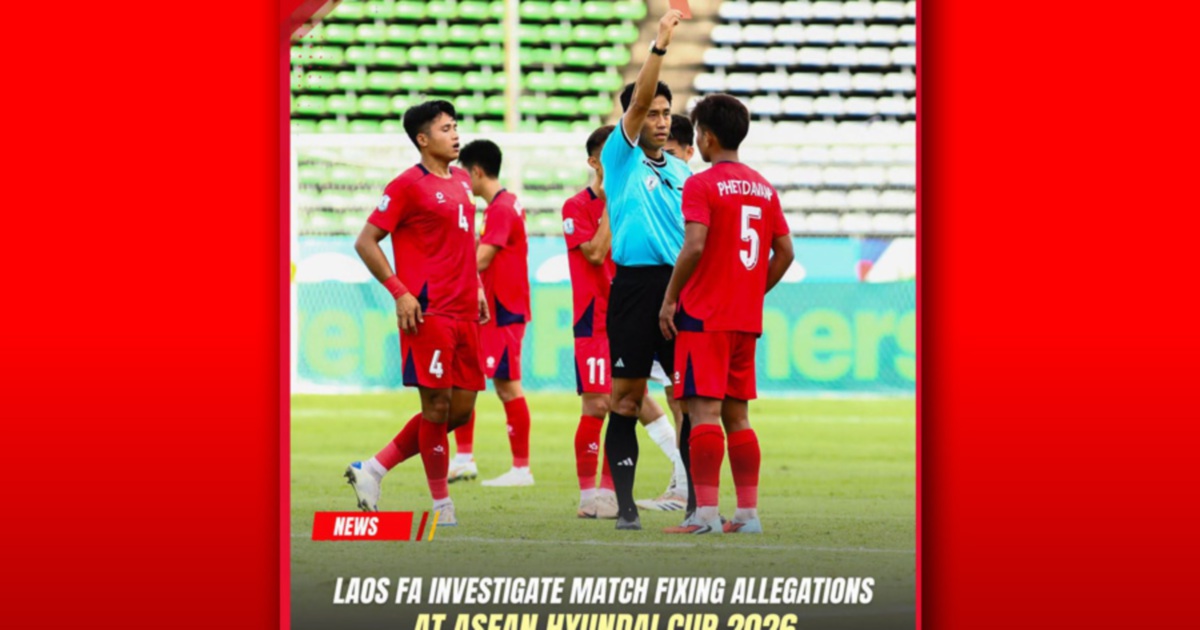
A corruption scandal has engulfed Southeast Asian football after the Lao Football Federation formally announced plans for a high-level investigation into allegations of match-fixing, bribery schemes, and organised illegal gambling involving players from the nation's representative squad at the Asean Cup.
The decision by the LFF signals mounting pressure within the regional football community to address integrity concerns that threaten to undermine the credibility of competitive tournaments across Southeast Asia. Match-fixing represents one of the most damaging threats to sports governance in the region, where weak regulatory frameworks and limited cross-border coordination have historically provided opportunities for criminal networks to infiltrate professional competitions.
For Malaysian football and the broader Asean ecosystem, the Lao situation highlights systemic vulnerabilities in how national associations verify player conduct and monitor betting activities during major tournaments. The federation's willingness to launch a public investigation—rather than attempting to contain matters internally—reflects heightened scrutiny from international football bodies and regional sporting authorities determined to establish cleaner competitive standards.
The timing of these allegations, coinciding with Asean Cup proceedings, amplifies concerns that match manipulation may have directly influenced tournament outcomes. This carries particular significance for nations like Malaysia, which has invested considerable resources in developing competitive squads and maintaining reputation within Southeast Asian football hierarchies. A compromised tournament undermines the legitimacy of any champion crowned and raises uncomfortable questions about results involving multiple participating nations.
Match-fixing investigations within Asean have proven historically challenging due to jurisdictional complications, limited international cooperation mechanisms, and the sophisticated methods used by gambling syndicates operating across borders. The involvement of illegal gambling operations adds another layer of complexity, suggesting organized criminal elements rather than isolated player misconduct. Such networks typically exploit financial vulnerabilities among players, offering immediate cash incentives that prove difficult to refuse in football economies where salaries remain comparatively modest.
The LFF's initiative to pursue accountability may establish precedent for how regional federations respond to corruption allegations going forward. Successfully investigating and prosecuting involved parties would signal that Southeast Asian football associations possess both institutional capacity and political will to enforce integrity standards, potentially deterring future corruption attempts. Conversely, if the investigation stalls or produces minimal consequences, it would reinforce perceptions that the sport lacks serious anti-corruption mechanisms.
Regional analysts observe that match-fixing scandals in Asean football frequently involve networks extending across multiple countries, with Singapore, Thailand, and Malaysia historically identified as jurisdictions hosting significant illegal betting operations targeting regional matches. The Lao case likely represents just the visible surface of broader corruption patterns operating throughout Southeast Asian football. Addressing root causes requires coordinated action among all national associations, improved player education regarding corruption risks, and cooperation with law enforcement agencies equipped to pursue organized gambling crimes.
For Malaysian stakeholders, the scandal underscores why domestic regulatory frameworks must be strengthened independent of international pressure. The Football Association of Malaysia should strengthen protocols for player monitoring, betting activity transparency, and whistleblower protections to insulate local competitions from similar compromises. International partnerships with anti-corruption organizations and regular integrity audits would demonstrate commitment to maintaining standards that distinguish Malaysian football from jurisdictions struggling with governance challenges.
The investigation's scope and ultimate findings will carry implications extending well beyond Laos. If credible evidence emerges linking systematic corruption to tournament results, Asean Cup organizers may face pressure to implement enhanced integrity protocols for future editions. Such measures could include mandatory player education programmes, real-time betting monitoring systems coordinated across the region, and tighter security around team personnel and match officials during tournament periods.
Broader Southeast Asian sporting reputation also hangs in balance as external observers assess whether the region possesses institutional sophistication to self-police against corruption. Successful investigation and transparent communication of findings would enhance regional credibility with international football authorities and commercial partners considering long-term investments in Asean football development. Conversely, perceived cover-ups or inadequate accountability would reinforce stereotypes about institutional weakness in Southeast Asian sports governance.
The scandal arrives during a pivotal period for Asean football, which has increasingly attracted international media attention and sponsorship interest. Professional integrity represents essential foundation for sustainable commercial development and athletic advancement. Players, coaches, and administrators must understand that competitive credibility directly translates to financial opportunity through broadcasting rights, sponsorships, and tournament participation—resources that corruption ultimately destroys.
As the LFF pursues its investigation, Malaysian football authorities and other regional federations should treat this as wake-up call warranting serious institutional reflection. Preventive measures implemented now—comprehensive integrity policies, player education, betting monitoring systems, and regulatory coordination—cost far less than managing full-scale corruption scandals that damage international reputation and undermine competitive legitimacy. The Lao Football Federation's decision to investigate transparently, regardless of findings, represents important step toward regional sporting culture that prioritises integrity over convenience.

