Kuala Lumpur has taken a significant step towards modernising its urban mobility infrastructure with the official launch of the LaLaport Transportation Hub (LTH), a fully integrated transport terminal positioned at the heart of the city. Located beside the Hang Tuah LRT and Monorail interchange, the facility is designed to accommodate up to 10,000 passengers daily while creating seamless connectivity across multiple transport modes—an increasingly essential requirement for a metropolitan area grappling with congestion and the need for efficient commuter solutions.
Minister in the Prime Minister's Department (Federal Territories) Hannah Yeoh emphasised the strategic importance of the hub during its unveiling, noting that the city experiences extraordinary daily movement with approximately 1.2 million people entering and exiting Kuala Lumpur each day, translating to around 5.5 million journeys. This volume underscores why continued investment in urban mobility infrastructure has become paramount for maintaining economic productivity and livability. The hub addresses a critical gap in the transport ecosystem by providing a unified boarding and alighting facility that integrates rail connections, express buses, e-hailing platforms, conventional taxis, and shared mobility services all within a protected pedestrian walkway environment.
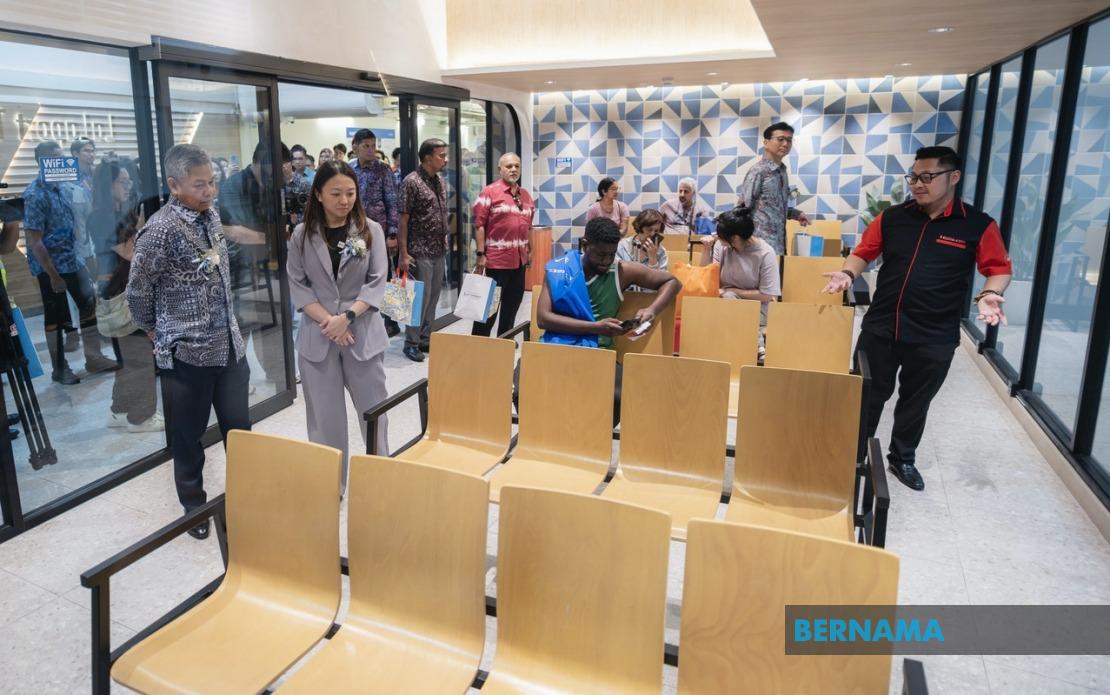
The infrastructure represents a departure from Kuala Lumpur's fragmented transport landscape, where passengers traditionally navigate between different terminals and pickup points scattered across the city centre. By consolidating these services under one roof with comprehensive facilities including an air-conditioned waiting area, manned service counters, and self-service ticketing kiosks, the hub eliminates friction points that often discourage public transport usage. The inclusion of a Passenger Information Display System providing real-time bus schedules further enhances the user experience by reducing uncertainty and wait times that typically plague multimodal journeys.
A particularly notable dimension of the LTH is its positioning as a major gateway for cross-border traffic between Malaysia and Singapore. The facility will support 24-hour express bus services running the Kuala Lumpur-Singapore corridor, accommodating approximately 150 bus trips daily. This development carries significant implications for regional connectivity, offering travellers a more streamlined alternative to existing border crossing procedures. As Southeast Asian integration deepens through initiatives like the ASEAN Framework Agreement on Services, such transport hubs increasingly serve as physical embodiments of regional mobility aspirations.
The facility's operational structure demonstrates evolving governance approaches to urban transport management. Dewan Bandaraya Kuala Lumpur (DBKL) has transitioned from annual renewal systems to three-year operating licences for transport terminals, a decision intended to provide terminal operators greater business certainty while maintaining regulatory oversight. This longer licensing window enables operators to implement longer-term service improvements and invest in facility enhancements without the uncertainty inherent in annual renewals. About 30 bus operators are anticipated to utilise the LTH as their primary city-centre transit hub, particularly for intercity and cross-border routes.
The hub's operational scope extends beyond intercity connections to encompass important airport accessibility services. Shuttle van services to Kuala Lumpur International Airport Terminals 1 and 2 provide passengers with convenient ground transport options integrated directly into the urban transit ecosystem. Additionally, the Boleh-Boleh Ride on-demand van shuttle service connects passengers to several strategic destinations within the city centre, acknowledging that first-and-last-mile connectivity remains a persistent challenge in multimodal transport systems. These complementary services substantially expand the hub's utility beyond basic intercity transit functions.
Security and safety infrastructure have received explicit attention in the hub's design and the broader city development strategy. DBKL has committed to installing approximately 10,000 operational CCTV cameras across Kuala Lumpur to enhance safety and accessibility across urban spaces. The LaLaport hub benefits from this expanded surveillance network, addressing passenger concerns about personal security that often influence mode choice decisions. While surveillance expansion warrants ongoing public discourse regarding privacy considerations, targeted deployment in transport facilities addresses legitimate safety concerns particularly relevant for female and evening travellers.
The launch reflects deepening Malaysia-Japan cooperation in urban development and sustainable transport infrastructure. Japanese Ambassador to Malaysia Noriyuki Shikata characterised the project as exemplifying bilateral commitment to advancing sustainable urban solutions. This partnership extends beyond the transport sector, with Prime Minister Datuk Seri Anwar Ibrahim's recent Japan visit reaffirming mutual commitments to energy security cooperation and broader regional engagement. The two nations will commemorate 75 years of diplomatic relations next year, providing opportunities to institutionalise such infrastructure partnerships more formally across Southeast Asia.
From an urban planning perspective, the hub's strategic placement adjacent to existing rail infrastructure demonstrates integrated transit-oriented development principles increasingly recognised as essential for managing metropolitan growth. By concentrating multiple transport modes at a single location with strong rail connections, the design encourages mode shifting away from private vehicles, potentially reducing congestion and vehicular emissions. However, the hub's success will ultimately depend on pricing structures, service frequency, and comfort standards that render public transport competitive against private vehicle usage—an ongoing challenge throughout the region.
The facility's emergence also reflects shifting transport sector dynamics driven by technology and changing consumer expectations. Integration of e-hailing services alongside traditional taxis and buses acknowledges the role digital platforms play in contemporary mobility. The inclusion of self-service kiosks and digital information systems signals recognition that passenger expectations now include seamless, technology-enabled booking and information access. These features align the LaLaport hub with globally competitive transport terminals while addressing local contextual requirements.
Looking ahead, the hub's performance metrics will merit close monitoring. Success indicators will extend beyond passenger volume targets to encompass service reliability, user satisfaction, operational efficiency, and modal share implications. Whether the facility effectively attracts 10,000 daily passengers and influences mode choice patterns will provide valuable insights for similar projects planned across Malaysian cities. The hub also establishes benchmarks against which other transport operators and local authorities will be measured, potentially accelerating infrastructure modernisation across the region.

