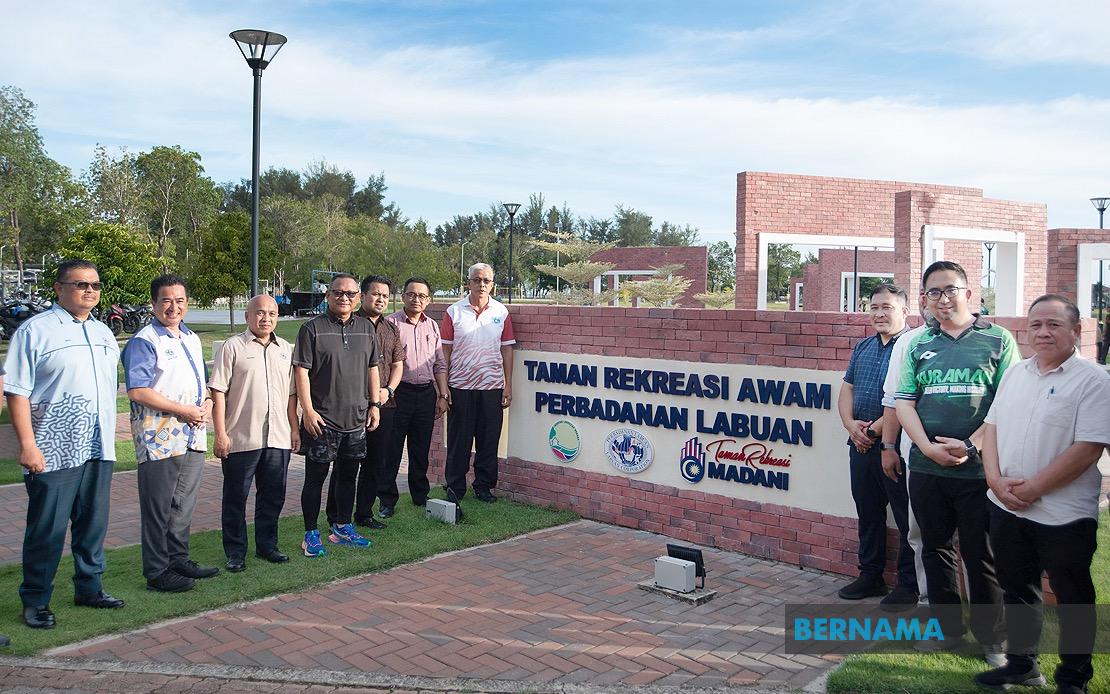
Labuan has taken a significant step toward enhancing public health and community engagement with the official opening of the Labuan Public Recreation Park at Tanjung Purun, marking the completion of a comprehensive RM495,382 upgrade initiative under the Madani Recreation Park scheme. The transformation represents a direct response to longstanding calls for improved recreational infrastructure in the federal territory, addressing both physical fitness needs and social cohesion among residents.
Rithuan Ismail, chief executive officer of Labuan Corporation, outlined the strategic vision behind the project during the opening ceremony, emphasising that the facility was conceived as an inclusive destination welcoming individuals across all age groups. The park's design philosophy centres on creating an environment where residents can simultaneously pursue individual fitness goals and strengthen interpersonal connections within their community. This dual focus reflects a broader shift in urban planning toward spaces that combine wellness with social infrastructure, a priority increasingly recognised across Malaysian municipalities.
The National Landscape Department, operating under the Ministry of Housing and Local Government, funded the development in 2024, directing resources toward transforming the previously underutilised LDA Field into a purpose-built recreational hub. The site selection process prioritised several critical factors: its central downtown location offered convenient access for working residents and families, existing infrastructure meant minimal additional connectivity costs, the plot size accommodated multiple activity zones without compromising design integrity, and the absence of land tenure complications streamlined project implementation—practical considerations often overlooked in discussions of public amenity development.
The original state of the location revealed common challenges facing public spaces in smaller Malaysian centres. Insufficient lighting discouraged evening use, essential recreational equipment was either absent or deteriorated, and ageing casuarina trees created environmental hazards while simultaneously limiting the area's appeal. These deficiencies had created a self-reinforcing cycle of underutilisation, wherein poor conditions discouraged visits, reducing foot traffic and thus lowering maintenance prioritisation. The upgrade directly addressed each identified shortcoming through comprehensive site redesign.
The completed facility now encompasses multiple activity zones designed to accommodate diverse recreational preferences and age groups. An 800-metre jogging track provides measured cardiovascular training space, while outdoor fitness equipment enables strength and flexibility work without membership fees or facility constraints. The addition of concrete seating areas throughout the park transforms it into a social gathering point for residents who may not exercise regularly but seek outdoor leisure spaces. The welcoming garden component introduces aesthetic value, softening the utilitarian character of fitness infrastructure and creating botanical appeal that encourages longer visits and repeated usage.
Labuan Corporation has signalled commitment to progressive expansion, with three open courts designated for pickleball and sepak takraw expected to complete construction by year-end 2024. This timeline reflects growing recognition of these sports' popularity across Malaysian communities, particularly among younger residents and established players seeking organised facilities. Pickleball's expansion into Southeast Asia has been especially notable, attracting practitioners from tennis and badminton backgrounds, while sepak takraw maintains cultural significance and competitive structure in the region. Dedicated courts would position Labuan to host inter-district competitions and recreational tournaments, generating additional economic activity and regional visibility.
The Madani Recreation Park initiative, within which this project sits, represents a coordinated federal approach toward standardising recreational infrastructure quality across Malaysia's towns and cities. By establishing consistent design standards and funding mechanisms, the programme aims to reduce disparities in public amenity access between larger urban centres and smaller municipalities. For a federal territory like Labuan, which operates with distinct administrative and financial frameworks, such centralised funding has particular significance in maintaining competitiveness with rapidly developing regional competitors for investment and population retention.
The opening arrives amid broader Southeast Asian recognition that accessible public recreation correlates with improved public health outcomes, reduced obesity prevalence, and enhanced mental wellbeing across populations. Malaysia's commitment to the Sustainable Development Goals and regional health frameworks makes such investments strategically aligned with national policy directions. Labuan's park demonstrates how modest capital expenditure—less than half a million ringgit—can yield disproportionate community benefits when designed around genuine resident needs rather than imposed templates.
Rithuan's explicit call for public stewardship acknowledges a persistent implementation challenge: infrastructure sustainability depends fundamentally on user engagement and community responsibility. Facilities across Malaysia have deteriorated despite recent upgrades due to inadequate maintenance protocols and insufficient community buy-in regarding preservation. Success at Tanjung Purun will likely depend on establishing clear maintenance schedules, transparent reporting mechanisms, and community groups willing to advocate for prompt repairs and facility improvements. Early engagement with residents through user committees could embed ownership psychology that extends facility lifespan and usage intensity.
The park's evening-time popularity represents particular significance for Labuan's working residents, as many Malaysian communities report constrained daylight exercise opportunities due to occupational schedules and climate considerations. Adequate lighting transforms evening recreation from a safety concern into an opportunity, potentially extending facility usage hours and spreading visitor flow across broader daily windows. This consideration has implications for similar projects across tropical Malaysia, where evening recreation can substantially increase annual facility utilisation without additional capital investment.
Looking forward, the Tanjung Purun development establishes a template for integrated recreation planning in federal territories and smaller urban centres across Malaysia. Its emphasis on mixed-use design, comprehensive accessibility, and phased expansion planning addresses lessons learned from earlier single-purpose recreational facilities that struggled to maintain relevance as community needs evolved. Success metrics extending beyond opening attendance—such as longitudinal health indicators among regular users, community satisfaction surveys, and tournament participation—will determine whether Labuan's investment achieves lasting lifestyle impact or represents another ceremonial infrastructure completion.
The facility joins a growing network of upgraded public spaces positioning Malaysian towns as lifestyle destinations rather than purely economic or administrative nodes. For Labuan specifically, recreation infrastructure investments complement ongoing efforts to diversify the federal territory's economic base beyond petroleum and financial services, attracting residents and visitors through quality-of-life indicators increasingly emphasised by mobile professionals and young families considering relocation decisions.